REVIEW · PAELLA COOKING CLASSES
Vegetable Paella cooking class, tapas and Ruzafa market visit
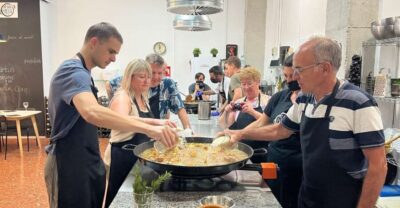
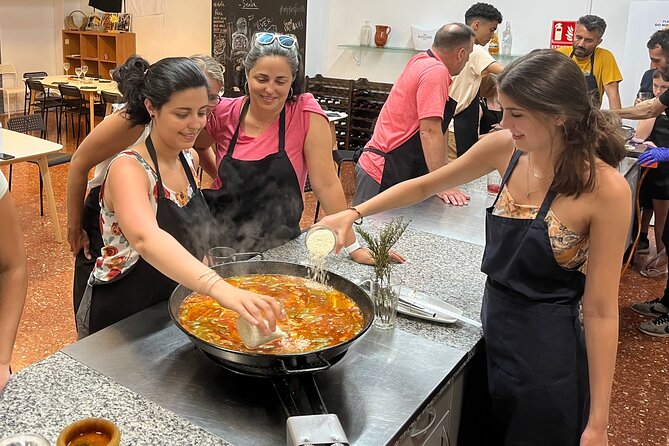
Valencia’s paella is best understood around a table, not just on a restaurant plate. This small-group cooking class starts at Ruzafa Market, where you help choose fresh ingredients before walking to the kitchen for sangria, tapas, and a hands-on vegetable paella lesson.
I like the market-to-table format, and I like that the class explains paella as a Valencian social custom rather than a dish to rush through. The main thing to consider is that the experience is taught in English, and the wider meal includes serrano ham and mussels, so it suits vegetarians better than strict vegans.
Key points at a glance
- Ruzafa Market comes first: You shop for the ingredients and hear about Valencian food customs before cooking.
- The paella is hands-on: You help prepare a vegan vegetable paella rather than simply watching a chef work.
- Tapas and drinks are included: Expect patatas bravas with sojanesa, ham, Manchego, mussels, olives, sangria, beer, wine, and soft drinks.
- The group stays fairly small: The class is advertised for up to 18 people, with another booking note listing a maximum of 20.
- The meal goes beyond paella: Tomato salad, fruit, Valencian cake, sweet wine, and coffee complete the lunch.
- Sunday needs care: Ruzafa Market is closed that day, so the market visit does not operate then.
Starting at San Valero Parish in Ruzafa
The experience begins at 11:00 a.m. outside Parroquia de San Valero, at Carrer del Pare Perera, 6, in Valencia’s L’Eixample district. You meet at the parish door, then go together to Mercado de Ruzafa.
That meeting point matters because this is not a cooking class you simply enter on your own. The first part is a short guided introduction to the neighborhood and market, followed by the food shopping. I would arrive a little early and make sure you are waiting at the parish entrance rather than inside the church.
The full activity lasts about three and a half hours and returns to the original meeting point. It is a useful half-day plan for your Valencia schedule, especially if you want lunch built into the morning rather than another restaurant reservation.
More Paella Cooking Classes in Valencia
- Valencian paella cooking class, tapas and visit to Ruzafa market.
★ 5.0 · 828 reviews - Seafood paella cooking class, tapas and visit to Ruzafa market.
★ 5.0 · 328 reviews - Valencia: Evening Guided Paella Workshop, Tapas, and Drinks
★ 4.9 · 326 reviews
Choosing ingredients at Mercado de Ruzafa
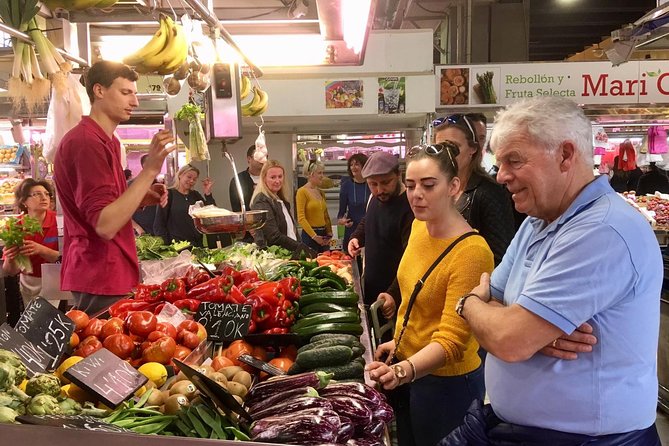
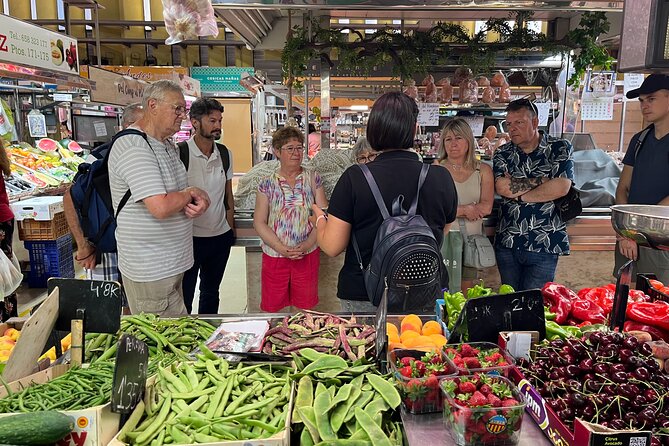
Ruzafa Market gives the class a practical beginning. Instead of presenting paella as a fixed recipe, the instructors show you the fresh products needed to make the vegetable version. As you shop, you hear about the dish’s origins and the customs of Valencian people.
That short market visit adds something a recipe video cannot. You see the ingredients before they are chopped and cooked, and you get a clearer sense of how local food depends on fresh produce and shared preparation. It also gives you a bit of context before the cooking starts, so the paella feels connected to Valencia rather than like a generic Spanish dish.
The market stop is not a long food tour. You should think of it as the shopping stage of the class, with cultural explanation along the way. The market is closed on Sundays, so the full market portion is not available that day. If seeing Ruzafa Market is important to you, book another day.
The eight-minute walk to the cooking kitchen
After the market, the group walks about eight minutes to the kitchen. That short transfer keeps the day simple. You do not need a taxi, private transport, or a complicated change of location.
The class is designed for a maximum group of around 18 people, although the additional tour information gives a maximum of 20. Either way, this is not a private lesson, but it is small enough for the chef to give attention around the workstations. The size also helps explain why the class has a social feel. You are preparing lunch with people from different countries rather than cooking alone.
The English-language format is clear and important. The class is offered in English, and one Spanish-speaking participant found that translation was needed for people who did not understand English. If your English is limited, the demonstrations may be harder to follow.
Sangria, tapas, and a warm start
Once you reach the kitchen, the chef begins with a sangria workshop. This is a good move. You have something to do and taste while the cooking setup is organized, and the group has a natural way to get acquainted.
Tapas are served before the paella. The listed selection includes patatas bravas with sojanesa, serrano ham, Manchego cheese, steamed mussels, and olives. Drinks include sangria, beer, water, wine, and soft drinks at different points in the meal.
There is an important dietary detail here. The main paella is vegan, and the patatas use sojanesa, but the complete meal is not vegan because it includes ham, cheese, and mussels. If you are vegetarian, you will need to ask how the tapas are handled. The experience description specifically promises vegetable or vegan paella, but it does not promise a fully vegetarian or vegan menu from start to finish.
This opening meal is one of the strongest parts of the experience for me. It gives you a relaxed way into the class, and it makes the three-and-a-half-hour schedule feel like a shared lunch rather than a technical cooking lesson.
More Spanish Cooking Classes in Valencia
- Valencian Paella Cooking Class, Tapas & Sangria – Evening
★ 5.0 · 303 reviews - Real Paella Cooking Class – Market Visit & Sangría Workshop
★ 5.0 · 291 reviews - Valencia Paella & Tapas Home Cooking Class with Local Chef Jose
★ 5.0 · 69 reviews
Learning the method behind Valencian paella
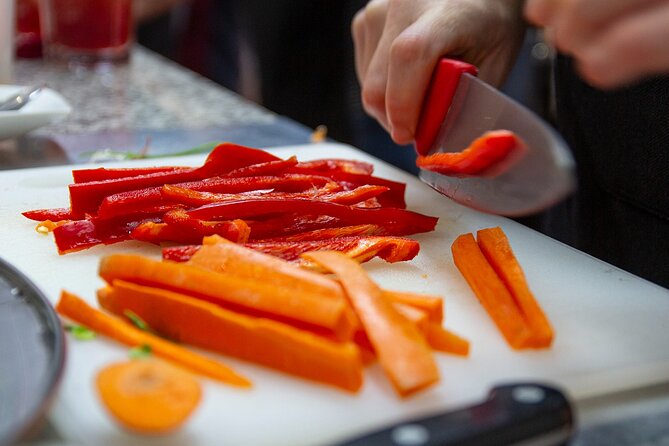
The chef then explains the vegetable paella step by step. You are not just handed a finished pan. You take part in preparing the ingredients, using the equipment, and following the cooking process.
That hands-on approach is valuable if you want to repeat the dish at home. The class covers more than a list of ingredients. It explains the method and the cultural role of paella, including the idea that paella is a social ritual in Valencia. Several people who enjoyed the class specifically valued learning the technique well enough to feel confident making it again.
The class also works for mixed groups. A family can have some members focus on the vegetable version while others take part in a more traditional paella activity, as one family did. The vegetable paella itself remains the focus described here, and the class is suitable for vegetarians and for people who simply want a lighter alternative to meat or seafood.
Expect to participate, but do not expect a private chef lesson built around your own pace. In a shared class, some tasks will be done with other people, and the chef must keep the group moving together. The advantage is the lively, social atmosphere. The trade-off is less individual control than you would have in a one-to-one session.
Sitting down to a full Valencian lunch
When the paella is ready, you sit down to eat it with the group. The paella is served with a Valencian tomato salad, which keeps the meal connected to the market visit and adds something fresh beside the rice.
The meal continues with seasonal fruit, Valencian sponge cake, sweet wine, and coffee. The sweet wine is mistela, a local-style drink that gives the ending a distinctly Valencian touch. With the tapas, drinks, main course, dessert, and coffee included, you are receiving a substantial lunch as well as a cooking class.
I would not book this experience if you want only a quick lesson and a small sample. The format is built around spending time at the table. That is part of its value, but it also means the morning is largely committed to food and conversation.
The shared table is also where the class earns much of its warmth. The hosts, including names such as Guillermo, Cristina, Anna, Jordie, and Marie in different sessions, are praised for being friendly, energetic, and good at drawing people into the process. The exact instructors may vary, but the experience depends heavily on the chef and hosts keeping everyone involved.
What the $78.44 price really covers
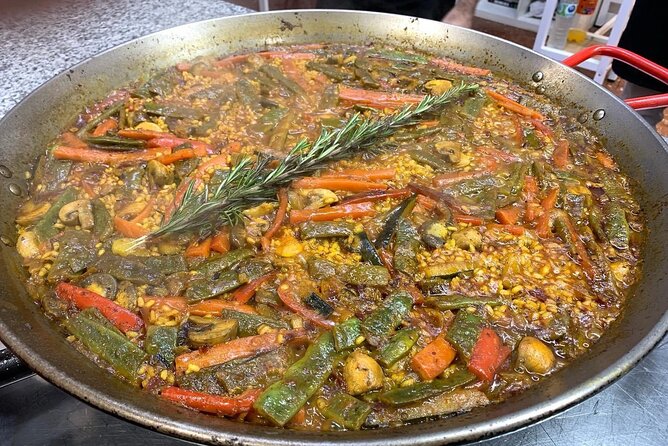
At $78.44 per person, this costs more than a simple paella meal in Valencia. The price is easier to justify when you count everything included: the market visit, ingredient shopping, cooking instruction, kitchen equipment, all paella ingredients, tapas, sangria, beer, wine, soft drinks, water, dessert, coffee, and mistela.
You are also paying for a guided cultural experience, not only for food. The instructors explain the background of paella and Valencian customs, then turn that information into a meal you help create. If you value an activity that combines lunch, a lesson, and meeting other people, the price is fair.
The value is less convincing if you are mainly looking for the cheapest way to eat paella. You could spend less at a restaurant, and you would not need to give up half a day. This class makes more sense for you if the preparation matters as much as the final dish.
It is also worth booking ahead. The experience is booked about 30 days in advance on average, and the limited group size can make popular dates harder to get. Confirmation is provided at booking, and free cancellation is available until 24 hours before the start time. Changes or cancellations inside that window are not accepted for a refund.
Who will enjoy this class most
This is a strong choice for you if you want an activity with food, conversation, and some local context. Couples, families with older children, and solo visitors can all fit the format. Children must be accompanied by an adult, and families with children around 11 and 15 have found the cooking accessible and engaging.
It also works well for a mixed group of eaters. A vegetarian can focus on the vegan paella, while others can enjoy the wider selection of Spanish tapas. Just clarify the menu if anyone has strict dietary rules, since the meal includes animal products even though the main dish is vegan.
You should be comfortable with an English-speaking group and with active participation. The instructors are praised for involving everyone, but this is not a quiet demonstration where you sit back and take notes.
Small drawbacks worth knowing before you book
The Sunday market closure is the clearest limitation. The activity may still operate in some form, but the promised visit to Ruzafa Market is not available on Sunday. Choose a weekday or Saturday if the market is a key reason for booking.
The group size can also vary within the advertised range. The experience is described as having a maximum of 18 participants in one place and 20 in another. That is still a manageable class, but it is not an intimate private lesson.
Finally, language may matter. The class is in English, and that can be a problem for anyone who does not understand English well. The hosts are described as friendly and patient, but the cooking instructions and cultural explanations still depend on following an English presentation.
Should you book the Ruzafa paella class?
I would book this if you want to understand paella by shopping for it, preparing it, and eating it with other people. The market visit and hands-on cooking give the class a stronger sense of place than a standard restaurant meal, while the tapas, drinks, dessert, and coffee make it a complete half-day outing.
I would skip it if you want a short, quiet meal, a fully vegan menu, or a class in a language other than English. For everyone else, especially families, couples, and curious food lovers, the combination of Ruzafa Market, sangria, generous tapas, and a shared vegetable paella makes this a practical and memorable Valencia activity.
FAQ
Where does the paella class begin?
It begins at the door of Parroquia de San Valero, Carrer del Pare Perera, 6, in L’Eixample, Valencia.
What time does the experience start?
The start time is 11:00 a.m.
How long does the activity last?
The experience lasts approximately three hours and 30 minutes.
Is the class taught in English?
Yes. The activity is offered in English.
Is the paella vegetarian or vegan?
The main paella is described as vegetable and vegan. The wider menu includes serrano ham, Manchego cheese, and steamed mussels, so the complete meal is not vegan.
Does the tour visit Ruzafa Market on Sunday?
No. Ruzafa Market is closed on Sunday, so the market visit is not included that day.
What is included in the price?
The price includes some tapas, the sangria workshop, wine, beer, soft drinks, water, all ingredients and cooking equipment, tomato salad, dessert, coffee, and mistela.
More Market and Tapas Tours in Valencia
- Barcelona Paella Cooking Class with Market Visit, Tapas & Sangria
★ 5.0 · 2,531 reviews - San Sebastian Pintxo Food, Wine & Market Foodie Tour(Small Group)
★ 5.0 · 621 reviews - Madrid Tapas & Paella Cooking Experience with Local Market Visit
★ 5.0 · 432 reviews - Alicante Paella Cooking Class, Tapas, Drinks and Market
★ 4.9 · 301 reviews
Recently reviewed in Valencia
- Valencia: Wine Tasting and Tapas Experience★ 4.5 · 38 reviews
- City of Arts & Sciences Tour with Rooftop Tapas & Wine★ 5.0 · 41 reviews
- Craft Beer Tasting and tapas in Valencia★ 4.9 · 70 reviews
- Valencia Paella & Tapas Home Cooking Class with Local Chef Jose★ 5.0 · 69 reviews
- Valencia Tapas Crawl by Food Lover Tour★ 5.0 · 78 reviews
- Valencia Food Tour: Tapas, Drinks and Delights with a Local★ 5.0 · 93 reviews
- Shore Excursion: City Tour with Tapas in 11th Century Monument★ 5.0 · 113 reviews
- Valencia Tapas and Sightseeing Guided Tour★ 5.0 · 138 reviews
Paella Cooking Classes, compared.
Barcelona Paella Cooking Class with Market Visit, Tapas & Sangria
Read our review →
Spanish Cooking Class Paella Tapas and Sangria in Madrid
Read our review →
Barcelona Food Tour: Tapas, Paella, Sangria & 8+ Local Tastings
Read our review →
Valencian paella cooking class, tapas and visit to Ruzafa market.
Read our review →
Madrid Tapas & Paella Cooking Experience with Local Market Visit
Read our review →
Alicante Paella Cooking Class, Tapas, Drinks and Marketplace
Read our review →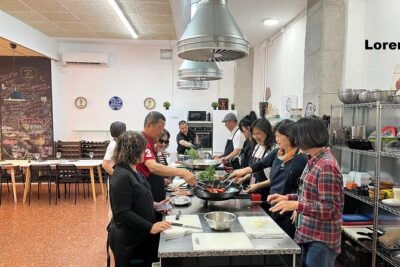
Seafood paella cooking class, tapas and visit to Ruzafa market.
Read our review →