
REVIEW · SPANISH COOKING CLASSES
Malaga Tapas Cooking Class
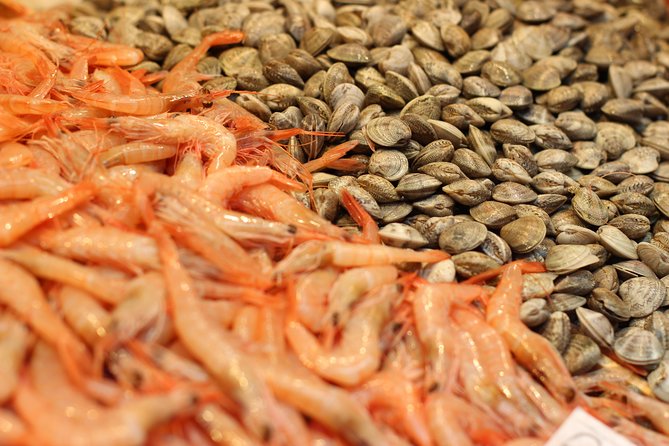
Malaga’s food culture makes the most sense at a worktable. This three-and-a-half-hour cooking class takes you first to Atarazanas Market, then into a modern Soho kitchen where you prepare regional dishes such as tortilla de patatas, pil-pil prawns, crispy noodles, and churros.
I like the market-to-kitchen setup because you see the ingredients before cooking them. I also like the generous meal plan, with olive-oil tasting, local olives or almonds, four tapas, seasonal fruit, and wine or beer included. The main consideration is group size: up to 16 people means a lively class, but not always a close-up lesson.
Key points at a glance
- Atarazanas Market comes first: The daytime Monday-to-Saturday class includes a guided look at Malaga’s central food market and seasonal produce.
- The kitchen is in Soho: After a five-minute walk, you cook in a modern, well-equipped space near the market.
- The menu is distinctly Spanish: Dishes can include tortilla de patatas, gambas pil pil, fideos tostados, sirloin with Pedro Ximénez sauce, and churros.
- Drinks are part of the experience: Start with sangria, taste local olive oils, and pair the meal with regional wine or beer.
- You leave with practical takeaways: Recipes and a small gift help you repeat the dishes at home.
- Timing matters: Evening and Sunday classes last three hours and do not include the market visit.
Why the market-to-kitchen plan works
The best feature here is the order of events. You do not simply arrive at a classroom and chop vegetables from a prepared shopping list. In the daytime version, you begin at Mercado Central de Atarazanas, Malaga’s central market, then walk about five minutes to the cooking school in the Soho district.
That short market visit gives the food some context. You can look at the seasonal produce, learn about local ingredients, and get a better sense of the food sold in Malaga homes and restaurants. The market is especially useful for first-time visitors who want more than a standard city walk but do not want to spend half a day on a formal food tour.
The market stop is included only in daytime classes from Monday through Saturday. Atarazanas is closed in the evening and on Sundays, as well as on several Spanish holidays. If the market is important to you, check the class time and date before paying. The evening and Sunday option lasts three hours, while the market version takes about three and a half.
More Spanish Cooking Classes in Malaga:
- Barcelona Paella Cooking Class with Market Visit, Tapas & Sangria
★ 5.0 · 2,531 reviews - Spanish Cooking Class Paella Tapas and Sangria in Madrid
★ 5.0 · 1,340 reviews - Valencian paella cooking class, tapas and visit to Ruzafa market.
★ 5.0 · 828 reviews
Atarazanas Market: the useful first stop
Atarazanas Market is not just a place to collect ingredients. It is where you begin to see how local food is organized, sold, and selected. The class focuses on fresh, seasonal products, so the exact ingredients and dishes may reflect what is available at the time.
That flexibility is a good thing. Spanish cooking often depends on what looks best that morning rather than on a rigid recipe. You may learn why one fish, vegetable, or cut of meat works better than another. You also get a quick introduction to Malaga’s food traditions before heading to the kitchen.
Do not expect a long market tour. The market visit is one part of a larger class, not a separate shopping expedition. Still, the combination works well: you see produce in its natural setting, then use similar ingredients a few minutes later.
The market is also a practical meeting point to understand. The official start is at Kulinarea, Avenida de Manuel Agustín Heredia 24, in Malaga’s Centro district, and the activity returns there at the end. The area is near public transportation, but hotel pickup and drop-off are not included.
A modern kitchen in Soho
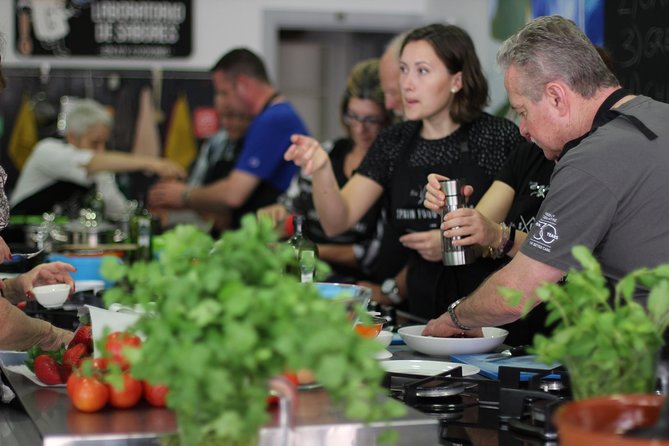
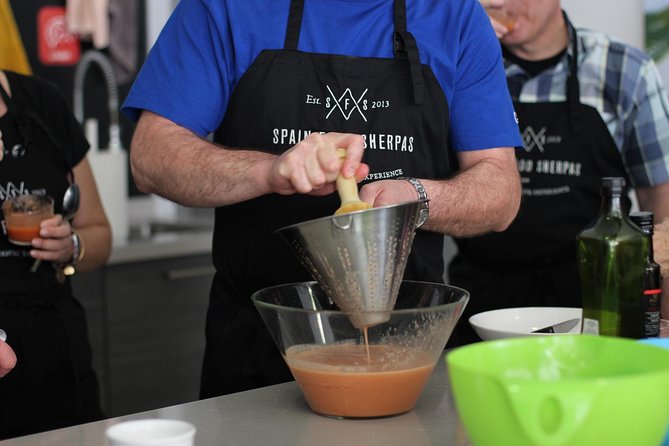
After the market, you walk to the cooking school in Soho, Malaga’s Art District. The kitchen is described as modern, spacious, and set up to feel welcoming rather than formal. That matters because a cooking class can become awkward when everyone is squeezed around one small counter.
The room has the equipment and utensils needed for the menu. Several instructors have been praised for keeping the class organized while handling groups of 12 to 14 people. Names associated with the sessions include Alba, Anaïs, Felipe, Belén, Elise, and Simone.
The teaching style appears friendly and practical. Anaïs has worked particularly well with families, making the food and market visit accessible to children around 11 and 13. Felipe has been described as organized and warm, while Belén has earned praise for choosing a strong set of tapas and explaining the techniques clearly.
Your hands-on time will depend on the group and the dish. With a maximum of 16 participants, you should expect to share tasks rather than prepare every item entirely alone. A group of 10 to 12 may feel comfortable, while a full class could mean waiting briefly for a turn at the counter.
That is the main weakness of the experience. The class is social and good for meeting people from different countries, but it is not a private cooking lesson. If you want one-on-one correction of every knife cut, look for a smaller workshop.
Olive oil, olives, and the first taste of Malaga
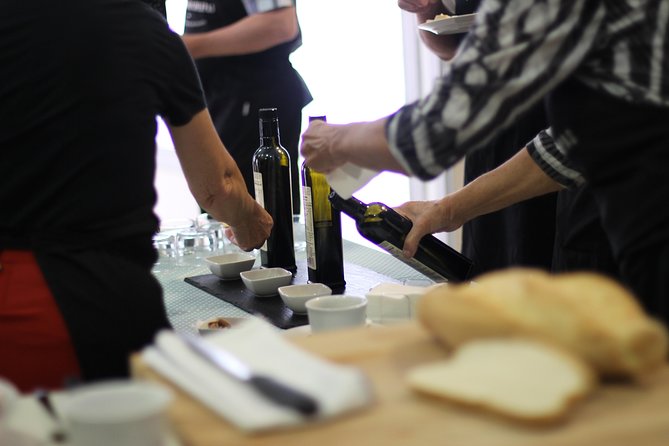
The food starts before the cooking. You taste several extra virgin olive oils, including local award-winning oils, and try Aloreña olives or roasted almonds. This is a small but valuable part of the class.
Olive oil is not a background ingredient in Spanish cooking. It changes the taste of a dish, and tasting several oils side by side helps you notice differences that are easy to miss when oil is mixed into a sauce or used for frying.
Aloreña olives are a local specialty from Malaga province. They give the opening snack a clear regional connection, rather than making the class feel like a generic Spanish food lesson.
Sangria is also served as a starter. The drink adds to the relaxed, shared-meal feel, though you should remember that this is still a hands-on class. Pace yourself if you plan to enjoy the wine or beer pairing later.
Other Malaga tapas evenings worth comparing
- Caminito del Rey & White Village Tour with Tapas from Málaga
★ 4.9 · 2,209 reviews - Malaga Wine & Tapas Small Group Guided Tour
★ 5.0 · 1,972 reviews - Málaga: Wine & Tapas Tour
★ 4.8 · 1,039 reviews - Taste of Malaga Tour : Tapas, History and Local Customs
★ 5.0 · 758 reviews
What you may cook
The dishes can vary, but the sample menu shows the class’s range. You may prepare four traditional tapas along with a starter, dessert, fruit, and drinks.
Crispy noodles and pil-pil prawns
Fideos tostados, or crispy noodles, bring a texture-focused dish to the menu. Pil-pil prawns add seafood and show how a short ingredient list can produce a strong result when the cooking technique is right.
The class is not built around difficult restaurant tricks. It focuses on useful methods you can repeat at home. That makes the recipes suitable for people who want a friendly introduction rather than advanced culinary training.
Tortilla de patatas
The Spanish omelette is one of the most useful dishes you can learn because it is simple in theory and easy to get wrong in practice. The class covers how to make a proper tortilla with eggs, giving you a foundation for one of Spain’s best-known home dishes.
You may also encounter regional recipes such as ensalada malagüeña or cod tostón, depending on the menu. These dishes connect the cooking to Malaga rather than presenting only the most familiar national favorites.
Sirloin with Pedro Ximénez sauce
Solomillo al Pedro Ximénez adds a meat course and a sweet wine sauce to the meal. Pedro Ximénez is a well-known Spanish dessert-style wine, and using it in a savory sauce gives you another way to see how Spanish cooking balances sweet and savory flavors.
This course also makes the meal feel substantial. You are not simply tasting small plates and leaving hungry. The format is tapas-based, but the combined menu functions as a full lunch or dinner.
Churros and seasonal fruit
Churros provide a straightforward finish, while seasonal fruit keeps the meal from becoming too heavy. The included fruit selection will depend on the time of year, which fits the class’s focus on fresh local ingredients.
Dessert is prepared as part of the group experience, so the emphasis is on learning and sharing rather than pastry-school precision. Families and first-time cooks should find this approachable.
The meal is part of the value
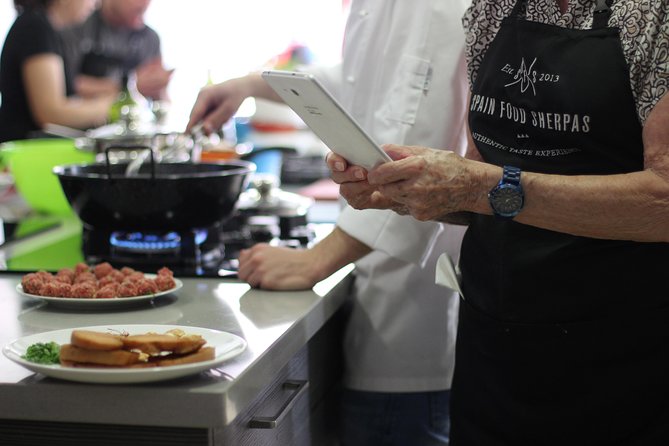
At $84.66 per person, this is more expensive than simply ordering tapas at a Malaga bar. That comparison misses the point, though. The price covers the market visit in the daytime class, instruction, kitchen use, olive-oil tasting, snacks, four tapas, dessert, seasonal fruit, recipes, and wine or beer.
You are also paying for a three-hour or three-and-a-half-hour activity that combines food, culture, and conversation. If you were already planning a meal and a market visit, the package can be reasonable. It is less attractive if you only want to learn one recipe or prefer a quiet restaurant meal.
The drinks make a noticeable difference to the value. Wine or beer is paired with the menu, and sangria starts the meal. The experience also includes a special gift and the recipes, which means you take home more than a memory and a full stomach.
I would think of the price as fair for a structured food activity in central Malaga, especially for couples, families, and first-time visitors who want a social evening. Solo participants can also fit in well because the format encourages people to cook and eat together.
Who will enjoy this class most
This is a strong choice for anyone who likes food but does not need a demanding culinary lesson. You get clear instruction, familiar Spanish dishes, local ingredients, and enough eating time to make the class feel like a proper meal.
Families should consider it. The market adds variety, and the cooking tasks are not described as highly complex. Children around 11 and 13 have taken part successfully, though adults should judge whether their children can manage a group class and a meal with wine served to the adults.
Couples who enjoy cooking together are also a good fit. You can work as a pair, meet other people, and leave with recipes you can try at home. The class has also worked well for mixed groups of international visitors, so it is a natural social activity.
It is less suitable if you want an advanced lesson, a private chef, or a very small group. A full group of 16 can still be organized well, but you should not expect constant personal attention.
Timing, dietary needs, and practical details
The experience is offered in English. You should provide any dietary requirements when booking. That is especially important here because the menu may include prawns, seafood, meat, eggs, and dairy-related ingredients depending on the dishes prepared.
A vegetarian request has been accommodated, including one made at short notice, but you should not rely on last-minute changes. Give the provider advance notice so the cooking team can plan a useful alternative.
The activity begins and ends at Kulinarea, Avenida de Manuel Agustín Heredia 24, in Distrito Centro. There is no hotel transportation. The location is near public transportation, and the market and kitchen are close enough to connect on foot during the daytime version.
The maximum group size is 16. That is small enough to avoid a huge tour-bus feeling, but large enough that the lesson remains communal. If your priority is personal instruction, ask about the expected group size before booking.
Free cancellation is available up to 24 hours before the local start time. Changes or cancellations inside that window are not accepted for a refund. The activity requires good weather, and if poor weather causes a cancellation, you can choose a new date or receive a full refund.
Should you book the Malaga Tapas Cooking Class?
I would book this if you want a practical introduction to Malaga’s food culture rather than another standard sightseeing tour. The market visit, olive-oil tasting, regional recipes, shared meal, and included drinks give the class a clear sense of place.
The strongest reason to choose it is the complete sequence: see the ingredients at Atarazanas, cook them in Soho, then sit down and eat what you helped prepare. The recipe collection and gift are useful extras, and instructors such as Alba, Anaïs, Felipe, and Belén bring a friendly, organized tone to the kitchen.
I would hesitate only if you dislike group activities or need intensive instruction. With up to 16 people, some tasks must be shared, and the cooking is designed to be approachable rather than technically demanding.
For most food-minded visitors, couples, and families, the $84.66 price is reasonable for the amount included. Choose a daytime Monday-to-Saturday session if the market matters to you. Pick the evening or Sunday class if the shorter schedule suits you and you are happy to skip Atarazanas.
FAQ
Where does the Malaga Tapas Cooking Class begin and end?
The class begins and ends at Kulinarea, Avenida de Manuel Agustín Heredia 24, Distrito Centro, 29001 Málaga, Spain.
Is the Atarazanas Market visit included in every class?
No. The market visit is included in daytime classes from Monday through Saturday. The market is closed in the evenings and on Sundays, as well as on certain holidays.
How long does the experience last?
The daytime market-and-cooking class lasts approximately three hours and 30 minutes. The evening and Sunday class lasts three hours.
What food and drinks are included?
The experience includes an olive-oil tasting, Aloreña olives or roasted almonds, four traditional tapas, wine or beer paired with the menu, seasonal fruit, and recipes. Sangria is listed as a starter, and the sample menu includes churros for dessert.
Is hotel pickup included?
No. Hotel pickup and drop-off are not included. The meeting point is near public transportation.
How many people can join the class?
The class has a maximum of 16 participants.
Can dietary requirements be accommodated?
You should advise the provider of any specific dietary requirements when booking. A vegetarian request has been accommodated, but advance notice is recommended.
Recently reviewed in Malaga
- Flamenco, Tapas and Wine Tour: Best of Málaga in one Evening★ 5.0 · 52 reviews
- PREMIUM TAPAS TOUR: Paella, Market Tastings, and Winery★ 4.7 · 27 reviews
- The Málaga Market & Tapas Tour By Food Lover Tour★ 5.0 · 23 reviews
- Wine and Tapas walking Tour in Malaga★ 5.0 · 70 reviews
- Malaga: Flamenco, Tapas, and Wine Tour★ 4.8 · 72 reviews
- Malaga Market Food Tour: Tapas, Drinks, and Local Flavors★ 5.0 · 78 reviews
- Malaga: Food Tour with Local Guide, Tapas, and Drinks★ 4.9 · 75 reviews
- Malaga Traditional Wine & Tapas Tour★ 4.5 · 78 reviews
Spanish Cooking Classes, compared.
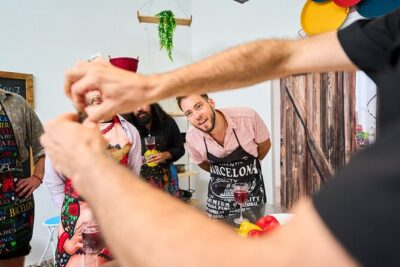
Barcelona Paella Cooking Class with Market Visit, Tapas & Sangria
Read our review →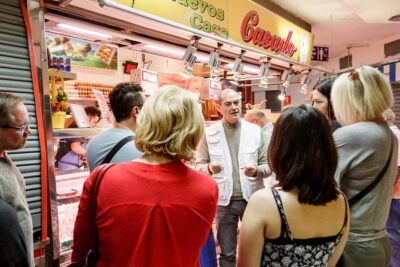
Spanish Cooking Class Paella Tapas and Sangria in Madrid
Read our review →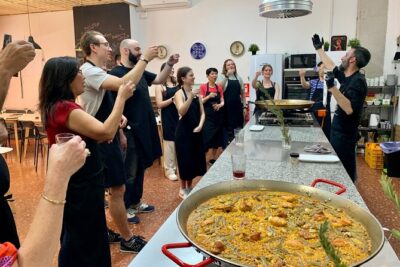
Valencian paella cooking class, tapas and visit to Ruzafa market.
Read our review →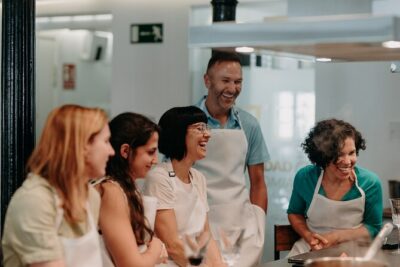
Madrid Tapas & Paella Cooking Experience with Local Market Visit
Read our review →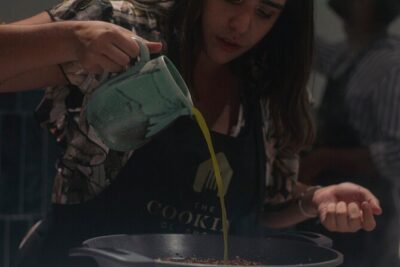
Taste of Spain: Tapas Cooking Class with Bottomless Wine Pairing
Read our review →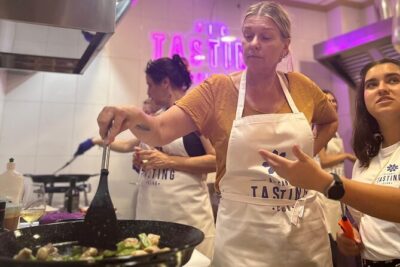
Alicante Paella Cooking Class, Tapas, Drinks and Marketplace
Read our review →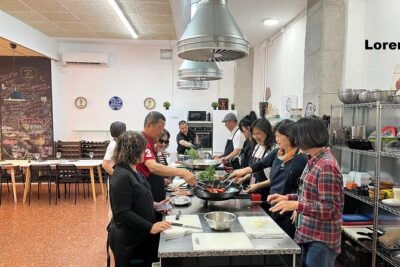
Seafood paella cooking class, tapas and visit to Ruzafa market.
Read our review →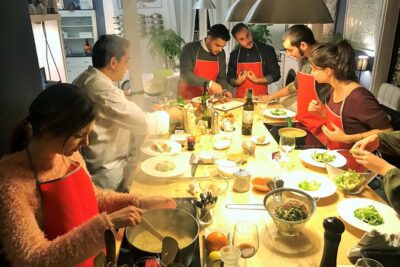
Premium Paella Cooking Class & 10 Spanish Tapas
Read our review →Browse the lists this tour appears in