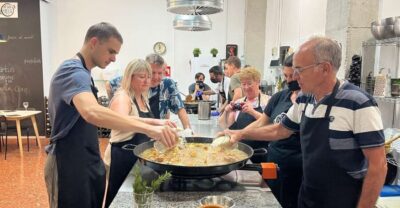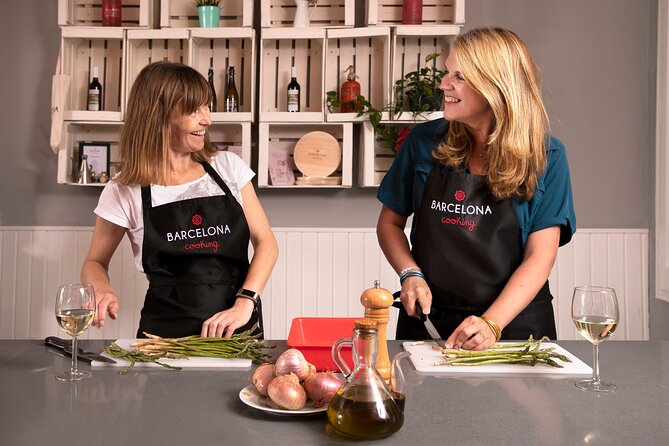
REVIEW · PAELLA COOKING CLASSES
Premium Paella & Tapas Feast: Unlimited Wine & Rambla Views
Barcelona’s famous market and a hands-on paella class come together in one lively three-hour experience. You begin at La Boqueria, choose ingredients with your chef, then return to Barcelona Cooking for tapas, tomato bread, seafood paella, and hand-torched Catalan cream. Unlimited Spanish wine keeps the class social and generous.
I like the small maximum of 12 people, which gives you a real chance to handle ingredients and ask questions. I also like the useful market start: you are not just handed a recipe, you see the produce and seafood that shape the meal. The main consideration is the price, $119.09 per person, and the wine-heavy format may not suit anyone who does not drink alcohol.
Key points at a glance
- La Boqueria comes first: Shop for fresh seafood and produce with your chef before cooking.
- Five-course meal: Prepare tomato bread, two Mediterranean tapas, seafood paella, and Catalan cream.
- Small-group setting: The class is capped at 12 people, with personal instruction from chefs such as Juan, Sonia, or Renata.
- Wine is part of the experience: Unlimited premium Spanish wine, plus a glass of cava, is included.
- A La Rambla location: Barcelona Cooking is at La Rambla 58, handy for continuing your sightseeing afterward.
- A practical cooking lesson: You learn techniques and the reasons behind them, not only a list of steps.
Starting at La Boqueria on La Rambla
Meet at Barcelona Cooking, La Rambla 58, at 10:00 a.m. The location is easy to connect with a day of sightseeing because you are already on one of Barcelona’s main pedestrian arteries. After introductions, your chef takes the group into La Boqueria.
This market stop gives the class a useful sense of place. Instead of beginning in a classroom with ingredients already measured out, you see the stalls and help source the seafood and produce for the menu. Your chef also shares local shopping tips, which adds a practical layer to the experience. You get a better idea of how freshness, season, and appearance affect Spanish cooking.
La Boqueria can be crowded, so stay close to the group and expect the market portion to feel active rather than quiet. The point is not a long guided tour of every stall. It is a focused shopping visit that sets up the cooking session.
I find this opening especially valuable for visitors who want more than a meal. You see the raw materials before they reach the pan, then work with them later. That simple connection helps paella and tapas feel less like restaurant dishes and more like food you could attempt at home.
More Gourmet Tapas Experiences in Spain
- Montserrat Half-Day Tour with Tapas and Gourmet Wines
★ 5.0 · 7,359 reviews - Montserrat & Cogwheel Train, Gourmet Wine Tasting & Tapas/Lunch
★ 5.0 · 6,290 reviews - Premium Paella Cooking Class & 10 Spanish Tapas
★ 5.0 · 312 reviews
Returning to Barcelona Cooking at 10:45
At about 10:45, you return to the cooking school and put on the provided apron. The class takes place in a historic space on La Rambla, with views toward the street. That setting gives the activity a pleasant Barcelona backdrop without asking you to leave the center of town.
The format is hands-on. You help prepare a five-course menu rather than sitting through a chef demonstration. The exact division of tasks can depend on the group and the instructor, but the planned meal includes Manchego cheese, cured meats, and olives, tomato bread, two Mediterranean tapas, seafood paella, and Catalan cream.
The class is capped at 12 people. That is a sensible size for a cooking lesson. You are part of a group, yet you should have a better chance of seeing the work surface, taking part, and asking for help than you would in a large demonstration class.
The instructors named in the experience include Juan, Sonia, and Renata. Their teaching styles may differ, but the class is designed to be clear and social. Juan is especially playful in his teaching, while Sonia is noted for making recipes easy to follow. Renata brings a warm, detailed approach and explains the cooking in a way that connects the dishes to Barcelona.
Tapas, tomato bread, and a useful first course
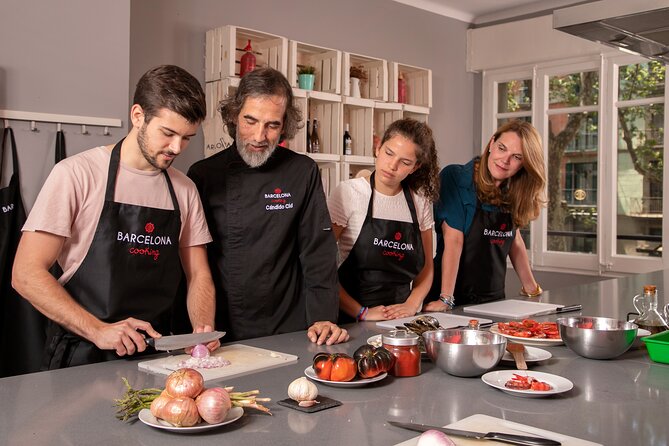
The meal begins with Manchego cheese, cured meats, and olives. This is simple food, but it gives you a proper Spanish starting point while the cooking gets organized. It also works well with the wine served throughout the class.
Tomato bread, or pa amb tomàquet, is another straightforward dish that rewards good ingredients. It is not a complicated recipe, which makes it useful for home cooks. You learn how a few basic elements can work when the bread, tomato, olive oil, and seasoning are treated with care.
The two Mediterranean tapas add the more active part of the early menu. The supplied examples mention dishes such as gazpacho and Spanish omelette in classes led by Juan, though the listed sample menu only identifies them as two Mediterranean tapas. That means you should expect the tapas selection to follow the school’s menu for the day rather than assume those exact dishes will appear.
This is a good place to pay attention to technique. The value of a cooking class is not only eating what you make. It is learning small decisions you can repeat at home, such as how far to cook an ingredient, how to balance seasoning, or why a step matters. The class places emphasis on those explanations, so you are not left copying instructions without understanding them.
Seafood paella as the main event
The centerpiece is a seafood paella. For many people, this is the reason to book the experience, and the class gives you the chance to see the dish from start to finish.
Paella can look simple on a menu, but the result depends on timing, heat, stock, rice, and restraint. A good class helps you understand the sequence rather than treating the pan as a mystery. You work with the ingredients chosen at the market, then follow the chef’s guidance as the dish comes together.
Do not expect to prepare an individual paella entirely by yourself. This is a group class, so some tasks may be shared or assigned around the cooking stations. The small group limit helps, but the experience is still communal. If you want a private chef lesson with complete control of your own pan, this may feel less tailored.
The finished paella is served as part of the meal, along with the earlier courses. The portions are described as generous, so arrive ready to eat. This is not a short tasting with a few bites. You receive the prepared dishes and snacks as part of the included meal.
More Paella Cooking Classes in Barcelona
- Barcelona Paella Cooking Class with Market Visit, Tapas & Sangria
★ 5.0 · 2,531 reviews - Barcelona Food Tour: Tapas, Paella, Sangria & 8+ Local Tastings
★ 5.0 · 1,275 reviews - Barcelona Culinary Experience: Paella & Tapas Cooking Class
★ 5.0 · 189 reviews - Barcelona Private Food Tour: Tapas, Paella & 8+ Food Tastings
★ 5.0 · 164 reviews
Unlimited wine and a glass of cava
Premium Spanish wines begin flowing once the cooking starts. The package includes unlimited wine from the family’s private vineyards in Rioja and Ribeira Sacra, as well as a glass of cava. Bottled water is also provided.
This inclusion changes the value calculation. At $119.09, the price is not low for a three-hour cooking class, but the cost covers the market visit, instruction, ingredients, apron, food, unlimited premium wine, water, and cava. If you would normally pay for several glasses of wine with a central Barcelona meal, the package may compare well.
Still, the wine should not be the only reason you book. The class is built around cooking and shared eating, with alcohol as a major part of the social atmosphere. If you do not drink, the price may feel harder to justify because the package includes an unlimited amount you will not use. Tips are not included, so plan for that extra cost if you choose to leave one.
The wine also means you should think about the rest of your day. The class begins at 10:00 a.m. and ends around 1:00 p.m. Drinking throughout a morning activity may not suit everyone. You can pace yourself, drink water, and treat the wine as an optional part of the experience rather than a challenge.
Hand-torched Catalan cream at the finish
Dessert is Catalan cream, the local cousin of crème brûlée. The final step is hands-on: you use a torch to caramelize the top of your own portion.
That small finishing ritual gives the class a satisfying close. You have shopped for the ingredients, prepared several dishes, eaten the meal, and then handled one last technique at the table. It is also a fun detail for a birthday or special occasion, though no formal celebration package is described.
The torch experience may be the moment children or first-time cooks remember most, but the class is not specifically described as child-focused. Since wine is central and the meal includes several cooking tasks, adults and older participants are likely to get the most from the full format.
What the three hours really include
The schedule is compact:
- 10:00 a.m.: Meet at Barcelona Cooking and visit La Boqueria.
- 10:45 a.m.: Return to the kitchen, put on an apron, and begin cooking.
- 12:45 p.m.: Sit down for the meal and finish with hand-torched Catalan cream.
- Around 1:00 p.m.: End back at the meeting point.
The timing leaves little wasted space. You get a market visit, cooking instruction, a multi-course meal, wine, and dessert within about three hours. That makes the experience easy to fit into a morning or early afternoon in Barcelona.
The end point is the same as the start, at La Rambla 58. You can continue exploring Las Ramblas, the Gothic Quarter, or nearby parts of Ciutat Vella after class. The central location is one of the practical strengths of the experience. You do not need to spend extra time reaching a distant cooking school.
One caution: the material describes the class as an evening experience in some participant accounts, while the supplied schedule begins at 10:00 a.m. Confirm the exact departure time for your chosen booking. The listed schedule is the clearest guide, but class times can vary by date.
What the teaching style adds
The strongest part of this activity is the combination of instruction and company. The class is meant to bring strangers together around shared work, shared plates, and wine. That can be ideal for solo visitors and couples who want an easy way to meet people without joining a formal sightseeing group.
Juan is described as funny and energetic, with a habit of keeping the class moving and the wine topped up. Sonia’s approach is clear and practical, with cooking tips that help the recipes make sense. Renata is praised for giving a detailed lesson and for explaining Barcelona cooking with warmth.
You should not expect the same chef every time, so the personality of your instructor is not guaranteed. But the teaching structure remains useful: preparation, explanation, cooking, and a shared meal. The aim is to help you understand the dishes, including the reason behind each step.
That last point matters. Many cooking classes show you what to do but rush past why it works. Here, the instruction is intended to make the recipes easier to repeat at home. You leave with food in your stomach and ideas you can use in your own kitchen.
Is $119.09 a fair price?
At $119.09 per person, this is a splurge rather than a budget activity. The fair question is not whether it costs more than a simple lunch. It does. The question is how much you value the combination of food, instruction, market access, location, and wine.
The price includes all ingredients, an apron, bottled water, the full prepared meal, snacks, unlimited premium Spanish wine, and cava. You also receive roughly three hours of guided activity. For someone who would otherwise pay for a market visit, a long lunch, and several glasses of wine, the package can offer reasonable value.
It is less attractive if you are mainly looking for a cheap paella meal, do not drink, or prefer a quiet restaurant. You are paying for participation and a social setting, not only for the final plate.
The activity is booked well ahead on average, around 94 days before the date. That suggests you should not leave it until the last moment if the schedule matters to you. Confirmation arrives at booking, and free cancellation is available up to 24 hours before the start time. Changes or cancellations inside that window are not refunded.
Who should book this class?
I would recommend it to you if you want food to be part of your sightseeing, enjoy meeting people, and like the idea of learning a few dishes rather than simply ordering them. It works particularly well for couples, small groups of friends, solo visitors, and anyone marking a birthday or special trip.
It is also a good choice for cooks at different levels. Beginners get step-by-step help, while experienced home cooks can pick up new methods or ingredient ideas. The class is not only for people who have never touched a pan.
Think twice if you need a fully private lesson, avoid alcohol, dislike group activities, or want a calm morning. The unlimited wine and group format are central to the mood. You should also leave room in your schedule for a substantial meal, rather than treating this as a quick pre-lunch activity.
FAQ
Where does the cooking class begin?
It begins at Barcelona Cooking, La Rambla 58, Ciutat Vella, 08002 Barcelona, Spain.
How long does the experience last?
The activity lasts approximately three hours. The supplied schedule runs from 10:00 a.m. until about 1:00 p.m.
What happens at La Boqueria?
You visit La Boqueria with your chef to source fresh seafood and produce for the five-course menu while learning local shopping tips.
What food will I prepare?
The sample menu includes Manchego cheese, cured meats and olives, tomato bread, two Mediterranean tapas, seafood paella, and Catalan cream.
Is wine included?
Yes. Unlimited premium Spanish wines, a glass of cava, and bottled water are included.
How large is the group?
The activity has a maximum of 12 people.
Is cancellation free?
You can cancel for a full refund up to 24 hours before the experience starts. Cancellations or changes made less than 24 hours before the start time are not refunded. If poor weather or an insufficient minimum group causes cancellation, you are offered another date or experience, or a full refund.
Should you book Premium Paella and Tapas Feast?
Book this class if you want a social food experience with real participation, not just a restaurant meal. The La Boqueria shopping stop, small group, generous wine policy, and hand-torched dessert give it plenty of personality, while the central La Rambla location makes the timing easy to use.
I would skip it if the alcohol package does not appeal to you or if $119.09 feels too high for a group cooking class. For everyone else, especially food-minded visitors with a free morning in Barcelona, it offers a satisfying mix of market culture, practical cooking, local dishes, and a very full lunch.
More Tapas and Wine Tours in Spain
- Barcelona: Food Walking Tour with Tapas and Wine
★ 4.9 · 2,180 reviews - Barcelona Tapas Walking Tour: Food, Wine & History
★ 4.5 · 1,928 reviews - From Barcelona: Montserrat Half-Day Wine and Tapas Trip
★ 4.8 · 1,918 reviews - Barcelona Gothic Quarter Tapas & Taverns Food & Wine Tour
★ 5.0 · 1,470 reviews
More Tapas and Wine Tours in Barcelona
- Barcelona Tapas and Wine Experience Small-Group Walking Tour
★ 5.0 · 5,804 reviews - Montserrat with Black Madonna & Medieval Winery with Tapas/Lunch
★ 5.0 · 5,209 reviews - Barcelona: Montserrat and Winery Tour with Tapas or Lunch
★ 4.8 · 4,695 reviews - Barcelona: Tapas Walking Tour with Food, Wine, and History
★ 4.8 · 4,261 reviews
Recently reviewed in Barcelona
- Barcelona Morning Tapas Crawl by Food Tour★ 5.0 · 45 reviews
- Wine & Cava Penedes Tour: Wineries, Wine Tasting and Tapas★ 5.0 · 5 reviews
- Barcelona Sailing Experience: Spanish Tapas and Premium Open Bar★ 4.5 · 34 reviews
- Tapas Bike Tour Barcelona★ 5.0 · 8 reviews
- Barcelona Tapas & Wine Private Tour in Traditional Taverns★ 4.5 · 60 reviews
- Barcelona’s Most Terrific of Tapas Tours in the Gothic quarter★ 5.0 · 2 reviews
- Tapas & Sidecar Motorcycle Barcelona Tour★ 5.0 · 26 reviews
- Tapas and Wine Walking Tour in Barcelona★ 5.0 · 47 reviews
Paella Cooking Classes, compared.
Barcelona Paella Cooking Class with Market Visit, Tapas & Sangria
Read our review →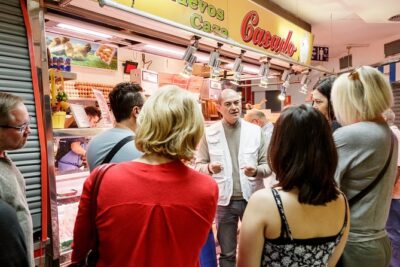
Spanish Cooking Class Paella Tapas and Sangria in Madrid
Read our review →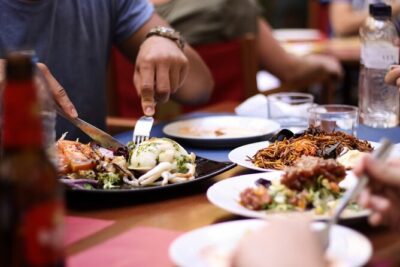
Barcelona Food Tour: Tapas, Paella, Sangria & 8+ Local Tastings
Read our review →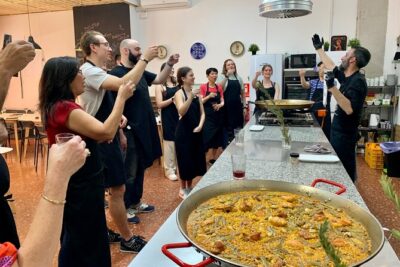
Valencian paella cooking class, tapas and visit to Ruzafa market.
Read our review →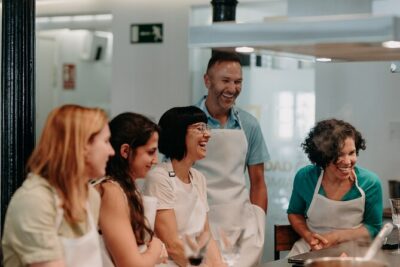
Madrid Tapas & Paella Cooking Experience with Local Market Visit
Read our review →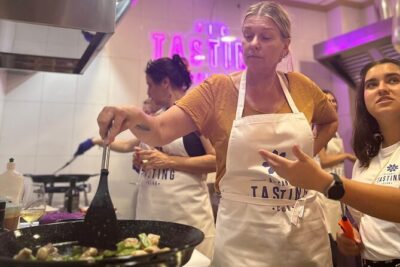
Alicante Paella Cooking Class, Tapas, Drinks and Marketplace
Read our review →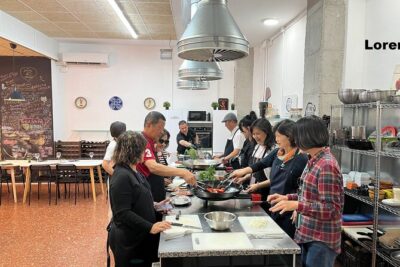
Seafood paella cooking class, tapas and visit to Ruzafa market.
Read our review →