
REVIEW · PAELLA COOKING CLASSES
Paella & Sangria Class with Tapas and Market Visit
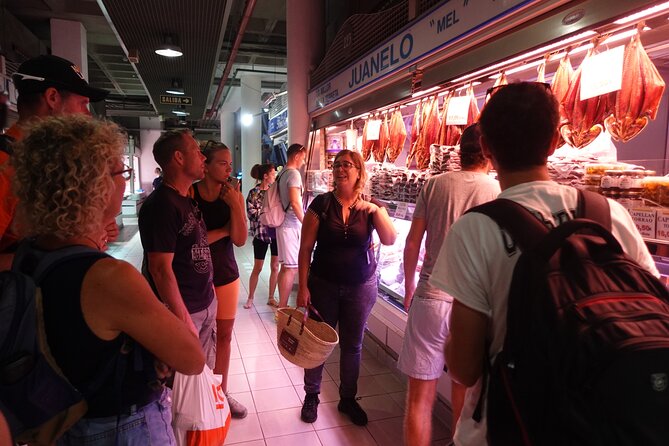
Alicante’s best food lesson starts before you reach the kitchen. At the Central Market, guide Federico, also called Fred or Freddy by some participants, introduces you to local ham, olives, seafood, salted fish, vegetables, and other ingredients before you help choose what goes into lunch. I like that this makes paella more than a recipe. You learn how Alicante shops and cooks.
I also like the hands-on format. You help prepare the broth, make the salmorreta sofrito, mix the sangria, and take turns cooking. The choice of seafood, meat, or vegetarian paella is useful for mixed groups. The main caution is that paella here is rice-led, not a giant heap of seafood. If you expect large shrimp and lots of fish in every serving, you may find the portions modest.
Key points at a glance
- The Central Market comes first: Shop for ingredients with your guide at Alicante’s main indoor market.
- You cook in a working restaurant kitchen: This is a real local food setting rather than a staged demonstration room.
- Choose your paella style: Seafood, meat, and vegetarian versions are available.
- Everyone gets a task: Prepare ingredients, make sangria, help with the cooking, and sit down for the finished meal.
- The group is kept fairly small: The stated maximum is between 15 and 16 people, depending on the booking information.
- The food is traditional and rice-focused: The broth and sofrito carry much of the flavor, while tapas add ham, sausage, olives, salad, and salted fish.
Starting at Alicante’s Central Market
Meet at Plaza 25 de Mayo, outside the Mercat Central d’Alacant. This location is central and near public transportation, which makes the class easy to fit into a morning or afternoon in the city.
The market visit is not filler before the cooking begins. It is the first lesson. You walk through the stalls with your guide and look at the ingredients used in the meal. Depending on the day’s selection, that can include seafood, meat, vegetables, fruit, wine, olives, Iberian ham, and local cured sausage.
I especially like this part for travelers who want a better grasp of Spanish food beyond restaurant menus. You learn how local ingredients fit into daily cooking, not just how to pronounce them. One guide has explained the differences among shrimp from the Alicante area, squid and cuttlefish, the brining of olives, and the qualities of Iberian ham.
The market also gives you a sense of scale and routine. You are not simply handed premeasured ingredients in a classroom. The group sees food being selected and purchased, then carries that connection into the kitchen.
Allow yourself to stay with the group. A market is full of distractions, and it would be easy to pause at a stand while the guide moves on. The market portion can last about an hour, so comfortable shoes are sensible.
More Paella Cooking Classes in Spain:
- Barcelona Paella Cooking Class with Market Visit, Tapas & Sangria
★ 5.0 · 2,531 reviews - Spanish Cooking Class Paella Tapas and Sangria in Madrid
★ 5.0 · 1,340 reviews - Barcelona Food Tour: Tapas, Paella, Sangria & 8+ Local Tastings
★ 5.0 · 1,275 reviews
From market stalls to a working kitchen
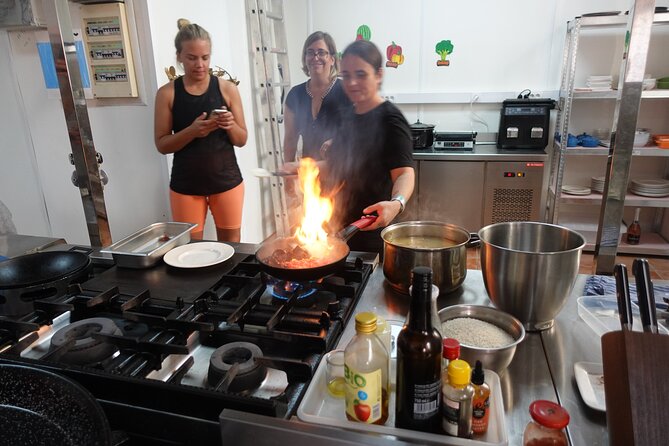
After shopping, the group walks about three blocks to a local restaurant kitchen. The setting matters. You are not placed in a polished cooking studio built only for tourists. You work inside a restaurant where locals eat, with a professional chef and a host guiding the session.
The exact kitchen team can vary, but Fred or Federico is frequently the host, and Maria has also led the cooking side. Fred is praised for clear English, humor, patience, and his ability to keep a mixed group involved. He can switch between English and Spanish while explaining ingredients and techniques.
The group size makes a real difference here. The maximum is listed as 15 people in one place and 16 in another, so confirm the current figure when booking. Smaller sessions of five to eight people are especially comfortable because everyone gets more time with the ingredients and cooking pans.
A group of 12 or more can still work, but you should expect to share tasks and take turns. This is an interactive class, not a private lesson. That social element is part of the appeal, though it means the pace depends on the group.
Learning paella through broth and salmorreta
The core lesson is not simply tossing rice, seafood, and vegetables into a pan. You work through the building blocks of paella, including the broth and salmorreta.
Salmorreta is the sofrito base that gives Alicante-style rice dishes much of their character. The group helps prepare it and learns how it fits into the final dish. You also take part in preparing the stock, which is especially important for seafood paella.
This approach explains why the class emphasizes the rice. The cooking team does not try to make the dish look extravagant by adding large quantities of seafood or meat. The flavor comes from the seasoned broth, the sofrito, and the cooking of the rice.
That may differ from the paella served at some restaurants outside Spain, where a large pile of toppings does most of the visual work. Here, the ingredients are treated as part of a balanced rice dish. Local Mediterranean shrimp can be smaller than ocean shrimp, and cuttlefish or sepionet may not look familiar if you are used to larger pieces of squid.
One disputed experience involved a participant who expected more seafood. The operator explained that the local shrimp were fresh from the bay, that two were provided per person, and that smaller sepionet can be more prized than ordinary squid. You do not need to agree with every cooking choice, but you should know the style before booking: this is traditional Alicante paella, not an all-you-can-eat seafood platter.
Choosing seafood, meat, or vegetarian paella
You can choose among seafood, meat, or vegetarian paella. That flexibility is helpful for couples and families who do not all eat the same way.
The seafood option is the most closely tied to the market visit and the preparation of fish stock. You may work with shrimp, squid, cuttlefish, or similar local ingredients selected for the class. The exact items can change according to availability.
The meat version gives you a different look at Spanish rice cooking, with ingredients linked to the surrounding mountains and local cured products. The vegetarian option avoids the seafood and meat components, though the precise vegetables depend on what is available.
Tell the provider your preference when booking or as early as possible. The experience is designed to offer a choice, but the kitchen still needs to organize ingredients for the group.
The choice is not merely a dietary checkbox. It lets you compare how the broth, sofrito, and rice work with different main ingredients. If you are curious about Spanish cooking, tasting the contrast between versions can be one of the most useful parts of the class.
More Sangria and Tapas Tours in Spain:
- Valencian Paella Cooking Class, Tapas & Sangria – Evening
★ 5.0 · 303 reviews - Real Paella Cooking Class – Market Visit & Sangría Workshop
★ 5.0 · 291 reviews - Madrid: Paella & Sangria Classes- Seafood, Chicken & Vegan option
★ 5.0 · 265 reviews - Alicante: Paella & Sangria Class with Tapas and Market Visit
★ 4.8 · 243 reviews
Tapas, sangria, and the social meal
While the paella cooks, you prepare fresh sangria and enjoy tapas. The extra food can include Iberian ham, local sausage, olives, crisps, and a tomato salad with salted fish. Fresh fruit may also be served.
This spread helps turn the class into a full meal. You are not waiting beside a pan with nothing to do. The tapas give you a chance to sample Spanish products in smaller portions while the rice finishes.
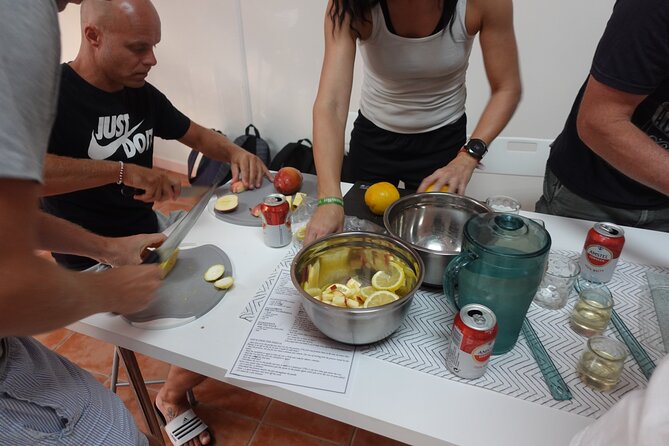
The sangria is made with wine, orange juice, soda, syrup, liqueur, and fruit. If you prefer a strong glass of wine, this may taste light or sweet. That is not a mistake in the recipe. The point is to make sangria, not to serve straight wine.
Alcohol is available only to people aged 18 or older. The activity is offered in English, but the market is also a good place to pick up a few Spanish food words from the guide.
I like the shared rhythm of this part. One person may prepare fruit, another may help with the salad, and others take turns at the paella. The format encourages conversation without making you perform for the group.
How much participation do you really get?
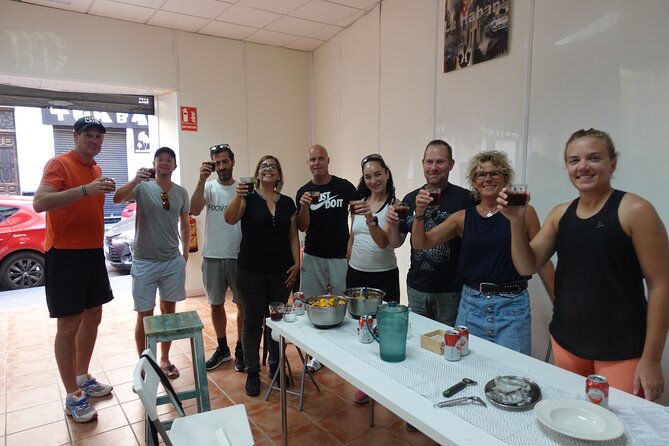
The class is genuinely hands-on, but it is not a private cooking lesson where you personally prepare every stage from start to finish. The group shares jobs.
You may chop ingredients, help prepare seafood, handle the sofrito, mix the sangria, or assist with the stock. One participant described using a blowtorch to cook fish, while another took on the preparation of dried fish. These details show that the session can include more than basic stirring and pouring.
The host explains each stage and keeps the cooking organized. Fred’s teaching style is often described as patient and lively, with enough humor to keep beginners comfortable. You do not need advanced kitchen skills.
The social side is a major part of the value. You arrive as separate couples, families, or solo participants and spend several hours working toward one meal. If you enjoy meeting people while you eat, this is a strong match. If you want silence, privacy, or control over every step, a private class would suit you better, though this experience is priced far below most private culinary sessions.
Price, timing, and what the $59.26 covers
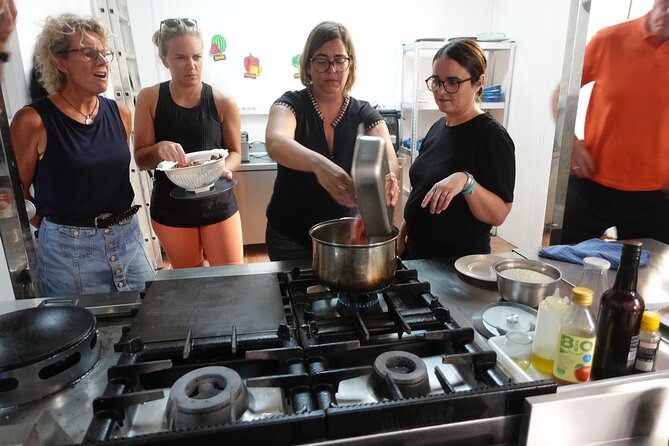
At $59.26 per person, the price is reasonable for a three-and-a-half-hour food experience that includes a market visit, instruction, cooking, tapas, sangria, and the meal you prepare.
The value is strongest if you count the lesson and market orientation, not just the final plate. You receive an introduction to Alicante ingredients, guidance from a host and chef, several shared dishes, and recipes to take home. You also get a meal in the middle of a sightseeing day.
The price becomes less attractive if you mainly want to eat a large seafood lunch. Paella portions are built around rice and traditional balance. The class does not promise a luxury seafood tasting or an unlimited supply of ingredients.
The booking pattern suggests that people often reserve about 19 days ahead. That is a useful planning clue for a popular date, especially if you need a particular paella style or want to attend with a larger group.
The activity lasts approximately three hours and 30 minutes. Keep the rest of your schedule flexible, since shopping, cooking, and eating all happen as one continuous experience. It ends back at Plaza 25 de Mayo.
Who will enjoy this Alicante cooking class?
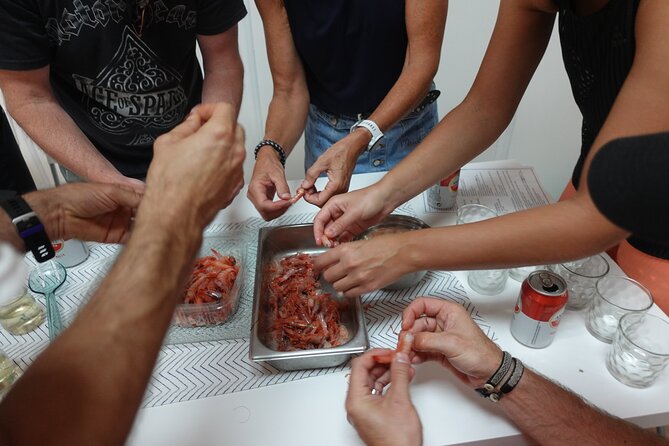
I would recommend this class to first-time visitors who want a practical introduction to Alicante food. You leave with more context for the market, the ingredients, and the local style of paella than you would get from simply ordering a dish at a restaurant.
It also suits:
- Couples looking for a social half-day activity
- Families with older children who can take part in food preparation
- Solo visitors who enjoy meeting people over a shared meal
- Beginner cooks who want clear guidance
- Food lovers interested in Spanish ham, olives, seafood, and rice dishes
- Groups with different food preferences, thanks to the three paella choices
It is less suited to anyone expecting a quiet, private meal or a large amount of seafood. It may also disappoint you if you dislike group activities or do not drink alcohol, though the cooking and food remain the main focus.
The experience requires walking through the market and then to the kitchen. You should be comfortable standing and moving around for much of the session.
Practical booking advice for a smoother class
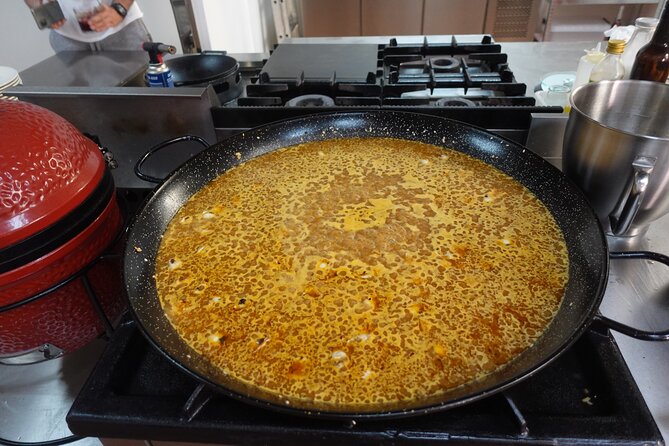
Meet at Plaza 25 de Mayo rather than going directly to a restaurant. The market visit is the first scheduled stop, and arriving at the kitchen would mean missing an important part of the experience.
Check your confirmation for the current maximum group size and tell the provider your paella preference in advance. If you have a food restriction, ask before booking, since the available choices are specifically described as seafood, meat, and vegetarian.
The activity is offered in English and uses a mobile ticket. Confirmation is issued at booking. Free cancellation is available if you cancel at least 24 hours before the start time. Changes or cancellations inside that window are not accepted, and the class may be rescheduled or refunded if its minimum number is not reached.
Because the group may include up to 15 or 16 people, earlier booking gives you a better chance of finding the date you want. A smaller group, if available, will make market shopping and kitchen participation easier.
Should you book the paella and sangria class?
Yes, if you want to understand Alicante through its food rather than simply eat a finished dish. The market visit, salmorreta lesson, shared cooking, tapas, and relaxed meal give you a useful look at how local ingredients become a traditional rice dish.
Book with realistic expectations. The paella is rice-centered, the seafood portions are not oversized, and the sangria includes juice and soda by design. For about $59.26, you are paying for a guided food experience and a meal, not a restaurant feast.
I would choose this class early in an Alicante stay. It gives you ideas for what to order later, names ingredients you might see again, and makes the Central Market easier to enjoy on your own. If Fred or Federico is leading the session, expect a lively host who keeps the group involved, but the quality still depends partly on your group size and cooking preferences.
FAQ
Where does the paella and sangria class begin?
The class begins at Plaza 25 de Mayo, outside the Mercat Central d’Alacant in Alicante.
Where does the activity finish?
The activity ends back at the meeting point at Plaza 25 de Mayo.
How long does the experience last?
The class lasts approximately three hours and 30 minutes.
What paella choices are available?
You can choose seafood, meat, or vegetarian paella.
Is the class conducted in English?
Yes. The experience is offered in English.
How old must you be to drink alcohol?
You must be at least 18 years old to consume alcohol during the activity.
What is the cancellation policy?
You can cancel for a full refund up to 24 hours before the experience begins. Cancellations or changes made less than 24 hours before the start time are not accepted for a refund.
More Market and Tapas Tours in Spain
- Valencian paella cooking class, tapas and visit to Ruzafa market.
★ 5.0 · 828 reviews - San Sebastian Pintxo Food, Wine & Market Foodie Tour(Small Group)
★ 5.0 · 621 reviews - Madrid Tapas & Paella Cooking Experience with Local Market Visit
★ 5.0 · 432 reviews - Seafood paella cooking class, tapas and visit to Ruzafa market.
★ 5.0 · 328 reviews
Recently reviewed in Spain
- Barcelona : Gothic, Tapas, Churros & Vermouth★ 5.0 · 65 reviews
- City of Arts & Sciences Tour with Rooftop Tapas & Wine★ 5.0 · 41 reviews
- Midday market and tapas tour of Zaragoza★ 5.0 · 24 reviews
- Wine Tasting and Tapas in the ancient Town of Zaragoza★ 5.0 · 66 reviews
- Evening traditional tapas walking tour in old Zaragoza center★ 5.0 · 19 reviews
- Valencia: Wine Tasting and Tapas Experience★ 4.5 · 38 reviews
- Zaragoza: Evening Tapas Walking Tour in the Old Town★ 4.9 · 37 reviews
- Seville: Tapas Tour Across the River in Triana★ 4.8 · 48 reviews
Paella Cooking Classes, compared.
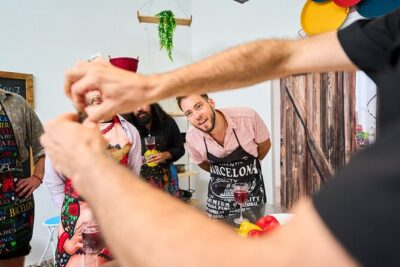
Barcelona Paella Cooking Class with Market Visit, Tapas & Sangria
Read our review →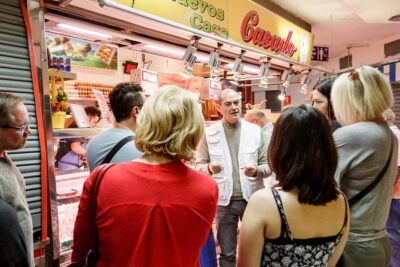
Spanish Cooking Class Paella Tapas and Sangria in Madrid
Read our review →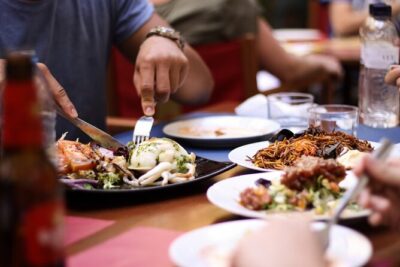
Barcelona Food Tour: Tapas, Paella, Sangria & 8+ Local Tastings
Read our review →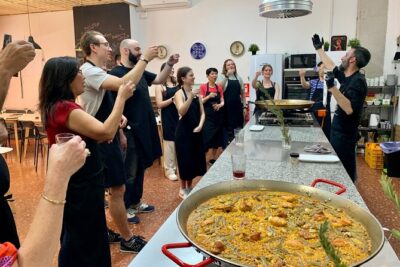
Valencian paella cooking class, tapas and visit to Ruzafa market.
Read our review →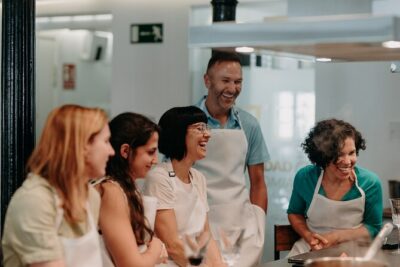
Madrid Tapas & Paella Cooking Experience with Local Market Visit
Read our review →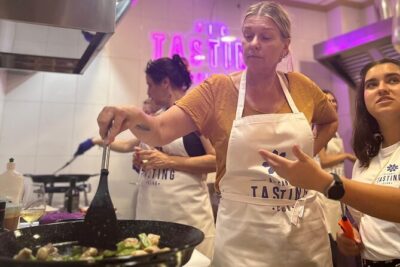
Alicante Paella Cooking Class, Tapas, Drinks and Marketplace
Read our review →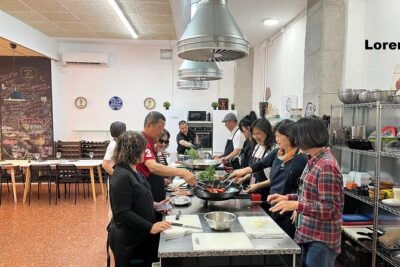
Seafood paella cooking class, tapas and visit to Ruzafa market.
Read our review →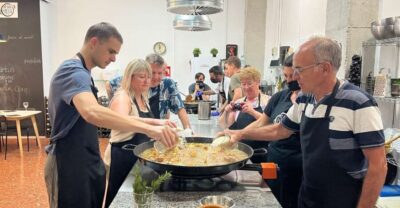
Evening Guided Paella Workshop, Tapas, and Drinks
Read our review →Browse the lists this tour appears in