
REVIEW · TAPAS AND WINE TOURS
Madrid: Not Just Another Tapas & Wine Tour by Eating Europe
Madrid’s best food moments often happen in old bars with a short menu and a long memory. This tour takes you into centennial tapas houses, a market, and the old-town streets around Plaza Mayor, with five food stops and three local drinks spread over about three and a half hours.
I like two things right away: you get to do more than simply eat, since jamón slicing, food origins, and Madrid history are part of the walk; and the route covers famous central sights without turning into a landmark checklist. The possible catch is group size. A maximum of 12 keeps things manageable, but a very small group can feel quiet if you hoped for a lively social evening.
Key points at a glance
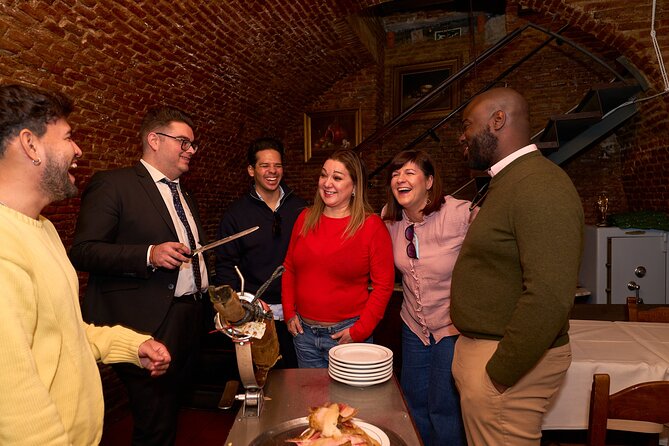
- Slice your own jamón ibérico: Learn the basics at a centennial underground cellar while pairing ham with wine or cava.
- Skip the line for a calamari sandwich: This Madrid classic is served crisp, hot, and fast.
- Taste five food stops: Expect mushrooms, rice, seafood, Iberian ham, chocolate, and other Spanish bites.
- Walk through old Madrid: The route links Mercado de San Miguel, Plaza Mayor, Puerta del Sol, and Plaza de Ramales.
- Meet local guides: Carolyn, Sirca, Adolfo, and Yvonne are praised for combining food knowledge with city stories.
- Keep the group small: The tour accepts no more than 12 people, though low-season departures may be much smaller.
Why this food walk feels different from a standard tapas crawl
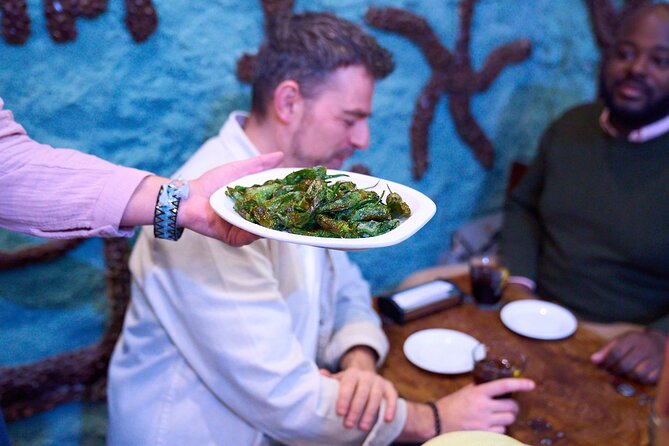
A basic tapas crawl can leave you full but still unsure what you actually ate. This experience tries to connect each bite with Madrid’s customs, neighborhoods, and old eating places.
The tour begins around Calle Mayor and Plaza de Ramales, then moves through the historic center. You are not simply seated in one restaurant for a long meal. Instead, you walk between stops, tasting specialties in places selected for their age, character, or connection to Madrid food culture.
That format matters. A calamari sandwich tastes better when you understand why it became such a central Madrid snack. A slice of Iberian ham becomes more memorable when you have tried to cut it yourself. Even the drinks have a role, from Rioja and vermouth to cava and a local wine pairing.
The guides are a major part of the experience. Carolyn is repeatedly praised for balancing food, architecture, and history. Sirca is noted for her warm manner and clear explanations. Adolfo is especially good at moving a group through busy streets and crowded entrances. Yvonne is described as strong on both Madrid food and the city itself.
The names matter because this tour is guide-led rather than self-guided. Your experience will depend partly on who leads your departure, but the repeated strengths are clear: friendly hosting, solid English, and an easy way of explaining local customs.
More Tapas and Wine Tours in Madrid
- Madrid Tapas & Wine Tasting Walking Tour – Small Group Local Bars
★ 5.0 · 3,644 reviews - Madrid: Tapas & Wine Tasting Tour with Local Guide
★ 4.8 · 2,171 reviews - Madrid Tapas & Wine Tour with Rooftop Views and Local Guide
★ 5.0 · 2,047 reviews
The opening stop on Calle Mayor, 84
The first listed stop is at Calle Mayor, 84, near the center of the route. This area puts you close to the old city’s most useful sightseeing territory, with short walks between major plazas and historic streets.
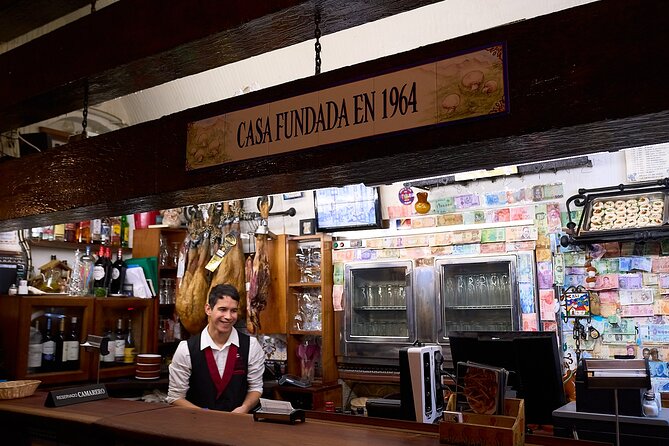
The food stop associated with the tour is Ciriaco, one of Madrid’s 15 centennial establishments. The setting is part of the appeal. Rather than beginning in a modern dining room designed for large groups, you start in a place tied to the city’s older restaurant culture.
For an evening tour, expect Iberian ham and tomato toast with wine or cava. Morning departures pair the food with coffee instead. That distinction is useful when booking, since the mood and drink selection will change with the time of day.
Ciriaco is also where you learn to slice jamón ibérico. This is a hands-on touch, not just a plate placed in front of you. You should not expect a full lesson in professional ham carving, but trying the technique helps you understand why thin, even slices matter.
Mesón del Champiñón and the pleasure of a simple mushroom
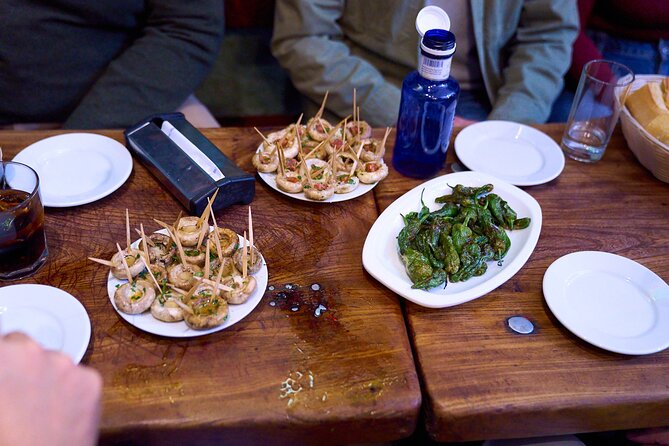
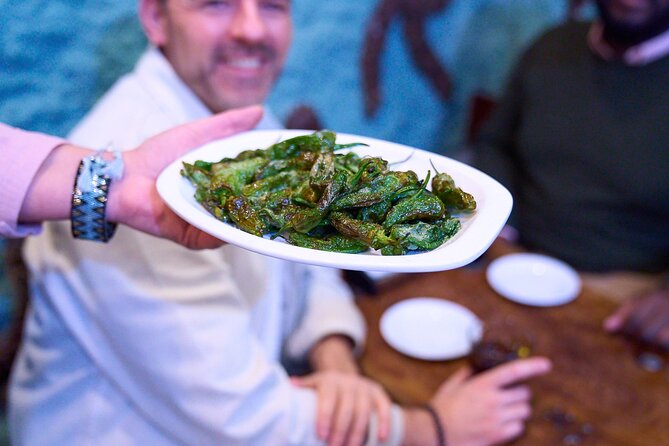
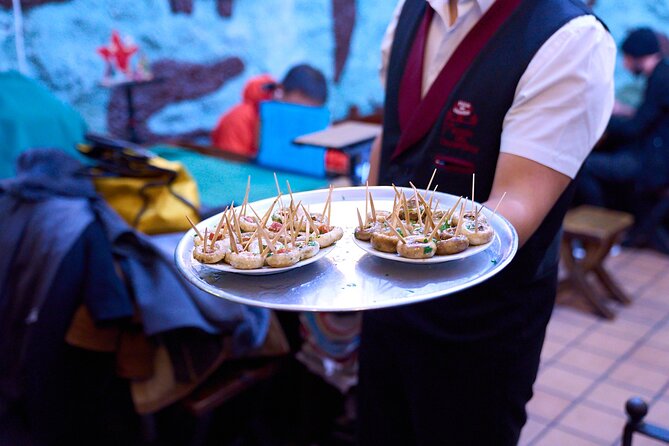
The next stop, Mesón del Champiñón, focuses on mushrooms. The name points directly to the specialty, and the dish has become one of the memorable parts of the route.
This is a good example of why the tour does not need expensive ingredients at every stop. A well-prepared mushroom can say plenty about Spanish bar food: a small portion, a strong flavor, and a dish that works well with a drink.
The underground, brick-lined setting associated with several of the older stops adds atmosphere without requiring a formal meal. If you like old taverns and compact tapas counters, this part should feel very Madrid. If you prefer spacious restaurants and long pauses between courses, the close quarters may feel less comfortable.
La Campana and Madrid’s famous calamari sandwich
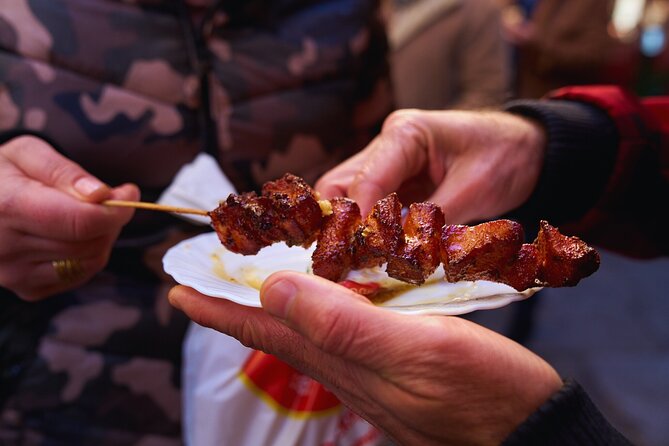
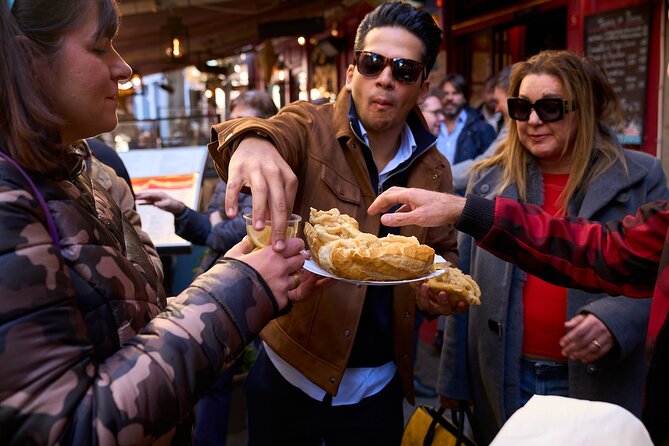
La Campana is the stop for a calamari sandwich, one of the capital’s classic quick meals. The idea is wonderfully plain: fried squid tucked into bread. The appeal comes from the contrast between crisp coating, tender seafood, and soft bread.
The tour includes skip-the-line access, which is valuable here. La Campana is popular, and standing in line for one sandwich can take more time than the food itself deserves. With the group’s arrangements already made, you can focus on the snack and the explanation rather than queue management.
This is also a useful reminder that Madrid food is not limited to the dishes most associated with coastal Spain. Calamari sandwiches are a city tradition, and eating one in the old center gives the stop a strong local identity.
The drawback is that this is a small tasting rather than a full sandwich lunch. You are sampling several foods in one outing, so you should arrive ready to eat but not expect large portions at each address.
More Tapas and Wine Tours in Spain
- Madrid: Food & Wine Tour with 10 Tapas & 4 Drinks Included
★ 4.9 · 984 reviews - Madrid Historic Centre Food Tour with Authentic Tapas & Wines
★ 5.0 · 814 reviews - Madrid Guided Food Tour with Tapas and Spanish Wine
★ 4.9 · 773 reviews - Madrid: Guided Tapas and Wine Tour with Rooftop Views
★ 4.8 · 608 reviews
La Trucha and a modern turn on Spanish rice
At La Trucha, the tour moves beyond the familiar version of paella and introduces a different take on a classic rice dish. The exact preparation can vary, and the supplied details do not name the specific recipe, so you should think of this as a guided taste rather than a full paella meal.
That distinction is useful. Many visitors arrive in Spain expecting paella everywhere, even though rice dishes vary widely by region, restaurant, and cooking style. This stop gives the guide a chance to explain how a familiar Spanish idea can be adapted without simply repeating the most famous version.
The tour’s food sequence benefits from this change of pace. You move from ham and toast to mushrooms, calamari, and rice, so the menu does not feel like five versions of the same tapa. The guide can also explain how the dish fits into Madrid’s broader food culture.
Mercado de San Miguel and the old center
Mercado de San Miguel is one of the route’s best-known locations. It is a central food market with many stalls and plenty of visual energy, though this tour does not present it as a free-for-all tasting session.
Instead, you pass through as part of the walking route between food stops. That gives you a useful first look at one of Madrid’s most visited food halls without asking you to plan the whole market on your own. Your guide can point out what belongs to the tour and what you might want to return for later.
I would pay attention to the market’s role rather than expecting a long stop. The tour includes five food stops, and the schedule has to keep moving. Mercado de San Miguel is more useful here as part of the city walk and food context than as the main meal.
From the market, the route continues through the Literary Quarter toward Plaza Mayor. This is where the experience works as a sightseeing walk as well as a tasting tour. You get food, stories, and a practical introduction to streets you may want to revisit.
Puerta del Sol and Plaza Mayor between bites
Puerta del Sol and Plaza Mayor are not separate attractions with long guided visits on this tour. They are landmarks along the walking route, giving you a sense of how Madrid’s old center fits together.
Puerta del Sol is a useful orientation point, especially early in a Madrid stay. Plaza Mayor gives the route a grander setting, with arcades and a broad historic square that has long served as one of the city’s central gathering places.
The guide’s commentary is important here. Several guides are praised for explaining Madrid’s history and architecture while keeping the focus on food. That balance prevents the tour from becoming either a dry lecture or a series of disconnected snacks.
You will still need separate time if you want detailed visits to nearby attractions. The tour is designed to introduce the area, not replace a full sightseeing day.
Plaza de Ramales and the return to the meeting point
The route ends back at Plaza de Ramales, the starting area. The meeting point is listed as Pl. de Ramales, 1, in central Madrid, and the final stop is also Plaza de Ramales.
This makes the logistics simple. You do not need to arrange a taxi from a distant neighborhood or learn a new part of the city after eating and drinking. The route stays in the central area, and public transportation is nearby.
You should arrive at the stated meeting point with enough time to find the guide. Hotel pickup and drop-off are not included, so you are responsible for reaching Plaza de Ramales and making your own way home afterward.
What you eat and drink over three and a half hours
The food lineup is broad enough to give you a useful introduction to Madrid rather than a single specialty:
- Iberian ham with tomato toast
- A calamari sandwich
- Stuffed mushrooms
- A different take on a Spanish rice dish
- Handmade chocolates and hot chocolate
- Additional tapas and regional bites depending on the stop and departure
Drinks include three local pours, with Rioja, vermouth, cava, or other local selections appearing in the food pairings. One tasting described in the experience materials includes vermouth, garlic shrimp, a special wine, and sipping chocolate, though the exact menu may vary.
The chocolate finish is a smart choice. Handmade chocolates and a hot chocolate drink provide a clear ending after savory tapas. You may also encounter violet ice cream, which has been part of at least one guide’s food selection.
Because the tour includes alcohol, pacing matters. The pours are part of tastings rather than a night of full glasses, but you should still plan for a food-and-drink experience. Morning tours use coffee at the first stop instead of the evening wine or cava arrangement.
Group size, guide style, and the social question
The maximum group size is 12. That is small enough for a guide to answer questions and keep everyone together across several food stops.
The group may be smaller, especially in the low season. A tiny group can feel almost private, which is helpful if you want direct conversation and more attention from your guide. It can also feel less social if you are traveling alone and hoped to meet a lively crowd.
That is the main consideration for solo visitors. The food quality and guiding do not depend on having a large group, but the atmosphere does. Couples and friends will usually create their own easy conversation. Solo visitors should book this for the food, city orientation, and guide interaction first, not as a guaranteed way to find a dinner party.
The guide names associated with the experience include Carolyn, Sirca, Adolfo, and Yvonne. Carolyn receives particular praise for combining Madrid history with food explanations. Sirca is described as warm and passionate about local food. Adolfo is noted for handling busy evening streets with calm efficiency, while Yvonne is praised for explaining where dishes and drinks come from.
Is $117.35 a fair price?
At $117.35 per person, this is not a cheap way to grab tapas. You are paying for five arranged food stops, three local drinks, an English-speaking guide, the city walk, skip-the-line access for the calamari sandwich, and the convenience of not having to research old bars yourself.
The value improves if you are new to Madrid. You get a food introduction, a central walking orientation, and a list of places and dishes to revisit. Doing the same route independently could cost less, but you would need to find the right venues, work out what to order, manage lines, and make sense of the food without a guide.
The price makes less sense if you mainly want a large dinner. Portions are tasting portions, and the tour keeps moving. You are buying variety and context, not a three-course restaurant meal.
I think the strongest value comes from booking it near the beginning of your stay. You can use the route to get your bearings, learn what foods to look for, and return to the central neighborhoods with more confidence.
Practical fit for different kinds of visitors
This tour suits you best if you want:
- A first look at Madrid’s central food culture
- A mix of history, architecture, and eating
- Small portions across several traditional venues
- A guide who can explain local customs in English
- A walk that stays in the old center
- A group capped at 12 people
It may not suit you if you want a long, seated meal, a large and guaranteed social group, or extensive time at each landmark. People with strict dietary needs should confirm suitability before booking, since the supplied details do not list dietary substitutions.
Most people can participate, and service animals are allowed. The tour is near public transportation, but hotel pickup and drop-off are not part of the price.
Free cancellation is available up to 24 hours before the start time for a full refund. Changes or cancellations made less than 24 hours ahead are not accepted for a refund, and the activity requires a minimum number of participants.
Should you book Madrid: Not Just Another Tapas & Wine Tour?
Book it if you want Madrid explained through food rather than viewed only from a sightseeing bus. The combination of jamón slicing, a calamari sandwich, old taverns, chocolate, local drinks, and central landmarks gives you a useful first taste of the city.
I would especially recommend it for a first Madrid visit, couples, friends, and anyone who likes a guide with stories to tell. Solo visitors should consider the possible group dynamic, particularly in low season, but the small size can also bring more direct time with Carolyn, Sirca, Adolfo, Yvonne, or the guide assigned to your departure.
Skip it if you want a large dinner or a purely self-directed food crawl. For most people seeking a friendly introduction to Madrid’s traditional bars and central streets, the price is reasonable for the access, planning, and local explanation built into the three-and-a-half-hour route.
FAQ
How long does the Madrid food tour last?
The experience lasts approximately 3 hours and 30 minutes.
How much does the tour cost?
The listed price is $117.35 per person.
Where does the tour begin and end?
It begins at Pl. de Ramales, 1, Centro, Madrid, and ends back at the meeting point.
How many people can join the tour?
The maximum group size is 12 people. Departures can sometimes be smaller, especially during low season.
What language is the tour offered in?
The tour is offered in English with a local English-speaking guide.
What is included in the tour?
The experience includes five food stops, three local drinks, a local guide, a city and food guide, Rioja or other local drinks, jamón ibérico slicing, a calamari sandwich, a rice dish, handmade chocolates, and hot chocolate. Hotel pickup, drop-off, gratuities, and tips are not included.
Recently reviewed in Madrid
- Madrid: Flamenco Show with Tapas and Wine Tour★ 4.9 · 66 reviews
- Madrid by Night: Vintage Bike Tour Highlights/Optional Tapas★ 4.8 · 68 reviews
- Toledo Tour with Tapas, Wine Tasting and Optional 3 Monuments★ 4.5 · 70 reviews
- Madrid: Guided Food Tour with Tapas Tastings and Drinks★ 4.8 · 72 reviews
- Madrid: Tapas, Taverns & History Tour★ 4.7 · 71 reviews
- Tasty Tapas & Drinks Tour with a Rooftop Included★ 5.0 · 82 reviews
- Madrid: Los Porches Flamenco Show with Tapas and Wine Ticket★ 4.7 · 84 reviews
- Personalised Traditional Madrid Night Tapas and Drinks Tour★ 5.0 · 95 reviews
Tapas and Wine Tours, compared.

Montserrat Half-Day Tour with Tapas and Gourmet Wines
Read our review →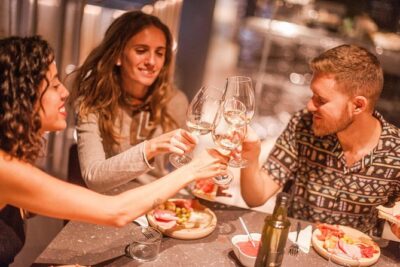
Montserrat & Cogwheel Train, Gourmet Wine Tasting & Tapas/Lunch
Read our review →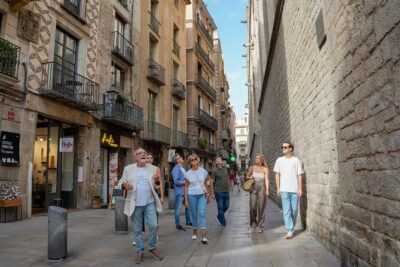
Barcelona Tapas and Wine Experience Small-Group Walking Tour
Read our review →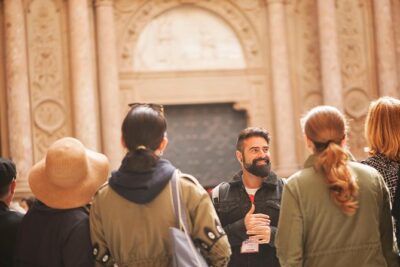
Montserrat with Black Madonna & Medieval Winery with Tapas/Lunch
Read our review →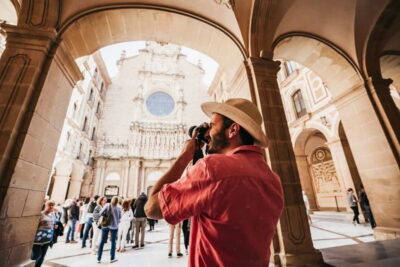
Montserrat and Winery Tour with Tapas or Lunch
Read our review →
Tapas Walking Tour with Food, Wine, and History
Read our review →
Madrid Tapas & Wine Tasting Walking Tour – Small Group Local Bars
Read our review →
Sevilla Food Tour: Tapas, Wine, History & Traditions
Read our review →Browse the lists this tour appears in