REVIEW · TAPAS AND WINE TOURS
Private Wine & Gourmet Tapas Tour in Madrid with Sommelier
Madrid’s vermouth tradition is the star here. You begin at a historic tavern with vermouth poured from the tap, then compare it with a modern vermouth cocktail before moving on to Cava and still wines. It is a tasty way to understand what locals drink, not just a parade of famous labels.
I especially like the private format and Jimena’s ability to adjust the food and wine to your tastes. I also like that the route uses three real taverns in Chueca, including a place dating to 1908. The main consideration is the price: at $245 per person, this makes sense for people who want a guided, food-heavy tasting rather than a basic tapas crawl.
Key things to know before booking
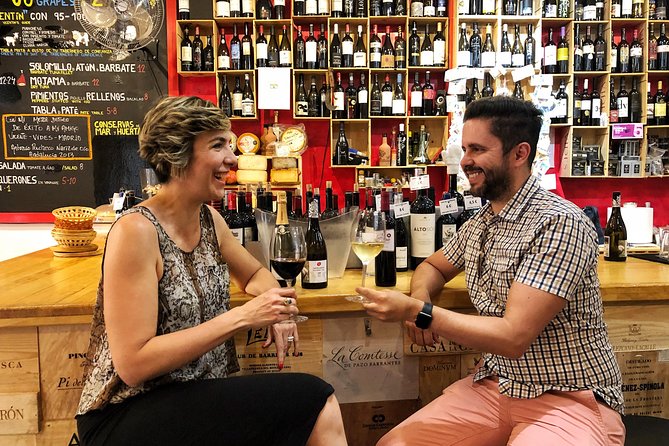
- Two sides of Madrid vermouth: You compare traditional vermouth on tap with a newer cocktail-style serving.
- Three taverns in Chueca: The short walking route keeps the focus on food, drink, and conversation.
- Five wine and vermouth tastings: The published plan includes one vermouth, one Cava, and three still wines, though the route description also refers to a second modern vermouth style.
- A serious food spread: Expect croquettes, acorn-fed Iberian ham, Spanish cheeses, tortilla, calamari, octopus, and patatas bravas.
- Private attention from Jimena: She can consider different preferences within your group.
- A useful wine lesson: You learn about Spanish regions, grape-growing areas, ageing, tasting technique, and wine labels.
Starting in Chueca Square
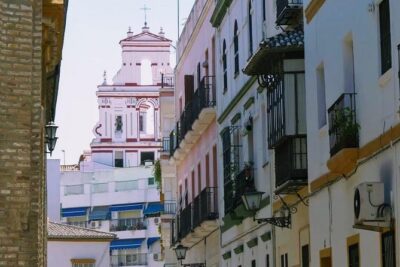
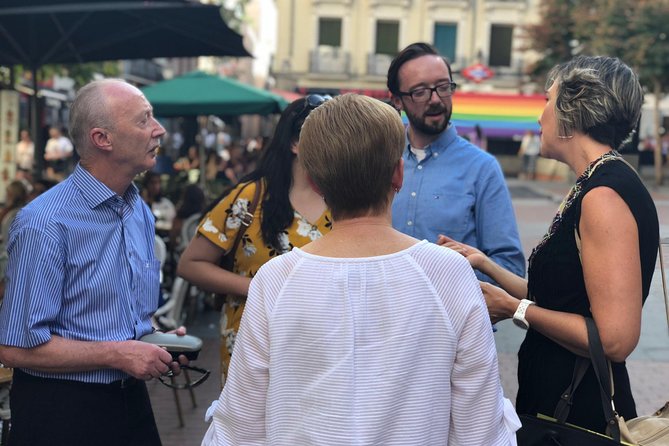
The tour begins in Plaza de Chueca, in central Madrid, and ends back at the same meeting point. Chueca is a lively, central neighborhood with plenty of bars and restaurants, so this is a useful part of town for an evening food experience.
The walking distances are short. That matters because the tour is built around tasting and discussion, not covering miles of city streets. You move between three taverns, but you do not need to treat it as a strenuous walking tour.
The private setup is one of the strongest reasons to consider this experience. Your group is the only group participating, so Jimena can spend more time answering your questions and adjusting the pace. If one person prefers red wine and another prefers white, or if someone has a strong food preference, the format gives her room to respond.
You should still tell the provider about important dietary needs before booking. The supplied information confirms that preferences can be considered, but it does not promise a particular allergy or dietary menu.
More Gourmet Tapas Experiences in Spain
- Tapas & Paella Cooking Class in Madrid with a Professional Chef
★ 5.0 · 177 reviews - Madrid Gourmet Tapas Small Group Tour
★ 5.0 · 175 reviews - Madrid: Tapas & Paella Cooking Class with Expert Chef
★ 4.9 · 61 reviews
First stop: vermouth from the tap
The first tavern introduces you to a traditional Madrid custom: drinking vermouth before a meal. Here, it is poured on tap in a historic bar that dates to 1908. That setting gives the tasting some sense of place. You are not simply sampling a bottle in a classroom. You are learning about a drink in the kind of local tavern where the custom belongs.
Jimena explains what vermouth is, how it is made, and the main styles you may encounter. She also covers the history of vermouth drinking in Madrid. This is useful if you have always treated vermouth as a minor cocktail ingredient. The tour presents it as a Spanish social drink with its own traditions and serving habits.
The first pour is paired with Spanish tapas. The exact dishes can vary, but the food list includes items such as Spanish croquettes, Iberian ham, and cheese. The pairing gives the drink a practical context. You can taste how salty, savory foods work with the herbal and sweet notes in vermouth.
This stop is likely to appeal most if you enjoy local customs more than formal wine tasting. The setting is informal, and the drink has a strong connection to Madrid’s bar culture.
Second stop: a modern vermouth cocktail
The next tavern shows a newer way to serve vermouth. Rather than another traditional pour, you taste a modern vermouth cocktail with large Gordal olives from Andalusia. Gordal olives are especially meaty, so they make a good partner for a drink that needs something substantial and salty on the plate.
The contrast between the two stops is important. You get to see how one drink can move from a classic tavern pour to a more current bar style. Jimena also discusses bottled vermouth and the different styles Spanish producers are making now.
The route description presents two vermouth experiences, while the inclusions list summarizes the tasting as one vermouth alongside four wines. That wording is not perfectly consistent. If the exact number of pours matters to you, confirm the final tasting lineup when you book. Either way, vermouth receives more attention here than it would on a standard wine-and-tapas outing.
This is also where Jimena’s flexibility matters. Several people who enjoyed the tour especially appreciated that she listened to personal tastes rather than treating the route as fixed. That can make a real difference in a private group with mixed preferences.
Third stop: Cava and Spanish still wines
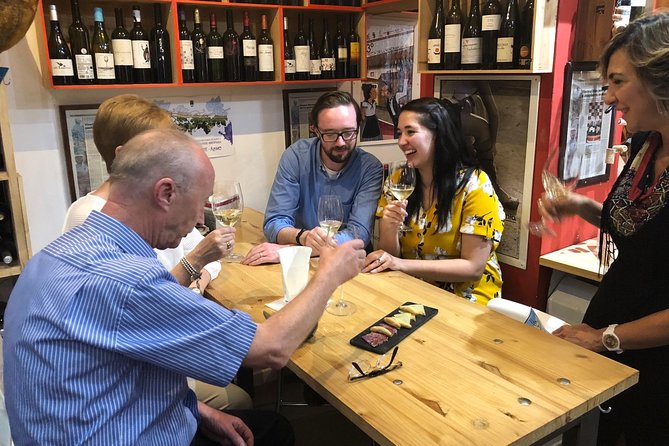
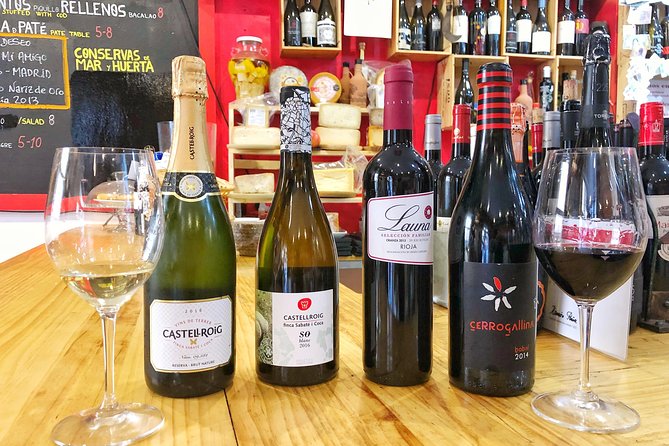
The final tavern is the main wine tasting stop. The stated plan includes three Spanish wines: a Cava made by the traditional method, followed by two still wines. Those may be a white and a red, or two reds, depending on the selection.
Cava gives you a clear introduction to Spanish sparkling wine. Made by the traditional method, it offers a useful comparison with other sparkling wines while keeping the focus on Spain. The still wines then broaden the tasting and give Jimena room to discuss regional differences.
The wine lesson goes beyond naming the bottle. You learn about Spanish wine regions, the wineries behind the pours, the Designations of Origin, and the soil and growing areas where the vines are planted. Jimena also explains wine ageing and how to read Spanish labels. That last point has direct value after the tour. Spanish labels can include regional terms and ageing information that are not always easy to interpret at a shop shelf.
You also receive an explanation of the stages of tasting and basic tasting technique. This is not a professional certification course, but it should help you slow down and notice color, aroma, texture, and finish. If you want to buy Spanish wine during the rest of your trip, these lessons can be more useful than a list of famous producers.
The strongest part of this stop is the connection between the glass and the place it comes from. You are not just told that one wine is white and another is red. You are given background on the region, production methods, and ageing system.
More Tapas and Wine Tours in Madrid
- Madrid Tapas & Wine Tasting Walking Tour – Small Group Local Bars
★ 5.0 · 3,644 reviews - Madrid: Tapas & Wine Tasting Tour with Local Guide
★ 4.8 · 2,171 reviews - Madrid Tapas & Wine Tour with Rooftop Views and Local Guide
★ 5.0 · 2,047 reviews - Madrid: Food & Wine Tour with 10 Tapas & 4 Drinks Included
★ 4.9 · 984 reviews
What you eat with the wine
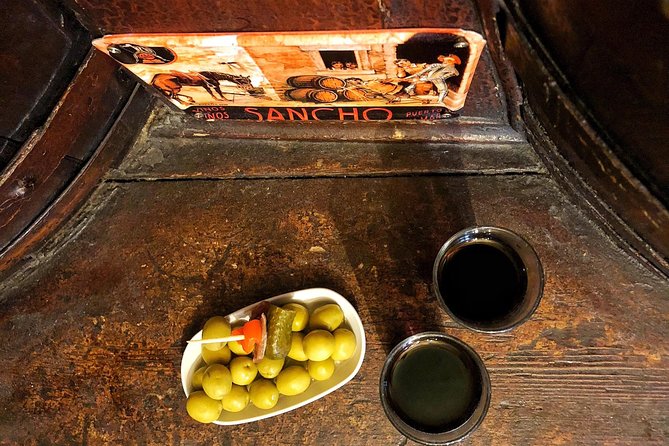
The food offering is more substantial than the word tapas might suggest. The sample menu includes several filling dishes, spread across the three stops.
You may taste Spanish croquettes, top-quality acorn-fed Iberian ham, and a cheese board with cured Manchego. The cheese selection can also include sheep cheese with truffles and several goat cheeses made by small producers from different Spanish regions.
The later dishes include Spanish tortilla, fried calamari, grilled octopus, and patatas bravas. The tortilla may come with toppings such as grilled prawns, boquerones, or red peppers. One particularly useful detail is that Jimena has changed a stop to provide a better tortilla when a guest preferred it to patatas bravas. That shows the value of having a private guide who knows the local places well and can make a practical adjustment.
The food is not merely decoration for the wine. It is part of the lesson. Salty ham, creamy cheese, fried seafood, potato dishes, and tortilla each give you different textures and flavors to compare with the drinks.
You should not assume every dish will appear exactly as printed. Tavern menus and available dishes can change, and the wording describes a sample menu. Still, the overall meal is clearly designed to function as dinner for many people, not just a few token bites.
How Jimena shapes the experience
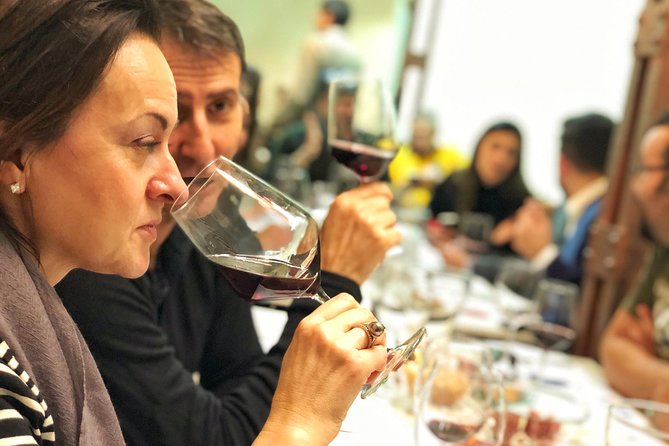
Jimena is a certified wine expert and the named guide for the experience. Her role is more than carrying you from one bar to the next. She explains winemaking, wine regions, grapes, vermouth production, food pairing, and label terms in a way aimed at people who may know little about Spanish wine.
The private format gives her room to work at your level. If you already know wine, you can ask about regions, ageing, or production methods. If you are new to Spanish wine, you can focus on the basics without feeling lost.
The personal style is one of the most praised features of the experience. Jimena is described as warm, friendly, and easy to talk with. Her relationships with the bars and restaurants also matter. A good local guide can make a tavern feel less like a scheduled stop and more like part of an evening out.
That does not mean the tour is completely unstructured. You still follow a planned route with set tastings. But the private arrangement allows for conversation and small changes, which can be more valuable than a rigid script.
What the $245 price really covers
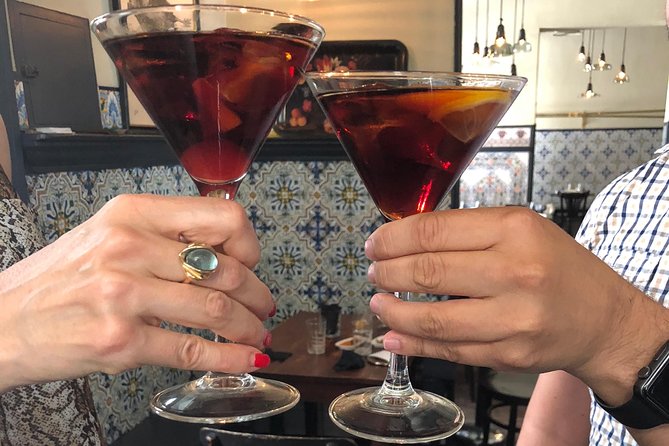
At $245 per person, this is a premium experience. You are paying for about two and a half hours, three tavern stops, five wine and vermouth tastings, a large selection of tapas, a private guide, and instruction about Spanish wine.
For someone seeking the cheapest way to eat in Madrid, it is not a bargain. You could order drinks and tapas independently for less, especially if you skip the teaching and private guide.
The value becomes clearer if you want several things at once: a private group, generous pours, a proper meal, local taverns, and a guide who can explain what is in your glass. One person specifically appreciated that the servings were full glasses rather than tiny tasting pours. That can make the price feel more reasonable, particularly when the food also replaces dinner.
The tour is also useful early in a Madrid visit. You learn what vermouth is, how Spanish wine regions differ, and how to read labels before you start ordering on your own. If you use that information during the rest of your trip, the value continues after the 2.5-hour route ends.
Tips for Jimena are not included, so plan for that additional cost if you feel she has provided good service.
Timing, transport, and practical details
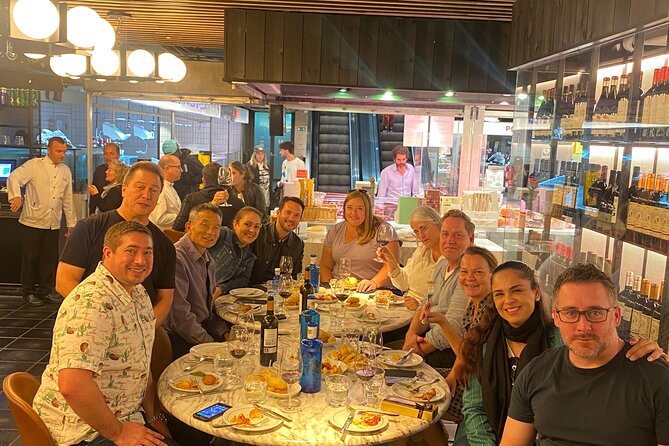
The tour lasts approximately two hours and 30 minutes. Because the route starts and ends at Plaza de Chueca and the walking distances are short, it is easy to fit into an evening plan in central Madrid.
The meeting point is near public transportation. You receive confirmation when booking, and the activity is offered in English. The experience is private, with only your group participating.
The tour is suitable for most people who can take part in a short urban walk and stand or sit at several taverns. The available information does not give a detailed accessibility plan, so you should ask the provider directly if you need specific arrangements.
The activity is often booked well ahead, with an average booking time of 54 days in advance. If your Madrid dates are fixed, booking early is sensible, especially because private tours have limited availability.
Free cancellation is available if you cancel at least 24 hours before the start time. Changes or cancellations inside that window are not refunded, and the experience requires a minimum number of participants. If the provider cancels because that minimum is not met, you are offered another date or experience, or a full refund.
Who will enjoy this Madrid wine route?
I would choose this for couples, families of adults, and small groups who want a polished introduction to Spanish food and drink. It works particularly well for a first evening in Madrid because it provides both a meal and a sense of how locals use taverns.
It also suits people with mixed wine experience. Beginners get clear explanations, while more experienced drinkers can ask about regions, production, and ageing. The private setting helps keep the conversation at the right level.
You may want something else if you prefer a large group atmosphere, a budget food crawl, or a tour focused mainly on sightseeing. Chueca is part of the experience, but the route is not a broad city tour. Most of the time goes to eating, drinking, and learning.
Should you book it?
Book this tour if you want a private, food-heavy introduction to Spanish wine and vermouth and you value a guide who can adjust the evening to your preferences. The short walks, generous food, and three different tavern settings make it easy to enjoy even after a long day.
Think twice if $245 feels high for a meal, or if you want a fast-moving tour with many neighborhoods and landmarks. Also confirm the exact vermouth and wine lineup, since the published details describe the pours in slightly different ways.
For the right group, this is less a simple tapas crawl than a guided evening of Spanish drinking culture. You leave with a full meal, a better sense of Madrid’s vermouth customs, and practical tools for choosing Spanish wine on your own.
FAQ
Where does the tour begin and end?
The tour begins at Plaza de Chueca in central Madrid and ends back at the meeting point.
How long does the experience last?
The tour lasts approximately two hours and 30 minutes.
How many taverns do you visit?
The walking route includes stops at three taverns in the Chueca neighborhood.
What drinks are included?
The inclusions describe five tastings in total: one sparkling wine, three still wines, and one vermouth. The route description also includes a traditional vermouth pour and a modern vermouth cocktail, so confirm the exact lineup when booking.
Is food included?
Yes. Five tapas are included for the pairings. The sample menu includes croquettes, Iberian ham, Spanish cheeses, tortilla, calamari, octopus, and patatas bravas.
Can I cancel for a full refund?
Yes, if you cancel at least 24 hours before the experience starts. Cancellations or changes made less than 24 hours in advance are not refunded.
More Gourmet Tapas Experiences in Madrid
- Gourmet edition: Segway tour and tapas
★ 4.0 · 5 reviews - Madrid Gourmet Tour: Local Markets, Tapas & Wine
★ 5.0 · 2 reviews - Montserrat Half-Day Tour with Tapas and Gourmet Wines
★ 5.0 · 7,359 reviews - Montserrat & Cogwheel Train, Gourmet Wine Tasting & Tapas/Lunch
★ 5.0 · 6,290 reviews
More Tapas and Wine Tours in Spain
- Madrid Historic Centre Food Tour with Authentic Tapas & Wines
★ 5.0 · 814 reviews - Madrid Guided Food Tour with Tapas and Spanish Wine
★ 4.9 · 773 reviews - Madrid: Guided Tapas and Wine Tour with Rooftop Views
★ 4.8 · 608 reviews - Old Madrid Tapas and Fine Wine Small Group Tour
★ 5.0 · 415 reviews
Recently reviewed in Madrid
- Madrid: Private Tapas & Wine Food Walking Tour in La Latina★ 5.0 · 4 reviews
- Madrid Food Tour – Tapas Walking Tour★ 5.0 · 3 reviews
- Tasting Madrid: Tapas Private Guided Tour (Customizable)★ 5.0 · 7 reviews
- Flamenco show & tasting Tapas with panoramic views in Madrid★ 4.5 · 6 reviews
- Culinary tour “Tapas & Wines” in Madrid★ 5.0 · 3 reviews
- Try Madrid Best Churros, Tapas & Market by FLT★ 5.0 · 37 reviews
- Small Group Tapas Tour in Madrid★ 5.0 · 4 reviews
- Guided Tapas and Flamenco in Madrid★ 4.5 · 21 reviews
Tapas and Wine Tours, compared.

Montserrat Half-Day Tour with Tapas and Gourmet Wines
Read our review →
Montserrat & Cogwheel Train, Gourmet Wine Tasting & Tapas/Lunch
Read our review →
Barcelona Tapas and Wine Experience Small-Group Walking Tour
Read our review →
Montserrat with Black Madonna & Medieval Winery with Tapas/Lunch
Read our review →
Montserrat and Winery Tour with Tapas or Lunch
Read our review →
Tapas Walking Tour with Food, Wine, and History
Read our review →
Madrid Tapas & Wine Tasting Walking Tour – Small Group Local Bars
Read our review →