
REVIEW · MARKET AND TAPAS TOURS
Seville: Tasting, History, Market visit and Tapas Tour
Seville’s food culture starts early, and this tour follows that local rhythm. You begin with the everyday Sevillian breakfast of coffee, toast, and fresh orange juice, then move through churros, olive oil, the Triana Market, fried fish, and tapas in one of the city’s oldest bars. The food is simple, local, and spread across the morning, not packed into one formal meal.
I like the way the tour connects eating with walking, especially the crossing over Triana Bridge to reach the market. I also like the small group limit of 10 and the chance to taste several olive oils while the shop owner explains their differences.
The main consideration is that this is a four-hour walking and eating tour, with several stops and a full tapas lunch at the end. It may be too much food for a light breakfast eater, and you should report allergies when booking.
Key points at a glance
- A true Spanish breakfast: Coffee, toast, and fresh-pressed orange juice introduce the foods many Sevillians eat every day.
- Churros before the market: You stop at a small churro stall and taste them as you continue through the waking city.
- Olive oil with a lesson: A local shop visit lets you compare oils with different flavors and varieties.
- Triana Market tasting: Cured ham, cheese, sherry from Jerez, olives, pickles, and capers are part of the market experience.
- Tapas in an old bar: The final meal includes original tapas and drinks among preserved earthenware wine vats.
- Small and accessible: The group is limited to 10, the tour is wheelchair accessible, and guides speak English, Spanish, or Norwegian.
Breakfast the Sevillian way
The tour begins at Plaza Nueva, in front of the main entrance to Seville’s town hall. That is a practical meeting point in the city center, and the tour returns there at the end, so you do not need to arrange a taxi or learn a new neighborhood for the finish.
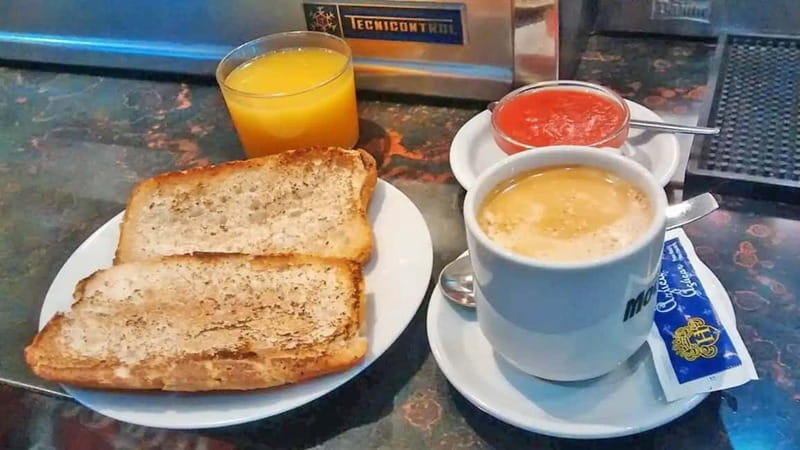
Your first food stop is a complete Spanish breakfast. In Seville, that means coffee, toast, and fresh-pressed orange juice. The breakfast is not a grand spread, and that is exactly why it works. You are introduced to an ordinary local habit rather than a special dish created only for visitors.
The toast is part of the lesson. Breakfast in southern Spain often relies on a few good ingredients instead of a complicated recipe. Here, the emphasis is on how people actually start their day. If you normally skip breakfast, keep that in mind before booking. This tour begins with food and continues eating for much of the morning.
The orange juice adds a fresh note to the coffee and toast. Since it is pressed fresh, it also gives the opening stop a local-market feel before you reach the market itself. I like this first taste because it gives you a useful answer to a basic question: what do people in Seville eat on a normal morning?
More Market and Tapas Tours in Seville
- Seville Vegan Tapas Food and Market Walking Tour
★ 5.0 · 40 reviews - The Seville Market & Tapas Tour by Food Lover Tour
★ 5.0 · 33 reviews - Seville Off the Beaten Path Tapas and Market Tour
★ 5.0 · 21 reviews
Churros from a small stall
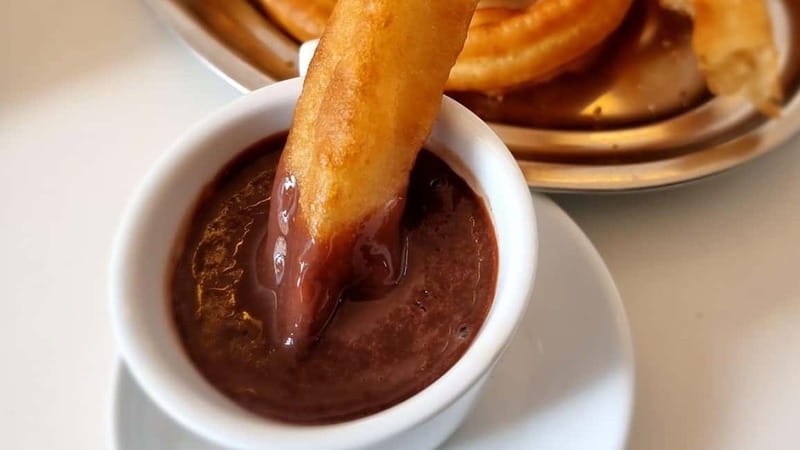
After breakfast, you walk toward a small churro stall. You taste churros with chocolate as you continue, rather than sitting down for a long dessert stop.
Churros are best understood as a social snack as much as a sweet. The point here is not a polished pastry presentation. It is the pleasure of eating something hot and familiar while walking through Seville as the city gets moving.
This stop also helps break up the morning. You have already had breakfast, but the churro tasting gives you another classic Spanish flavor before the tour turns toward olive oil and the market. If you have a sweet tooth, this is likely to be one of the most memorable early stops. If you prefer savory food, the tasting is still brief and the main food stops come later.
The tour description does not specify the exact churro style, portion size, or chocolate preparation, so you should think of this as a tasting rather than a full second meal. That is useful to know when deciding how much breakfast to eat before arriving.
Comparing olive oils by flavor
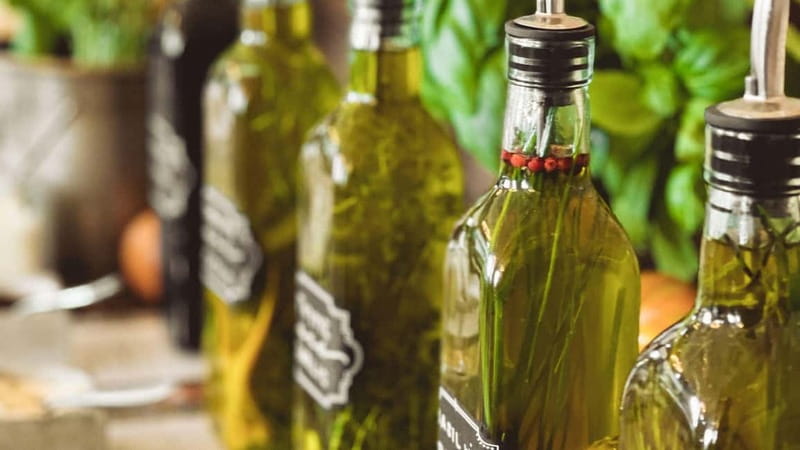
The next stop is a local olive oil shop. Here, you taste different oils with different flavors while the owner explains the varieties.
This is more useful than simply being told that olive oil is important in Andalusia. You get to compare the oils directly and pay attention to differences in taste. For many people, olive oil is just a cooking ingredient. A guided tasting helps you notice that the oils can have their own character and that two bottles need not taste alike.
I especially like the owner-led part of this stop. The guide can introduce the setting, but the shop owner brings direct knowledge of the products being tasted. You can ask questions in the moment and connect the explanation to what is in your glass or on your palate.
The visit is also a chance to understand why olive oil appears so often in Spanish food. It links the breakfast toast, market products, and later tapas. This is a small stop, but it gives the meal stops a clearer thread.
Do not expect a full olive oil class. The information provided promises tastings and an explanation of varieties, not a technical course or a visit to an olive grove. For most people, that is the right balance on a food walk.
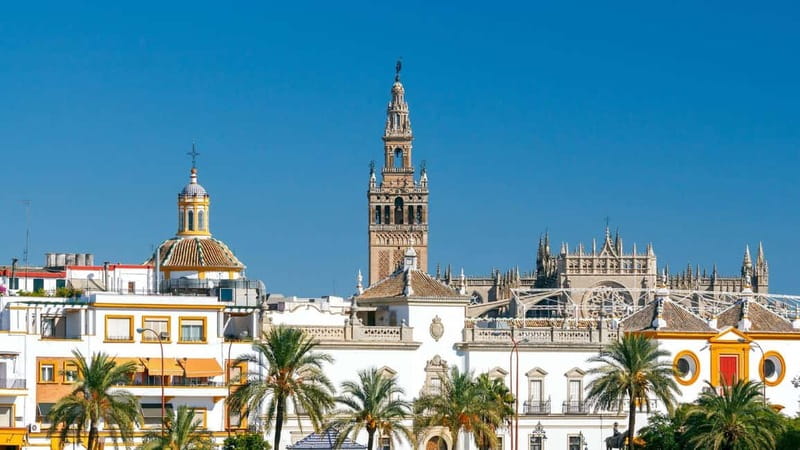
Crossing Triana Bridge to the market
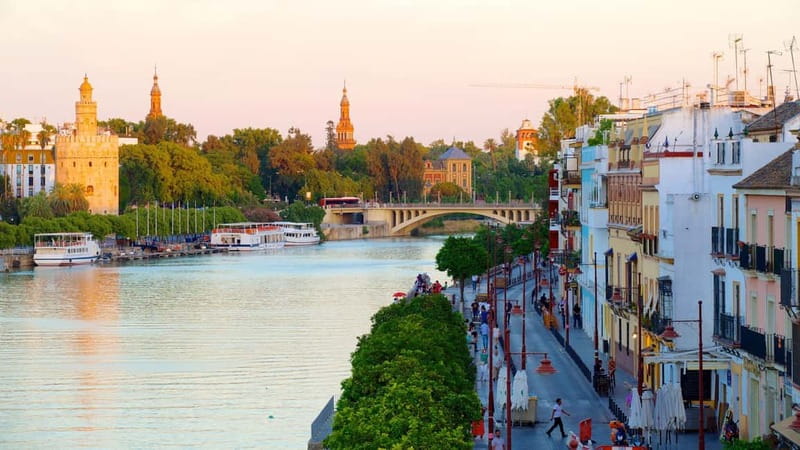
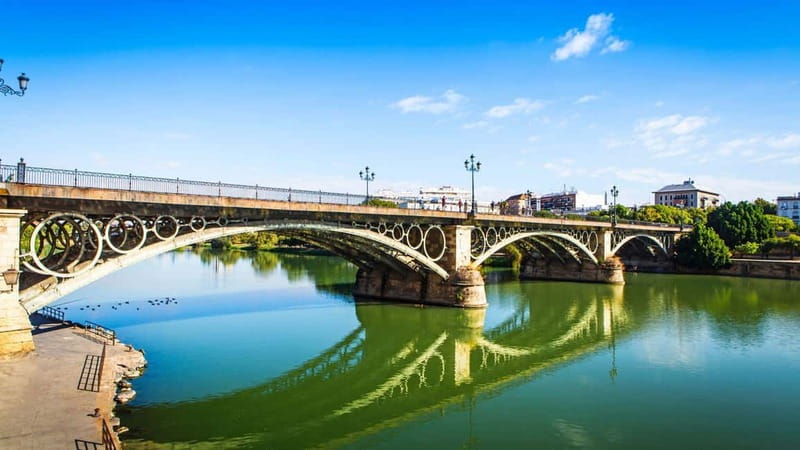
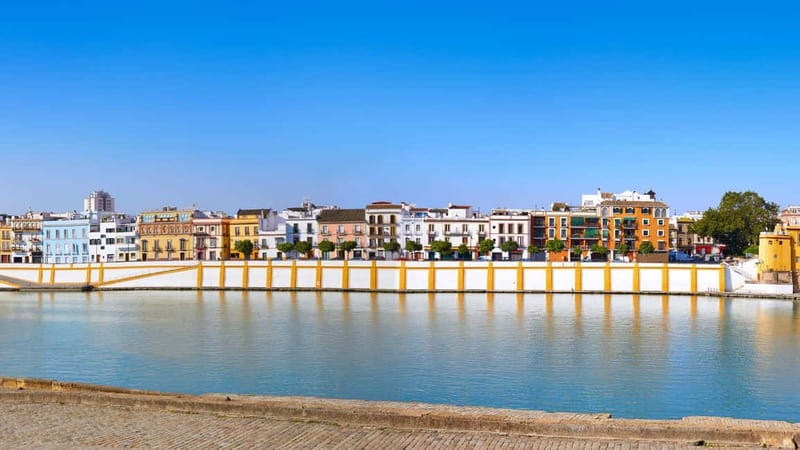
After the olive oil tasting, you cross Triana Bridge on foot. The bridge provides a clear change of scene and takes you toward the Triana Market, one of Seville’s best-known places for fresh produce, meat, fish, and other regional foods.
This part gives the tour a useful sightseeing break. You are not riding between restaurants or being driven to separate food stops. You move through the city on foot, with the food providing a reason to notice the route.
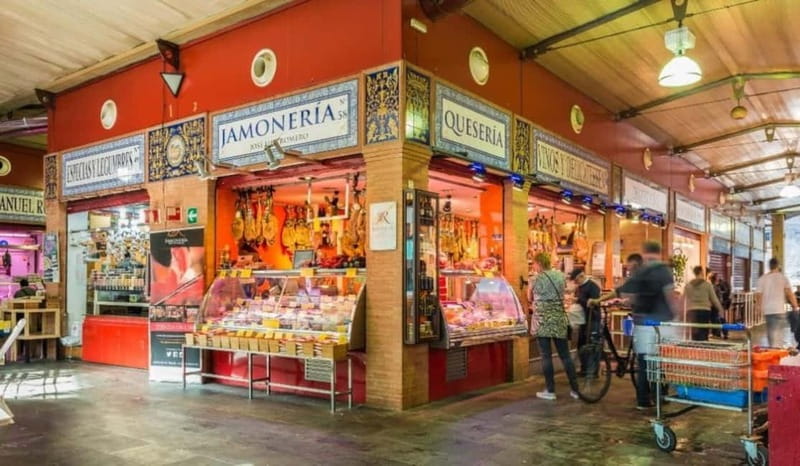
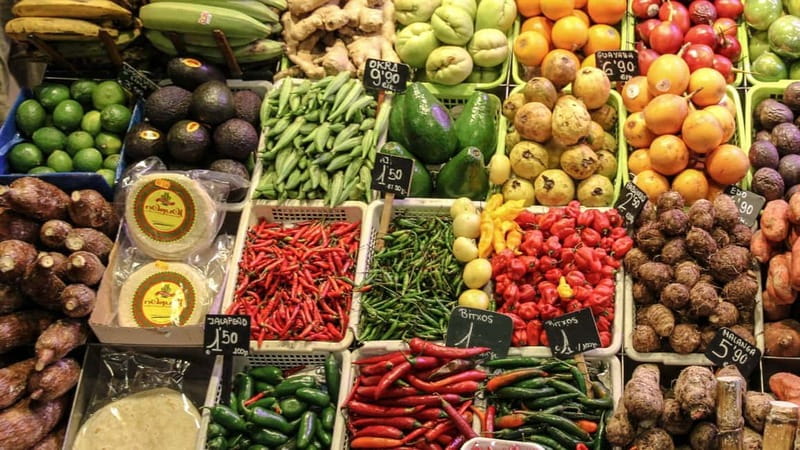
The market visit begins with a walk around the stalls. That matters because you first see the full range of products before stopping for tastings. You can look at fruit and vegetables, meat, fish, and other foods before concentrating on the items selected for the tour.
Markets are often more informative than a restaurant menu. A menu tells you what one kitchen serves. A market shows the ingredients that shape daily cooking. The Triana stop gives you that wider view, even though the tour does not attempt to cover every stall.
The market is also a working food place, not only a sightseeing stop. That means the atmosphere and exact stall activity can vary by day and time. You should come ready to walk, look closely, and keep pace with the group.
Same streets, a different round:
- Sevilla Food Tour: Tapas, Wine, History & Traditions
★ 5.0 · 3,468 reviews - Ultimate Seville Tapas, Wine & History Small Group Tour
★ 5.0 · 1,766 reviews - Seville: Tapas Crawl
★ 4.9 · 1,705 reviews - Authentic Flamenco Show with Tapas & Wine Guided Tour
★ 5.0 · 1,476 reviews
Ham, cheese, sherry, and pickles
At selected market stalls, you taste cured ham and cheese. These are familiar Spanish foods, but the market setting gives them more meaning than a generic tasting plate. You see the products among other foods being sold for local meals.
The tasting also includes sherry wine from Jerez de la Frontera. Jerez is in Andalusia, so the sherry adds a strong regional link to the stop. It pairs naturally with cured foods and gives you a chance to try a drink that is central to the food culture of southern Spain.
Near the ham and cheese stalls, you visit a seller of olives and pickles. The tasting includes olives and capers. This is a useful reminder that Spanish snacks are not limited to meat and cheese. Salty, sharp, and briny foods are part of the table too.
I like the variety here. You are not asked to spend four hours eating versions of the same dish. The morning moves from coffee and toast to churros, olive oil, cured foods, sherry, and pickles. Each stop adds a different flavor and a different way of eating.
If you have allergies, tell the provider when you book. The tour includes many products, and the guide needs that information before the tastings begin. The supplied details do not promise that every substitution will be possible, so advance notice is important.
Fried fish before the final tapas bar
Leaving the market, you stop at a typical bar for fresh fried fish and vegetables with a glass of local beer. This is a short but important change in pace. You have been tasting market foods, and now you see how a neighborhood bar turns simple ingredients into a hot snack.
Fried fish and vegetables are especially suited to a casual bar setting. You get food that is fresh from the fryer, paired with a cold drink, before the more substantial final stop. The portion details are not specified, so do not treat this as a separate full lunch. It is one part of a morning that builds toward tapas.
The beer pairing gives you another look at local drinking habits. Earlier, you try sherry with ham and cheese. Here, beer accompanies fried food. The tour is quietly teaching you that Spanish food is often about matching the right small dish with the right drink.
The bar stop is also useful for people who feel that food tours can become too formal. Nothing in the description suggests a fine-dining setting. The focus is on fresh food, local bars, and the way people eat in ordinary places.
Tapas among old earthenware vats
The last food stop is one of Seville’s oldest tapas bars. It is described as a characterful place that still preserves old earthenware wine vats. You taste original tapas with drinks here, including wine.
This is the tour’s main meal and its strongest sense of place. A tapas bar with old wine vats gives you more than a plate of food. It connects the meal to older ways of storing and serving wine, while keeping the setting informal.
The phrase original tapas suggests dishes selected for the group, but the exact menu is not given. That is normal for a food tour, since the available food may depend on the day. You should book this experience for the range of tastes and settings, not for one specific dish.
By this point, you have sampled breakfast, sweets, oil, market foods, sherry, fried food, beer, and tapas. The final bar works because it brings those threads together. You can ask the guide how the foods relate, what to order later, and which places are worth revisiting during your stay.
One customer described leaving with confidence about what and how to order in Seville. That is a valuable result. The best food tour does not only feed you for one morning. It gives you enough context to make better choices afterward.
The guide and group size
The tour uses a live guide in English, Spanish, or Norwegian. Gunvor Guttormsen has led this experience, and her approach is described as clear, accommodating, and generous with explanations about the foods being tasted.
That matters because a food tour can become confusing when the guide rushes through unfamiliar ingredients. Here, the guide is expected to explain what you are eating and discuss food-related subjects along the route. If you are visiting Seville with limited Spanish, an English-language guide can make ordering later in your trip easier.
The group is limited to 10 people. That is small enough for a guide to keep track of everyone through the market and enough for questions without turning each stop into a lecture. It also makes shared tastings more manageable.
You should confirm the available language and guide when booking, since the listed options are English, Spanish, and Norwegian, not a guarantee that every language runs at every starting time. The duration is four hours, and starting times vary according to availability.
The tour is wheelchair accessible. Since the experience includes walking through streets, crossing the bridge, and visiting a market and bars, you may still want to mention any specific mobility needs when arranging your place. The supplied information confirms accessibility but does not describe the exact route or restroom arrangements.
Is $90 a fair price?
At $90 per person, the cost is not low for a morning of eating, but it covers a full four-hour program with several tastings and a guide. Included are the complete Spanish breakfast, churros, the market tasting, the olive oil shop tasting, and a tapas lunch with wine.
The value depends on how you use the experience. If you only want a cheap breakfast and a few tapas, you can spend less on your own. If you want explanations, several organized tastings, a market visit, and help navigating local food customs, the price becomes easier to justify.
You are also paying for variety. The tour includes coffee, toast, orange juice, churros with chocolate, olive oils, ham, cheese, sherry, olives, capers, fried fish, vegetables, beer, tapas, and wine. Exact portions are not provided, but the stops make this far more than a single tasting plate.
I would see the tour as good value for a first morning in Seville, especially if you want food guidance for the rest of your trip. It is less compelling for someone who already knows Seville’s food scene and prefers to choose every bar independently.
Free cancellation is available up to 24 hours before the tour for a full refund, and you can reserve now and pay later. Those terms help if your schedule is still changing, but the main value remains the access to a guide, a small group, and places you might not choose on your own.
Who should book this Seville food tour?
I would recommend it to a first-time visitor who wants an introduction to Sevillian food without spending a full day on a formal cooking class. It also suits anyone who enjoys walking between stops and wants local context with each taste.
The tour is a good fit if you like trying many small portions rather than ordering one large meal. It is also helpful if your Spanish is limited. The guide can explain foods and ordering customs, and the route gives you practical ideas for the rest of your stay.
The four-hour length and steady food schedule are the main limits. You need to be comfortable eating breakfast, sweets, market samples, fried food, and a tapas lunch in one morning. People with allergies should provide full details before booking.
The small group, central meeting point, accessible format, and multiple guide languages make the logistics straightforward. Just wear something comfortable for walking and arrive ready for a long, food-centered morning.
Should you book it?
Book this tour if you want Seville explained through everyday food: breakfast toast, churros, olive oil, market products, sherry, fried fish, and tapas in an old bar. The strongest reasons to choose it are the small group, the range of tastings, and the practical guidance from a food guide such as Gunvor Guttormsen.
Skip it if you prefer to eat slowly at one restaurant, avoid a full morning of tastings, or already know exactly which markets and tapas bars you want to visit. For a first visit, though, $90 buys a useful introduction to how Seville eats, not just a list of dishes.
FAQ
Where does the tour start?
Meet the guide in front of the main entrance to Seville’s town hall at Plaza Nueva.
Where does the tour end?
The activity ends back at the meeting point in Plaza Nueva.
How long does the food tour last?
The tour lasts four hours. Starting times vary, so check availability when booking.
How much does the tour cost?
The listed price is $90 per person.
What food and drinks are included?
The tour includes a Spanish breakfast, churros with chocolate, olive oil tastings, market tastings, cured ham, cheese, sherry, olives, capers, fried fish, vegetables, beer, tapas, and wine.
What languages are available?
Live guides are available in English, Spanish, and Norwegian.
Is the tour wheelchair accessible?
Yes, the activity is listed as wheelchair accessible.
Can I cancel the booking?
You can cancel up to 24 hours in advance for a full refund. You can also reserve now and pay later.
More History Tours in Seville
- Seville: Tapas, Taverns, and History Walking Tour
★ 4.9 · 676 reviews - Seville: Tapas, Taverns and History Guided Walking Tour
★ 4.9 · 515 reviews - Private Seville Tapas & History Tour
★ 5.0 · 380 reviews - Seville: Private Tapas & History Tour in Triana Neighborhood
★ 4.7 · 16 reviews
Recently reviewed in Seville
- Triana Market Tapas Tour★ 4.9 · 12 reviews
- Seville Wine & Gourmet Tapas Tour by Food Lover Tour★ 5.0 · 50 reviews
- Tapas and Flamenco in Seville★ 4.5 · 34 reviews
- The One and Only Nuevo Tapas Tour★ 5.0 · 15 reviews
- Tapas Tour Sevilla★ 4.5 · 2 reviews
- Private off the beaten path Tapas Tasting in Seville★ 5.0 · 2 reviews
- Tapas Tour★ 4.5 · 3 reviews
- Sevilla Private Flamenco and Tapas Tour★ 5.0 · 16 reviews
Market and Tapas Tours, compared.
Barcelona Paella Cooking Class with Market Visit, Tapas & Sangria
Read our review →
Valencian paella cooking class, tapas and visit to Ruzafa market.
Read our review →
San Sebastian Pintxo Food, Wine & Market Foodie Tour(Small Group)
Read our review →
Madrid Tapas & Paella Cooking Experience with Local Market Visit
Read our review →
Seafood paella cooking class, tapas and visit to Ruzafa market.
Read our review →
Alicante Paella Cooking Class, Tapas, Drinks and Market
Read our review →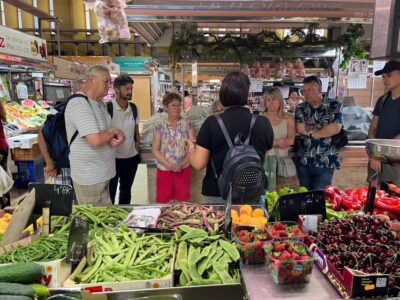
Real Paella Cooking Class – Market Visit & Sangría Workshop
Read our review →
Paella & Sangria Class with Tapas and Market Visit
Read our review →Browse the lists this tour appears in