
REVIEW · OLD TOWN TAPAS WALKS
Gothic Quarter Insights & Tapas Experience
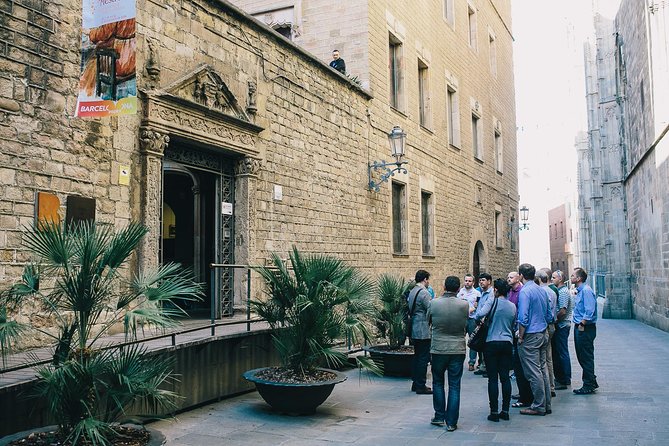
Barcelona’s Gothic Quarter is best understood on foot, one crooked lane and quiet square at a time. This tour links Roman Barcelona, medieval royal power, neighborhood churches, and the old civic quarter before ending with a pintxo and drink. It is a good way to get your bearings without spending half a day inside a museum.
I like the wide sweep of the route, which takes you from Plaça Nova to Santa Maria del Mar and Carrer de Montcada. I also like the human finish: one pintxo and one drink give you a chance to sit down and chat with the group after the history lesson. Guides including Ariana, Leah, Núria, and Maria have been praised for making the past easy to follow.
The main consideration is pace and depth. You cover many major sights in about two and a half hours, but most stops last only ten minutes, and one past rating felt the tour offered more building history than legends and stories. You will also need comfortable shoes and a little patience with narrow, busy lanes.
Key details that shape the experience
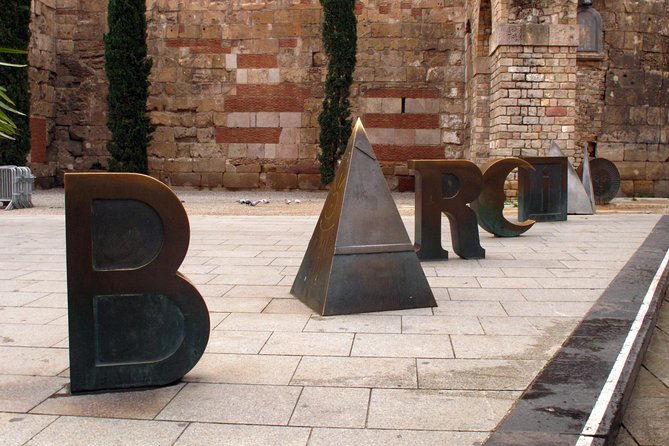
- Roman Barcelona begins at Plaça Nova: See Joan Brossa’s large Barcino letters beside the old Roman wall.
- Nine historic stops follow a compact route: The walk includes the cathedral, medieval squares, Roman columns, Santa Maria del Mar, and Carrer de Montcada.
- The finish includes a pintxo and drink: This is a modest tasting, not a full meal, but it adds a welcome social pause.
- The group can reach 20 people: A smaller group may feel more personal, while a full group can make narrow streets and questions less easy.
- The 3:30 pm start is useful: It fits well after a morning arrival, a museum visit, or a cruise stop.
- The tour suits first-time visitors: You get a broad introduction to the old city before returning to the places you want to explore slowly.
Why this route works for a first afternoon
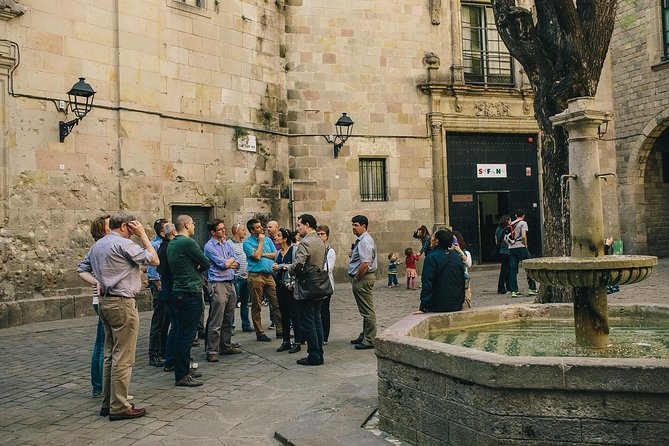
The Gothic Quarter can feel confusing at first. Streets change name, small squares appear without warning, and buildings from different centuries sit close together. A guide gives you a story line, so you are not simply wandering from one attractive doorway to the next.
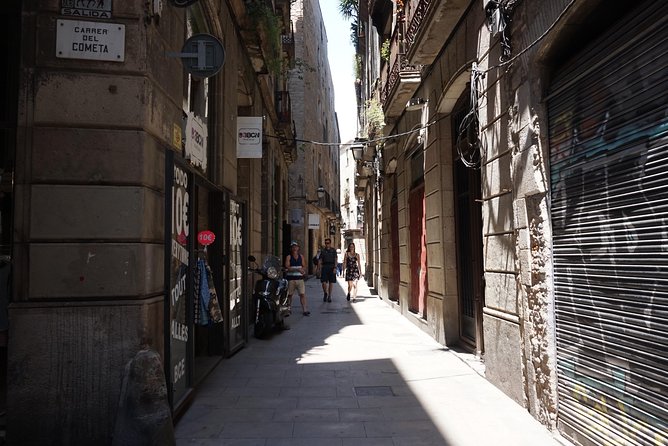
The tour begins at Lamaro Hotel Barcelona on Av. de la Catedral, 7, beside the cathedral area. The listed start time is 3:30 pm, and the activity returns to the same meeting point. That makes the route easy to fit into a day in Ciutat Vella, though you should allow time to find the guide in the crowded cathedral district.
One useful tip comes from a past afternoon when a street fair made the meeting area hard to read. The guide was eventually found with an umbrella. Look for the tour leader carefully, especially if events or market stalls fill Plaça Nova.
The route is offered in English, with multilingual guiding also listed in Spanish, French, and Italian. The included details specify a professional guide in English, Spanish, and French, so check the language offered for your selected departure when booking.
More Old Town Tapas Walks in Barcelona
- Barcelona Gothic Quarter Tapas & Taverns Food & Wine Tour
★ 5.0 · 1,470 reviews - Barcelona: El Born and Gothic Quarter Wine & Tapas Bar Tour
★ 4.8 · 674 reviews - Barcelona Old Town Tapas Tour: Vermouth, Bites & Hidden Gems
★ 5.0 · 627 reviews
Plaça Nova and the Roman name of Barcelona
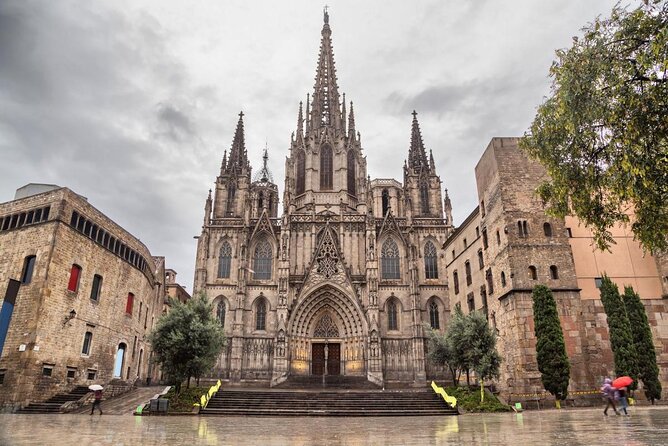
Plaça Nova provides a smart opening because it places modern Barcelona directly beside its Roman foundation. Seven large letters spell Barcino, the main Roman name for the settlement that became Barcelona. Joan Brossa designed the letters, six in bronze and one in aluminum, and they sit on the ground near the former city wall.
This is more than a quick photo stop. The letters help you connect the present city with Colonia Iulia Augusta Faventia Paterna Barcino, the formal Roman name behind the shorter word. You can also begin to understand the old city’s shape from the surviving wall and the nearby Roman gate.
The stop lasts about ten minutes and has no admission charge. I like that the tour starts outdoors, with an immediate sense of place rather than a long introduction in a lobby.
Barcelona Cathedral and Casa de l’Ardiaca
The cathedral stop is short, about five minutes, so expect an exterior orientation rather than a full cathedral visit. Plaça Nova was created in the 14th century in front of the Roman wall’s Portal del Bisbe. Its name means New Square, a reminder that even a medieval-looking space may have changed greatly over time.
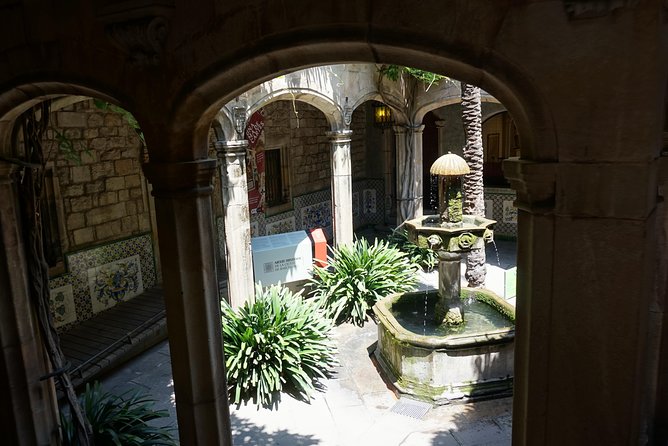
The nearby Casa de l’Ardiaca adds another layer. This former residence of the ecclesiastical hierarchy began its role in the 12th century and changed over the years. Its courtyard combines remnants of the original Gothic building with Renaissance decoration, and a staircase leads toward an upper terrace with a balcony reminiscent of a Romeo and Juliet setting.
You may want to return to this area later if you wish to examine details more slowly. Ten minutes is enough to hear the main story and take photographs, but not enough for a long architectural inspection.
Sant Felip Neri and Placeta del Pi
The walk then turns into the narrower lanes that make the Gothic Quarter feel like a maze. Plaça de Sant Felip Neri is a small, unexpected square with a fountain, a Baroque church, and former guild buildings linked to shoemakers and coppersmiths.
This is the sort of stop where the guide’s storytelling matters more than a checklist of facts. The square is compact, so you can take in the whole space quickly. It also provides a useful contrast with Plaça Nova: one is open and monumental, while the other feels tucked into the street plan.
At Placeta del Pi, the focus shifts to the Gothic basilica and the two small squares around it. Former cemeteries near the 14th-century church became public spaces where painters and artisans display their work. The stop connects religious architecture with the everyday life of the neighborhood.
Both stops receive roughly ten minutes. That is enough for a clear introduction, but you should not expect extended church visits or a long period to browse art.
Same streets, a different round:
- Montserrat Half-Day Tour with Tapas and Gourmet Wines
★ 5.0 · 7,359 reviews - Montserrat & Cogwheel Train, Gourmet Wine Tasting & Tapas/Lunch
★ 5.0 · 6,290 reviews - Barcelona Tapas and Wine Experience Small-Group Walking Tour
★ 5.0 · 5,804 reviews - Montserrat with Black Madonna & Medieval Winery with Tapas/Lunch
★ 5.0 · 5,209 reviews
Plaça del Rei and Barcelona’s medieval power
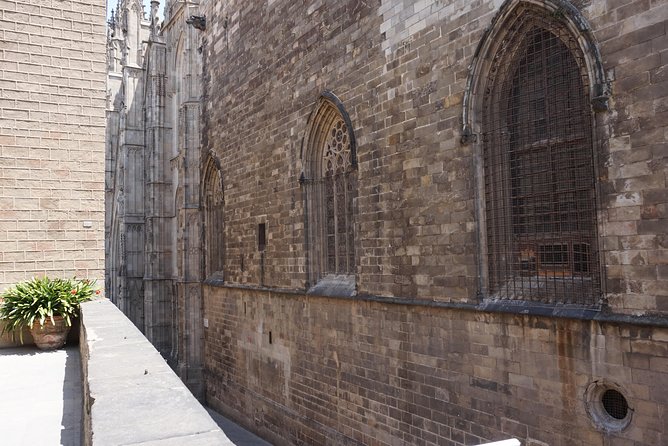
Plaça del Rei is one of the strongest historical points on the route. The royal palace, Palau Reial Major, and surrounding buildings form a calm architectural group that helps explain Barcelona’s medieval importance.
I find this kind of stop especially useful because it moves beyond pretty streets. You get a sense of how power was organized in the old city, with royal buildings enclosing a formal square. The guide can give the setting a human scale by explaining how the space fit into medieval Barcelona.
The official stop time is about ten minutes. If the square catches your interest, note it as a place to revisit. The tour gives you the framework, while a later visit would allow more time for museums, interiors, or close study of the buildings.
Two thousand years at the Temple of Augustus
The MUHBA Temple d’August is one of the route’s most surprising stops. On Carrer Paradís, four columns from the Temple of Augustus survive inside a small medieval courtyard. They are more than 2,000 years old and link directly to Roman Barcelona.
The setting makes the visit memorable. You are not approaching a large freestanding classical ruin. Instead, the columns survive inside the dense old city, where later buildings grew around them. That contrast explains why a guided walk is useful here. Without context, you might pass through the courtyard, take a quick photograph, and miss the scale of what you are seeing.
The stop lasts about ten minutes and does not list an admission fee. It is another place where you may want to return if Roman archaeology is a major interest.
Santa Maria del Mar and Carrer de Montcada
The Basilica of Santa Maria del Mar is described as the real cathedral of the old town because local residents built it during the medieval period. It is one of the clearest expressions of Catalan Gothic art on the route and a major visual highlight.
The tour gives you an exterior and historical introduction rather than promising a full interior visit. That distinction matters. If you want quiet time inside the basilica, plan to return independently. The guided stop helps you understand why the church matters to the neighborhood and to Barcelona’s medieval identity.
From there, the walk reaches Carrer de Montcada, the city’s most important area for medieval civic architecture. The street begins near the 12th-century Romanesque Marcus chapel and runs toward Plaça del Born. Its history also reflects later urban change: Carrer Princesa divided the former single street in 1853.
The Montcada family gave the street its name. The family received land in the 12th century, connected with Guillem Ramon de Montcada’s support for King Ramon Berenguer IV during the conquest of Majorca. That story brings together family power, royal ambition, and the physical growth of the city.
What the pintxo and drink add
The included food is one pintxo and one drink. A pintxo is not quite the same as a larger tapas meal, so think of this as a snack and a social finish, not dinner. One past guide ended at a small local place where the pintxo and beer provided a satisfying close to the walk.
This final stop has practical value. After two and a half hours on foot, you get a chance to sit, ask a last question, and compare notes with the group. It also gives you a first taste of Barcelona’s bar culture without requiring you to choose a restaurant on your own.
Food and drinks are not included beyond the stated pintxo and drink. If you arrive hungry, eat beforehand or plan dinner afterward. The tour is strongest as an orientation walk with a tasting, not as a dedicated food tour.
Guide style and group size
The experience allows up to 20 people. That is small enough for a walking group to move through the quarter, but a full departure may feel less intimate in tight lanes or at a busy square. If you like asking many questions, stay near the guide and speak up during pauses.
The guide is central to the quality of this experience. Past guides named Ariana, Leah, Núria, and Maria were described as friendly, lively, and able to make the history easy to follow. One guide even helped a participant choose olive oil by calling a shop, an example of the practical help that can make a city walk feel personal.
The tone seems suited to curious visitors who want facts, architecture, and small details. One lower rating wanted more legends and stories, so you should not book this expecting a theatrical tale-filled performance. The focus leans toward history, buildings, and how the quarter developed.
Price, timing, and practical value
At $54.06 per person, the price is fair if you value a guided introduction, a small tasting, and a compact route through several important sights. You are paying for the guide’s interpretation and the convenience of connecting Roman, medieval, and Gothic Barcelona in one outing. The admission-free stops mean the value rests mainly on the guiding rather than entry tickets.
The 3:30 pm start is particularly useful. You can spend the morning at another attraction, arrive after a cruise, or use the tour as your first structured activity after checking into a nearby hotel. One past booking worked well for visitors who had just arrived from a cruise and wanted a quick introduction to the area around their accommodation.
Wear comfortable shoes. The route includes plenty of walking, narrow lanes, and frequent stops. Most people can participate, service animals are allowed, and the meeting point is near public transportation. Hotel pickup and drop-off are not included.
Free cancellation is available up to 24 hours before the start time. Changes or cancellations inside that window are not refunded, and the tour requires a minimum number of participants. Confirmation is provided when you book.
Who should choose this Gothic Quarter walk
I would choose this for a first or second day in Barcelona, especially if you want the old city to make sense before exploring it alone. It also suits history fans, architecture lovers, couples, families with teenagers, and solo visitors who like meeting people during a group outing.
The tour works well if you want a manageable introduction rather than a full-day program. Its broad route lets you mark places for a later return, including the cathedral area, Plaça del Rei, the Temple of Augustus, and Santa Maria del Mar.
I would think twice if you want extensive interior visits, a full meal, or a highly theatrical account of local legends. The stops are short, the tasting is small, and the guide’s approach may focus more on historical explanation than folklore.
Should you book it?
Book this Gothic Quarter experience if you want a well-organized afternoon walk that connects Barcelona’s Roman roots with its medieval streets and churches. The best reasons are the range of sights, the useful 3:30 pm timing, the social pintxo stop, and the chance to get oriented before exploring on your own.
Skip it if you already know the Gothic Quarter well or prefer to linger at each sight independently. For a first visit, though, the combination of guide, compact route, and snack offers solid value at $54.06, especially when you treat it as an introduction rather than a complete tour of every building.
FAQ
How long does the Gothic Quarter tour last?
The experience lasts approximately 2 hours and 30 minutes. It begins at 3:30 pm and ends back at the meeting point.
Where does the tour start?
The meeting point is Lamaro Hotel Barcelona, Av. de la Catedral, 7, Ciutat Vella, 08002 Barcelona, Spain.
What food and drink are included?
The tour includes one pintxo and one drink. Additional food and drinks are not included.
What languages are offered?
The experience is offered in English. Multilingual guiding is listed in English, Spanish, French, and Italian, while the included guide information specifies English, Spanish, and French.
How many people can join the group?
The tour has a maximum group size of 20 travelers.
Can I cancel for a refund?
Yes. You can cancel at least 24 hours before the local start time for a full refund. Cancellations or changes made less than 24 hours before the start are not refunded.
Recently reviewed in Barcelona
- Barcelona Morning Tapas Crawl by Food Tour★ 5.0 · 45 reviews
- Wine & Cava Penedes Tour: Wineries, Wine Tasting and Tapas★ 5.0 · 5 reviews
- Barcelona Sailing Experience: Spanish Tapas and Premium Open Bar★ 4.5 · 34 reviews
- Tapas Bike Tour Barcelona★ 5.0 · 8 reviews
- Barcelona Tapas & Wine Private Tour in Traditional Taverns★ 4.5 · 60 reviews
- Tapas & Sidecar Motorcycle Barcelona Tour★ 5.0 · 26 reviews
- Tapas and Wine Walking Tour in Barcelona★ 5.0 · 47 reviews
- Barcelona’s Most Terrific of Tapas Tours in the Gothic quarter★ 5.0 · 2 reviews
Old Town Tapas Walks, compared.

Valencia Old Town Tour with Wine & Tapas in 11th Century Historic Monument
Read our review →
Old Town Tour, Wine & Tapas in an 11th c. Monument
Read our review →
Barcelona Gothic Quarter Tapas & Taverns Food & Wine Tour
Read our review →
San Sebastian Old Town Pintxos & Wine Tour Small Group Tour
Read our review →
El Born and Gothic Quarter Wine & Tapas Bar Tour
Read our review →
Barcelona Old Town Tapas Tour: Vermouth, Bites & Hidden Gems
Read our review →
Barcelona Old Town Tapas Night: Hidden Bars, Cava & Vermut
Read our review →
Private Tour: Tapas, Wine & Flamenco Show in Barcelona’s Old Town
Read our review →Browse the lists this tour appears in