
REVIEW · TAPAS AND WINE TOURS
Barcelona Side Streets Tapas & Wine Tour
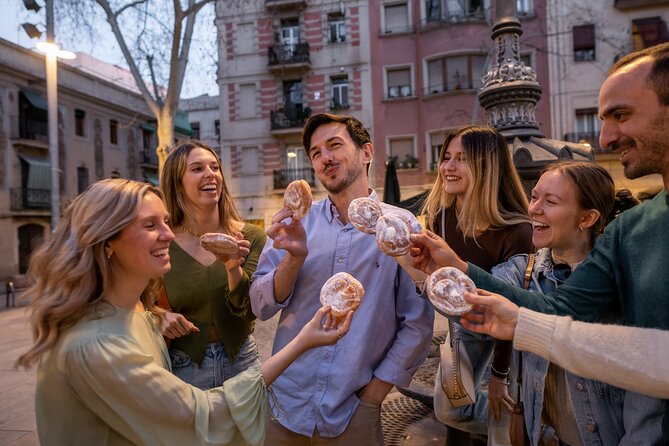
Barcelona’s best food lesson may come one small plate at a time. This 3.5-hour walk links El Born, Barceloneta, and the old Port through Catalan dishes, drinks, medieval lanes, a 2,000-year-old wall, and Santa Maria del Mar. You get more than a meal here. You get the story behind what lands on your plate.
I like the focus on local Catalan cooking, rather than a parade of generic Spanish favorites. I also like the way drinks are part of the route: cava, Basque vermut cocktails, and white wine poured from a traditional porrón. Guides Lindsey and Lindsay have earned especially strong marks for their city stories and food choices.
The main caution is dietary. Vegetarian choices may be limited, and the tour is not suitable for vegans. At $112 per person, the value depends on how much you want a guided food-and-history walk, rather than simply stopping at inexpensive tapas bars on your own.
Key points at a glance
- Five food stops in 3.5 hours: Expect a steady sequence of tastes, drinks, and short walks rather than one long restaurant meal.
- Bomba de Barceloneta and Fideuà: Two signature bites give the tour a clear Barcelona and Catalan identity.
- El Born to the seaside: The route connects medieval alleys, Picasso’s home, the old Port, and Barceloneta.
- Three local drinks: Cava, vermut, and white wine from a porrón add useful cultural context to the food.
- Stories between plates: Guides Lindsey and Lindsay have been praised for fun facts about Barcelona and for choosing distinctly Catalan dishes.
- Good practical flexibility: You can cancel up to 24 hours before the start for a full refund, or reserve now and pay later.
Why this food walk feels different from a standard tapas crawl
Many Barcelona food outings lean on familiar Spanish shorthand: a little ham, a little tortilla, perhaps some patatas bravas. This route takes a more local path. You taste Catalan tomato bread, aubergine tortilla or fried aubergine, Bomba de Barceloneta, and Fideuà.
That distinction matters. Catalonia has its own food traditions, and the tour uses the meal to explain Roman, Moorish, and Latin influences. You are not just checking off snacks. You are learning why Barcelona’s cooking has its own character within Spain.
I like that the route includes both food and place. A bite of Bomba de Barceloneta means more when you are near the neighborhood that gives it its name. Fideuà becomes easier to place when it arrives during a walk that connects the Old Town with the port and sea.
The format also suits anyone who wants a gentle introduction to Barcelona. You do not need to know the difference between a Catalan specialty and a broader Spanish dish before you arrive. Your guide supplies the context, then lets you taste the lesson.
More Tapas and Wine Tours in Barcelona
- Montserrat Half-Day Tour with Tapas and Gourmet Wines
★ 5.0 · 7,359 reviews - Montserrat & Cogwheel Train, Gourmet Wine Tasting & Tapas/Lunch
★ 5.0 · 6,290 reviews - Barcelona Tapas and Wine Experience Small-Group Walking Tour
★ 5.0 · 5,804 reviews
Starting among El Born’s medieval alleys
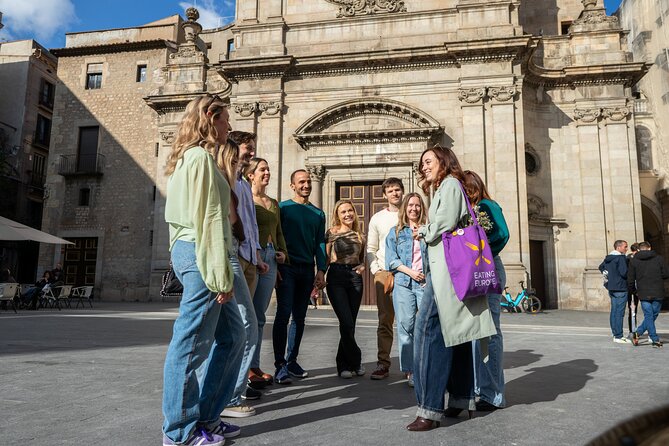
The meeting point is in the middle of a square, where you look for the guide carrying the Eating Europe logo. No hotel pickup is included, so plan your route to the square before the start time and allow a few extra minutes to get oriented.
From there, the tour moves through El Born. The narrow lanes give the opening part of the walk a historic setting without requiring a formal museum visit. You also see a 2,000-year-old wall, a direct reminder that Barcelona’s past reaches far beyond its modern food scene.
Santa Maria del Mar is another important stop. The church brings a striking Gothic setting into the route and helps break up the eating with architecture. The supplied details do not promise an interior visit or a dedicated church tour, so think of it as a landmark encountered along the walk, not a replacement for a full architectural visit.
Picasso’s home is also part of the route. The appeal here is the way the tour layers cultural landmarks into a food walk. You can connect an artist’s Barcelona with the city’s old streets, then move on to the next family-run food stop.
The walking is part of the point, but it does mean comfortable shoes are essential. Bring water, especially if the weather is warm, and carry a camera if you like collecting visual reminders between tastings.
The first plates: aubergine and Catalan tomato bread
The early food stops introduce dishes that may be less familiar than the headline tapas. Expect Aubergine Tortilla or fried aubergine, along with Catalan tomato bread.
Aubergine gives the meal a vegetable-led start, though the exact preparation can vary between tortilla and fried form. That flexibility is worth noting if you have strong food preferences. Vegetarian food is available, but the tour warns that choices may be limited, so you should share dietary needs before booking rather than assume every stop can adapt.
Catalan tomato bread is simple on paper, yet it says a lot about the region’s approach to food. Bread, tomato, and seasoning can be a small accompaniment, but on a tasting walk it gives you a basic local flavor before the heavier dishes arrive.
These opening tastes also help pace the afternoon. You are not expected to consume a full meal at every stop. Instead, the food arrives in portions intended to build into a complete sampling over several locations.
The tour may suit a curious eater better than someone seeking a single large restaurant meal. If you want to sit down for hours in one dining room, this format could feel too mobile. If you like seeing how a dish fits into its neighborhood, the movement adds value.
Vermut, cava, and the traditional porrón
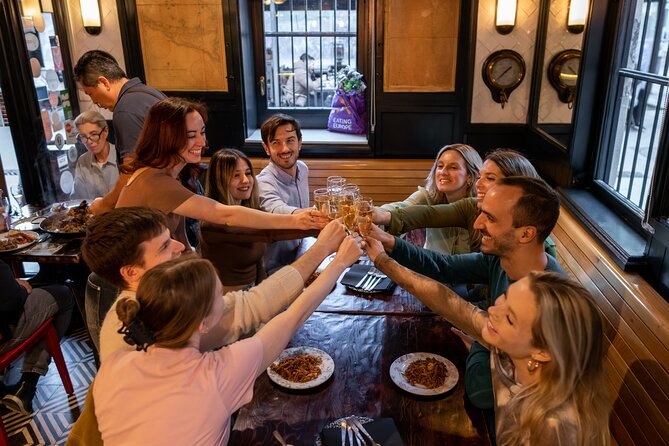
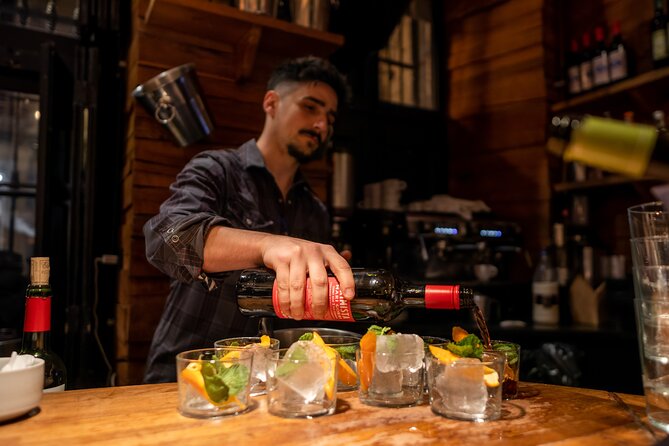
The drinks are not afterthoughts. You receive three local beverages across the route: cava, vermut, and white wine served from a traditional porrón.
The vermut portion includes Basque vermut cocktails. That gives you a chance to see how vermut fits into local drinking culture rather than treating it as a generic cocktail ingredient. The format is social and informal, making it a useful pause between food stops.
Cava brings a distinctly regional sparkling wine to the table. The experience does not specify the producer or style, so do not book this expecting a formal wine tasting with detailed technical notes. The strength is cultural context and variety.
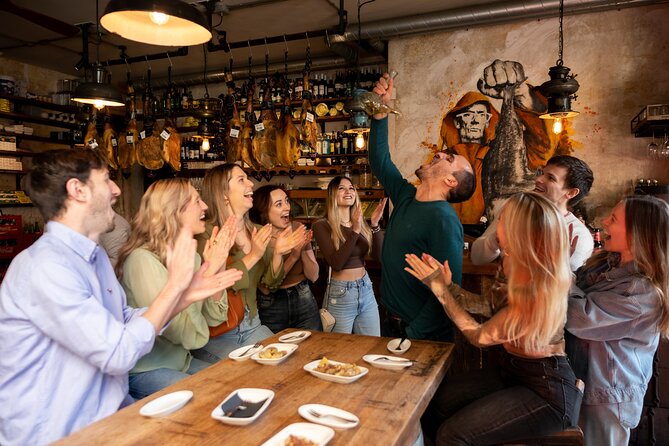
The porrón is the most playful serving detail. Wine is poured from this traditional vessel, which is known for allowing people to drink without touching the container to their lips. It is an old-fashioned piece of table culture and one of the tour’s more memorable small rituals.
Alcohol is included, so this tour is a better fit if you enjoy drinks with your food. The supplied information does not describe nonalcoholic alternatives, so ask in advance if you do not drink. You should also bring water, since the walk and tastings stretch over several hours.
More Tapas and Wine Tours in Spain
- Montserrat with Black Madonna & Medieval Winery with Tapas/Lunch
★ 5.0 · 5,209 reviews - Barcelona: Montserrat and Winery Tour with Tapas or Lunch
★ 4.8 · 4,695 reviews - Barcelona: Tapas Walking Tour with Food, Wine, and History
★ 4.8 · 4,261 reviews - Barcelona: Food Walking Tour with Tapas and Wine
★ 4.9 · 2,180 reviews
Barceloneta’s signature Bomba
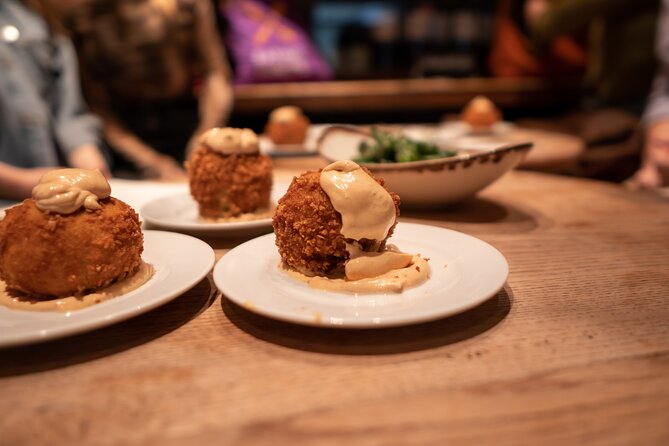
The Bomba de Barceloneta is one of the stops I would use to judge the tour’s local focus. It is an iconic bite associated with the seaside neighborhood, and the route takes you to Barceloneta rather than discussing the dish in the abstract.
The name and neighborhood connection make this more than another fried snack. You are tasting something tied to the city’s port-side food culture while walking through Barceloneta’s seaside setting.
The exact filling and preparation are not specified, so the tour does not promise a particular recipe. What it does promise is a chance to try the dish in the context of its home district, alongside stories about Barcelona and the food traditions that shaped it.
This part of the tour should appeal to anyone who likes food with a sense of place. It is also a good reason to schedule the experience early in your Barcelona stay. You will gain names and dishes to look for later, and you may find it easier to order local food after hearing the guide explain it.
Fideuà, Catalonia’s answer to a paella-style meal
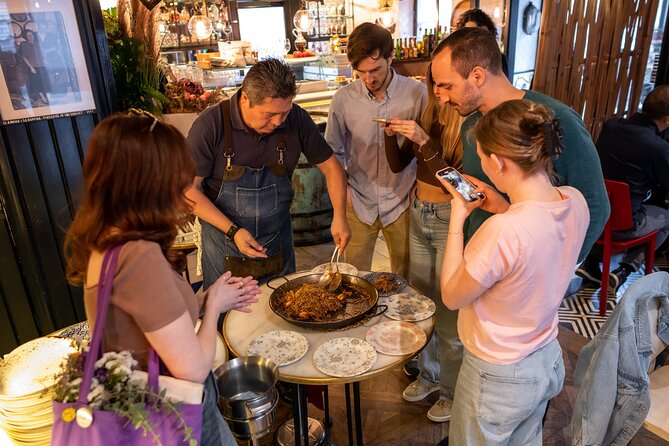
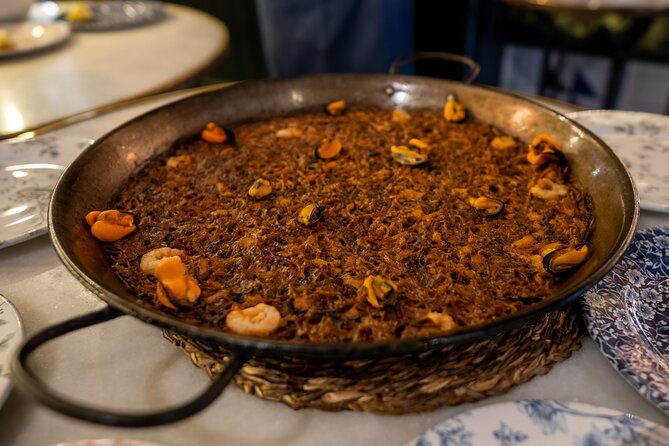
Fideuà is presented as a Catalan paella, and it gives the tour a hearty centerpiece. Rather than relying only on small fried items and bread, the route includes a substantial dish with a clear regional identity.
For many people, this may be the dish that most clearly separates the outing from a standard tapas crawl. You get a taste of Catalan cooking in a form connected to the wider Spanish tradition, but with its own name and place in local food culture.
The information provided does not specify the ingredients, restaurant, or portion size. That means you should regard it as a tasting rather than a guaranteed full serving of paella-sized food. Five food stops can add up to a satisfying meal, but appetites vary.
I would avoid eating a large lunch beforehand. You should arrive hungry enough to sample several dishes, but not so hungry that the walking between stops becomes uncomfortable.
Family-run restaurants and small local details
The tour includes family-run restaurants with generations of history. That detail matters because the setting changes the mood of the meal. Instead of treating Barcelona as a set of famous photo stops, the walk brings you into places connected to local dining traditions.
The route also includes lighter human touches, such as a bar’s resident seabird. It is an unusual detail, but it shows the kind of informal local character that can make a food walk memorable. You are not moving from one anonymous tasting counter to the next.
Guide quality matters greatly on a tour like this. The strongest comments attached to the experience praise Lindsey and Lindsay for fun facts, city stories, and selecting food that felt genuinely Catalan. One guide in particular was noted for bringing together a strong representation of Barcelona through both food and drink.
That is the right standard for this type of activity. The dishes need to be good, but the guide must also explain what makes them local. Based on the available feedback, storytelling is one of the tour’s strongest assets.
The pastry finish and the full 3.5-hour rhythm
The final stop ends with a traditional Catalan pastry. This is a sensible finish after savory food and drinks. It gives the route a clear beginning, middle, and end rather than leaving you with a random collection of bites.
The full duration is 3.5 hours. That is long enough to cover several neighborhoods and five food stops, but short enough to fit into a full sightseeing day. You will spend part of the time walking, part eating, and part listening to the guide.
Do not expect a fast sightseeing tour. The value comes from slowing down for food and conversation. Weather may affect your comfort, so dress for the forecast. The instructions specifically advise preparing for changing conditions.
The tour is wheelchair accessible, though the route includes medieval alleys and city streets. If you use a wheelchair, contact the provider before booking to confirm that the exact route and stop arrangements suit your needs. A private group option is available, which may be useful for families or friends who want a more personal pace.
Is $112 a fair price?
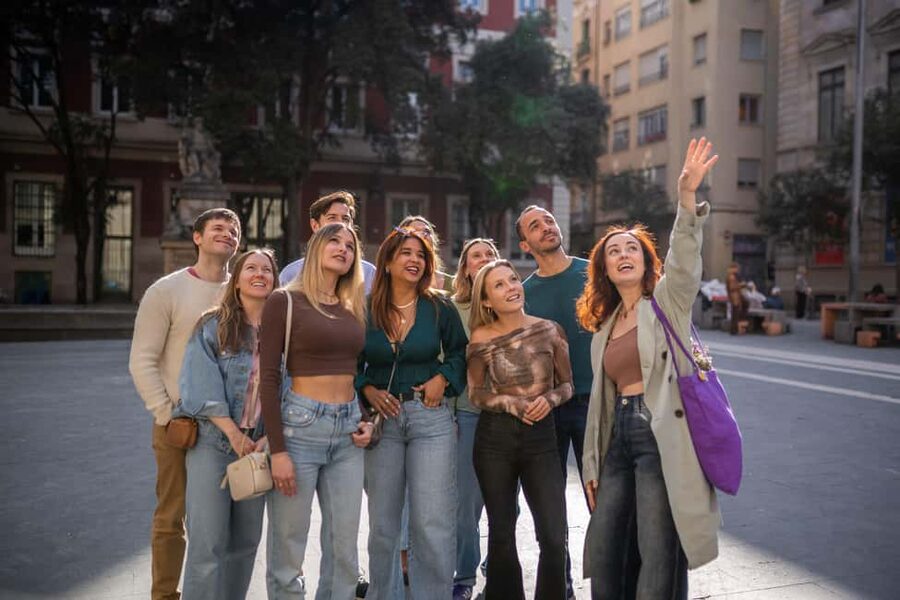
At $112 per person, this is not the cheapest way to eat tapas in Barcelona. You can certainly order individual dishes for less if you plan your own route and already know where to go.
The price makes more sense when you count what is included: five food stops, three local drinks, an English-speaking guide, neighborhood orientation, historical context, and the convenience of moving between established stops without planning each one yourself.
I see the value in the food selection. The route does not simply promise vague tapas. It names Bomba de Barceloneta, Fideuà, aubergine dishes, tomato bread, and a Catalan pastry. It also includes cava, vermut, and wine from a porrón, giving the afternoon a wider cultural range.
You are paying partly for access and partly for interpretation. If you are confident ordering local food and already have a detailed restaurant plan, the price may feel high. If you want a well-organized introduction to Catalan cooking, the combination is easier to justify.
Free cancellation up to 24 hours before the start and the option to reserve now and pay later reduce the risk of fitting it into a changing itinerary. Those policies are useful, but they do not change the basic price calculation: book it for the guided food-and-history experience, not simply for the calories.
Who should book this Barcelona food walk?
I would recommend it to first-time Barcelona visitors, food-focused couples, and small groups that want an English-speaking introduction to Catalan dishes. It also suits people who prefer a moving neighborhood walk to a formal cooking class or long restaurant dinner.
You will get the most from it if you are open to trying unfamiliar regional food, drinking local beverages, and listening to stories between plates. The route gives you a practical vocabulary for eating in Barcelona afterward.
Vegetarians should ask about the available choices before booking. The tour may include aubergine dishes, but vegetarian options are described as limited. Vegans should skip this experience because it is specifically marked as unsuitable for vegans.
The private group option may appeal if you want a more personal outing. The standard experience is conducted in English, and the guide is a major part of the value, so choose this only if that language works comfortably for you.
Should you book the Barcelona Side Streets Tapas & Wine Tour?
Book it if you want Catalan food tied to Barcelona’s streets, neighborhoods, and old landmarks. The strongest reasons are the local dish selection, the unusual drink traditions, and the guides’ well-regarded storytelling.
Skip it if you need a vegan menu, have very limited walking tolerance, or mainly want the lowest-cost way to eat tapas. For everyone else, $112 is a reasonable splurge for a structured afternoon that combines five food stops, three drinks, and a useful first look at El Born, Barceloneta, and the Port.
The best practical move is to schedule it early in your stay, wear comfortable shoes, arrive ready to eat, and bring water. You will leave with more than a full stomach: you will know which Catalan dishes to recognize when you order on your own.
FAQ
How long does the Barcelona Side Streets Tapas & Wine Tour last?
The tour lasts 3.5 hours and includes walking, five food stops, three local drinks, and a traditional Catalan pastry.
What food is included?
The food can include Bomba de Barceloneta, Fideuà, aubergine tortilla or fried aubergine, Catalan tomato bread, and a traditional regional pastry.
Which drinks are included?
The tour includes cava, Basque vermut cocktails, and white wine served from a traditional porrón.
Is the tour suitable for vegans?
No. The tour is listed as not suitable for vegans. Vegetarian options may also be limited.
Is the tour wheelchair accessible?
Yes, the activity is listed as wheelchair accessible. The route includes city streets, medieval alleys, and several food stops.
Where do I meet the guide?
Meet the guide in the middle of the designated square, looking for the Eating Europe logo. Hotel pickup and drop-off are not included.
Recently reviewed in Barcelona
- Barcelona Morning Tapas Crawl by Food Tour★ 5.0 · 45 reviews
- Wine & Cava Penedes Tour: Wineries, Wine Tasting and Tapas★ 5.0 · 5 reviews
- Barcelona Sailing Experience: Spanish Tapas and Premium Open Bar★ 4.5 · 34 reviews
- Tapas Bike Tour Barcelona★ 5.0 · 8 reviews
- Barcelona Tapas & Wine Private Tour in Traditional Taverns★ 4.5 · 60 reviews
- Tapas & Sidecar Motorcycle Barcelona Tour★ 5.0 · 26 reviews
- Tapas and Wine Walking Tour in Barcelona★ 5.0 · 47 reviews
- Barcelona’s Most Terrific of Tapas Tours in the Gothic quarter★ 5.0 · 2 reviews
Tapas and Wine Tours, compared.

Montserrat Half-Day Tour with Tapas and Gourmet Wines
Read our review →
Montserrat & Cogwheel Train, Gourmet Wine Tasting & Tapas/Lunch
Read our review →
Barcelona Tapas and Wine Experience Small-Group Walking Tour
Read our review →
Montserrat with Black Madonna & Medieval Winery with Tapas/Lunch
Read our review →
Montserrat and Winery Tour with Tapas or Lunch
Read our review →
Tapas Walking Tour with Food, Wine, and History
Read our review →
Madrid Tapas & Wine Tasting Walking Tour – Small Group Local Bars
Read our review →
Sevilla Food Tour: Tapas, Wine, History & Traditions
Read our review →Browse the lists this tour appears in