
REVIEW · TAPAS WALKING TOURS
Málaga: Highlights Walking Tour with Drinks and Tapas
Málaga’s best feature on this tour is the mix of city sights and everyday food. In three and a half hours, you walk from the port-side meeting point through the old center, stopping at three typical bars for a drink and tapa. It gives you a useful first look at the city without trapping you inside a coach or a lecture hall.
I like the route’s range. You see Picasso’s birthplace and the Roman Theater, then move through markets, churches, squares, and old lanes. I also like the small maximum group of 12, which should make it easier to hear the guide and keep the walking pace together.
The main limitation is clear: you do not enter Málaga’s major monuments. You view the Alcazaba, Cathedral, Roman Theater, and Gibralfaro Castle from outside, while the only interior stops are the bars. The 11:15 a.m. start and the walking demands also matter if you have limited mobility or only want a short port-side outing.
Key points to know before you book
- Three drinks and three tapas: One drink and one tapa are included at each of three bars.
- A broad old-center route: The walk links the Atarazanas Market, San Juan Church, Plaza de la Constitución, Plaza de la Merced, the Roman Theater, Cathedral, and Calle Marqués de Larios.
- Picasso’s Málaga connection: You visit Plaza de la Merced, where you can see the house where Pablo Picasso was born.
- No monument interiors: The tour shows the principal buildings from outside, with bar visits providing the indoor stops.
- Small group format: The maximum group size is 12 people.
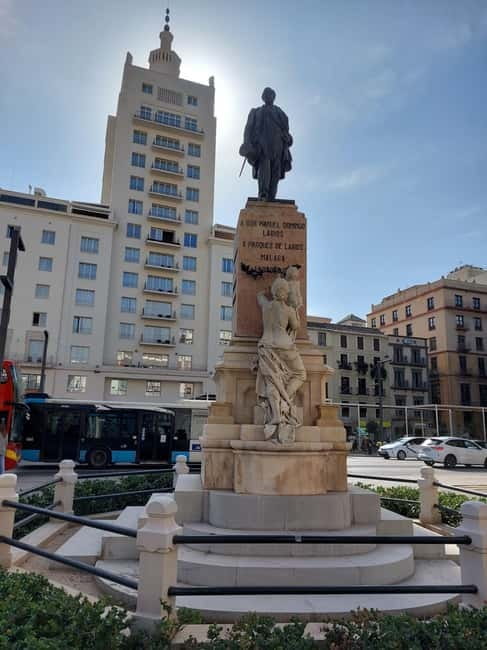
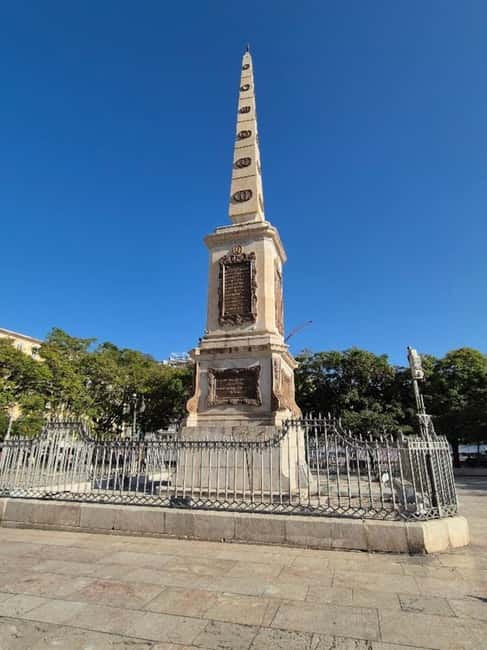
- Easy port meeting point: Meet at the statue of the Marquis de Larios, on the corner of Alameda Principal and Larios Street, across from the cruise shuttle.
Three tapas stops give the walk its flavor
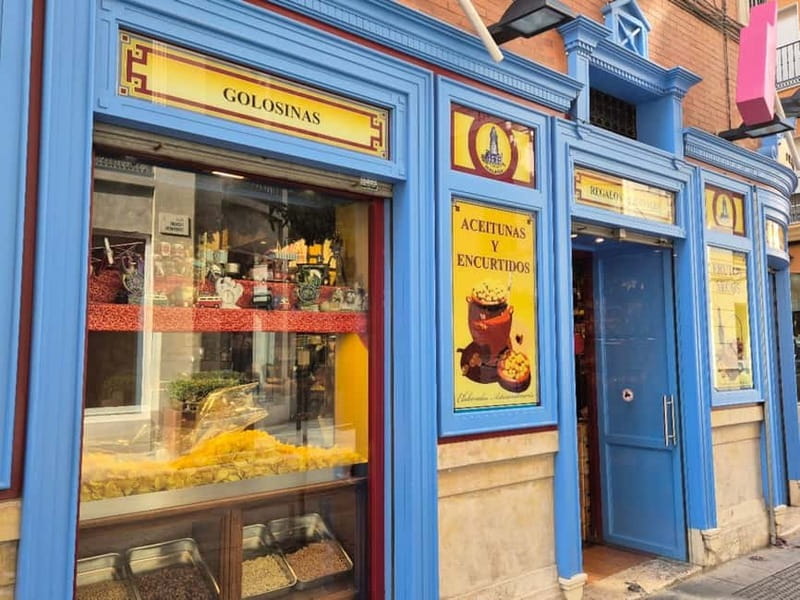
This is not just a sightseeing walk with a snack tacked on at the end. Food is part of the route. You stop at three different bars, and each stop includes one drink and one tapa.
That structure gives the tour a pleasant rhythm. You walk, look, listen, then sit or pause for something local before continuing. Three drinks over three and a half hours is also spread out enough to avoid turning the tour into a rushed bar crawl.
The exact drinks and tapas are not specified, so you should not book this expecting a fixed tasting menu. The experience is better understood as a casual introduction to Málaga’s bar culture. You may get more from it if you are willing to try the house choice rather than compare each tapa with a restaurant meal.
The bars are described as typical and traditional, with the route including authentic bodegas. That matters because food stops here are meant to show you how the city eats in ordinary settings, not simply provide a polished tourist lunch.
I would treat the included food as a substantial snack rather than a guaranteed full meal. If you have a large appetite, plan another meal later. If you enjoy trying local bites while learning the layout of a city, the three-stop format is a strong part of the price.
More Tapas Walking Tours in Malaga:
- Wine and Tapas walking Tour in Malaga
★ 5.0 · 70 reviews - Self Guided Wine and Tapas Walking Tour
★ 5.0 · 8 reviews - Malaga: City Center Walking Tour with Tapas Food Tastings
★ 5.0 · 5 reviews
From the cruise shuttle to Málaga’s oldest bar
The meeting point is practical for cruise passengers. You meet at the statue of the Marquis de Larios, where Alameda Principal meets Calle Larios, directly across from the cruise shuttle. Your guide carries a bag marked Andalucia, which gives you a clear visual sign at a busy city corner.
The route begins with Málaga’s oldest bar. The supplied details do not name the bar, so I cannot promise a particular interior, menu, or specialty. Still, starting with an old drinking place sets the right tone: you begin with the city’s social life before moving into its larger monuments.
This first stop may also help you settle into the group. You can meet the guide, learn how the food portions work, and get a feel for the pace before the longer stretch through the center.
The tour is led in English, French, or Dutch. Andy is one guide associated with the experience, and his work with a family group included historical, cultural, and food-related explanations. That combination is useful here, since Málaga makes more sense when you connect its buildings with the way people use its streets and bars today.
Atarazanas Market and the working side of the center
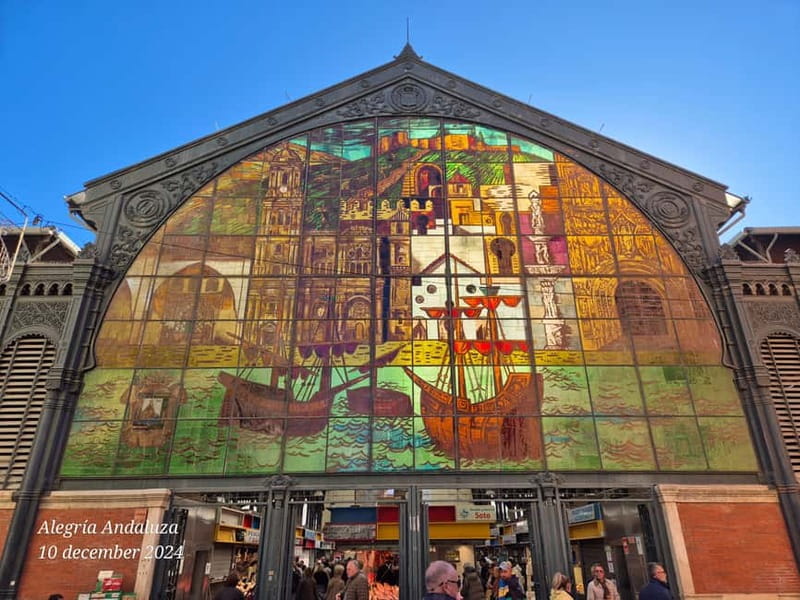
The walk continues to Atarazanas Market, described as Málaga’s biggest market. This is one of the more useful stops for getting beyond the postcard version of the city.
Markets show you what a place cooks with and how its food trade works. Even when you are not buying anything, the market gives context to the tapas later in the tour. You can better understand why fresh ingredients matter in Andalusian cooking and how the old center still serves daily life.
The market stop is also a good reason to wear comfortable shoes. You are not simply crossing a few plazas. The itinerary links several parts of the center, and the full tour lasts three and a half hours.
The details do not state how long you spend inside the market or whether food samples are included there. Your included eating stops are the three bars, so think of Atarazanas as a sightseeing and local-life stop rather than a fourth tasting.
San Juan Church, San Telmo, and the city’s central squares
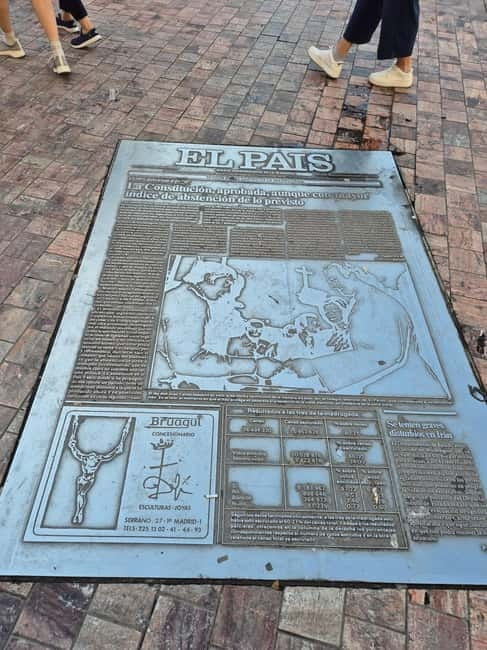
From the market, the route reaches San Juan Church and the old San Telmo school. These stops add variety to the walk. Instead of seeing only grand civic buildings, you get religious and educational landmarks as part of the same city story.
You then pass through Plaza de la Constitución, one of the central public spaces in Málaga, before entering Passage Chinitas and Plaza Carbon. These smaller passages and squares help show how the historic center is arranged. They are especially useful for you if this is your first visit, since the walk helps connect places that can feel scattered when you explore alone.
The tour does not enter San Juan Church or the other buildings. Your guide explains and points out the sites from public areas. That keeps the route moving, but it also means you will not see interiors, religious art, or architectural details that require a ticket or opening time.
I see this as a good trade for a first orientation tour. You cover more ground and get a clearer map of Málaga. If your main goal is to study the inside of the Cathedral or Alcazaba, you will need a separate visit.
Other Malaga tapas evenings worth comparing
- Caminito del Rey & White Village Tour with Tapas from Málaga
★ 4.9 · 2,209 reviews - Malaga Wine & Tapas Small Group Guided Tour
★ 5.0 · 1,972 reviews - Málaga: Wine & Tapas Tour
★ 4.8 · 1,039 reviews - Taste of Malaga Tour : Tapas, History and Local Customs
★ 5.0 · 758 reviews
Plaza de la Merced and Picasso’s birthplace
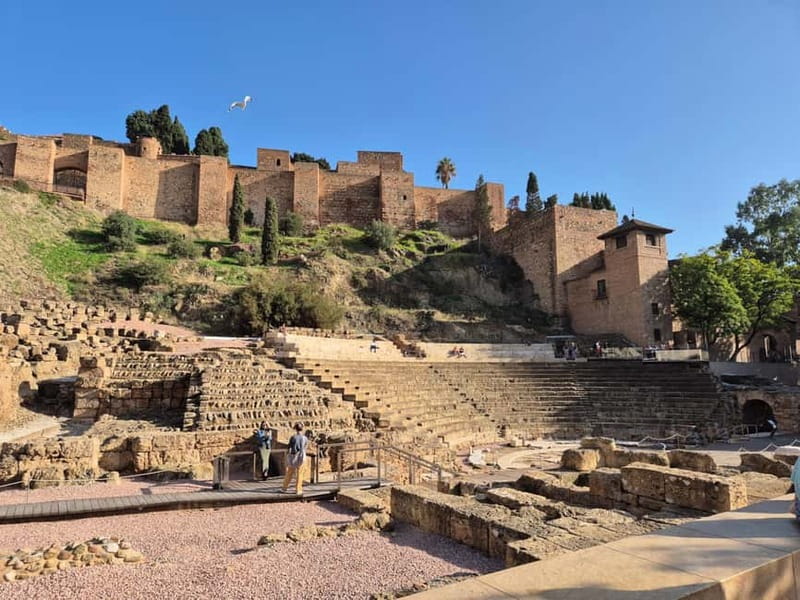
Plaza de la Merced is one of the route’s most recognizable stops. Here you can see the birthplace of Pablo Picasso, linking Málaga to one of Spain’s most famous artists.
The stop is more valuable when treated as a city connection rather than a full museum visit. You see where Picasso was born, but this tour does not take you inside buildings. If you want a deeper look at his life and work, you will need to arrange a separate museum or house visit.
Still, the birthplace gives the walk a personal detail. It reminds you that Málaga’s cultural importance is not limited to ancient ruins and churches. The city also shaped a major modern artist.
Plaza de la Merced comes after several historic-center stops, so the route has already given you a sense of Málaga’s older streets before arriving at this artistic landmark. That gradual build makes the stop more meaningful than simply checking a birthplace off a list.
Roman Theater and the Alcazaba from outside
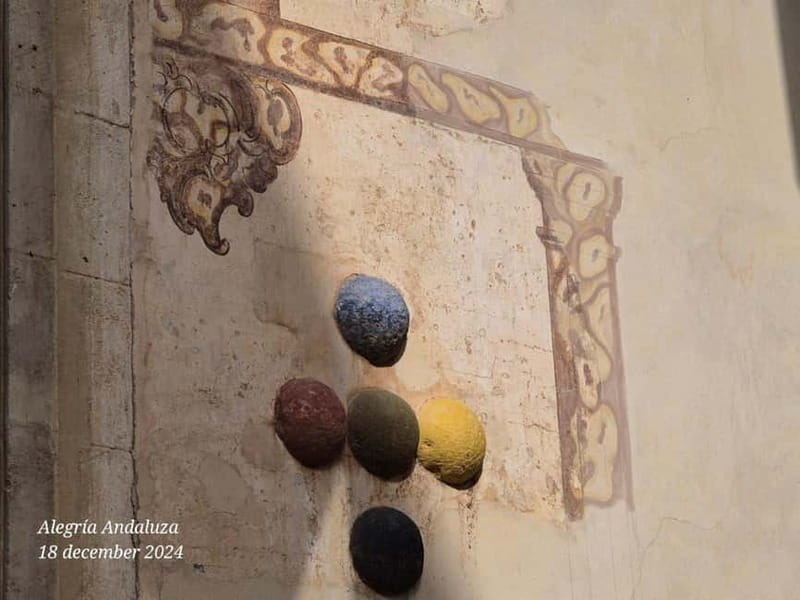
The Roman Theater is one of the most important ancient sights on the route. You see it from outside, alongside the Alcazaba, which the tour describes as Málaga’s little Alhambra.
The comparison gives you a quick sense of the Alcazaba’s role as a fortified palace complex, though this walk does not take you through its courtyards or walls. You get an exterior introduction, a guide’s explanation, and a chance to place the monument within the old city.
This is where expectations matter most. If you want to explore the Roman Theater or Alcazaba at length, book this walk as an introduction, not as a replacement for admission. The tour specifically does not enter buildings other than the bars.
That limitation can actually suit a port day. You can see several major sights without spending your whole morning in one monument. You also avoid building the tour around timed admission, which helps the group keep a steady route through the center.
Gibralfaro Castle and the Cathedral
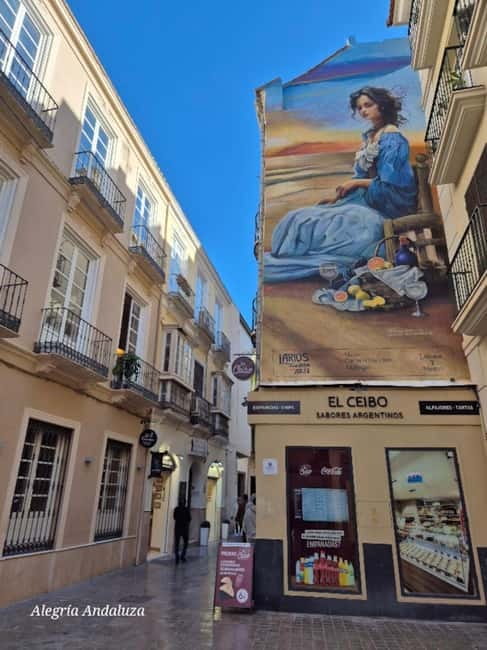
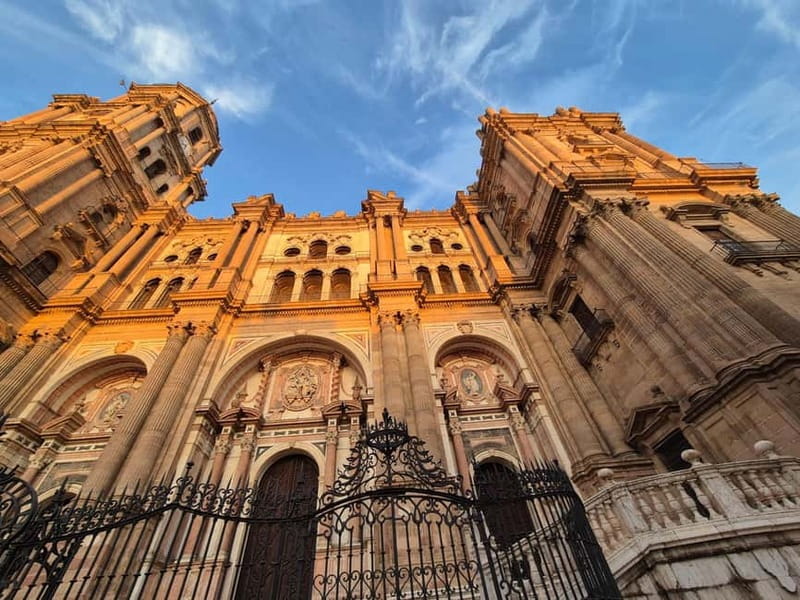
The itinerary also points out Gibralfaro Castle and Málaga Cathedral. These are large, important landmarks, but the tour’s format means you view them from outside.
Gibralfaro Castle gives the route a strong visual connection to Málaga’s defenses and hilltop setting. The supplied information does not promise a climb to the castle or a viewpoint visit, so you should not assume that you will walk through the fortress or reach its highest terraces.
The Cathedral adds another layer to the city center. It is one of the sights you can understand better after walking through the surrounding squares and streets. Again, this is an exterior visit, so anyone wanting the full interior should set aside separate time.
The Episcopal Square follows naturally in this part of the route. You get several landmark views in a compact area, which makes the final section efficient. You are seeing a lot, but you are not receiving the slower, detailed treatment that comes with a dedicated monument tour.
Ending on Calle Marqués de Larios
The walk ends on Calle Marqués de Larios, Málaga’s best-known shopping street. This is a convenient finish because you end in a central area with easy access to shops, plazas, and other parts of the old center.
The ending also brings you back close to the starting point. That is useful for cruise passengers, especially if you want to return to the shuttle, continue shopping, or find lunch nearby. The tour does not provide a return transfer, but the finish is in a central pedestrian area rather than at an isolated outpost.
Ending on Larios Street gives the route a modern counterpoint to the market, church, ruins, and old bars. You finish with Málaga as a living city, not only as a collection of monuments.
What $105 means in practical value
At $105 per person, this is not a bargain-priced orientation walk. The value depends on how much you would otherwise spend on food and how useful you find a local guide for joining the city’s sights together.
You receive three drinks, three tapas, and three and a half hours with a local expert. The route also covers a broad list of landmarks that would take some planning to connect on your own. For a first visit, that combination can make the price reasonable, especially if you enjoy eating as you sightsee.
The value is weaker if you mainly want monument access. Your fee does not include entry into the Cathedral, Alcazaba, Roman Theater, Gibralfaro Castle, Picasso’s birthplace, or the market as a formal attraction. You are paying for the walk, explanations, route planning, and food stops.
The small maximum group of 12 improves the experience. It is not a private tour, but it is much easier to keep a group together and hear the guide than in a large coach group. That matters in narrow old streets and crowded public squares.
Two recent family outings received especially strong praise for the guides and food. Andy was thanked for explaining Málaga’s history, culture, and food, while another family group highlighted pleasant guiding, beautiful lanes, exceptional tapas, and authentic bodegas. Those details support the tour’s main appeal: a friendly, food-led introduction rather than a formal academic lecture.
The overall rating supplied for the activity is 3.5 from three reviews. That is a small sample, so I would not use it alone to make the decision. The written comments point clearly to the strongest features, the guide’s personal approach and the quality and setting of the tapas stops.
Who will get the most from this Málaga walk
I would choose this for a first visit, a cruise stop, or a short stay when you want a quick map of the old center. It suits you if you like history in manageable portions and prefer a tapa with your sightseeing.
Families may find the food breaks helpful, especially since the route mixes short explanations with movement through streets and squares. The positive family experiences also suggest that the guide can make the tour work for different ages, although no specific child policy is provided.
This is also a good fit if you want to hear English, French, or Dutch. The group size is limited to 12, and the 11:15 a.m. departure gives the tour a fixed morning schedule.
I would be cautious if you use a wheelchair. The activity is not suitable for wheelchair users, and the old-center walking route may be difficult for anyone who cannot manage sustained walking. You should also wear comfortable shoes and bring a camera.
Smoking is not allowed during the activity. That is worth noting for anyone who expects to smoke during outdoor walking stops.
Book it if you want food and orientation, not monument interiors
Book this tour if you want Málaga explained through its streets, bars, markets, squares, and major exterior sights. The three tapas and drinks give the route a social feel, while the small group and central meeting point make it practical for a port visit.
Skip it if your priority is entering the Alcazaba, Cathedral, Roman Theater, or Picasso’s birthplace. You will see those places, but you will not tour their interiors.
The booking terms are flexible: you can cancel up to 24 hours before the start for a full refund, and you can reserve now and pay later. Starting times should be checked when booking, but the tour itself starts at 11:15 a.m. The strongest reason to choose it is simple: you get a broad first look at Málaga with a guide, three local bar stops, and enough food to turn sightseeing into part of the city experience.
FAQ
How long does the Málaga walking tour last?
The tour lasts three and a half hours.
What time does the tour start?
The tour starts at 11:15 a.m.
Where is the meeting point?
Meet at the statue of the Marquis de Larios on the corner of Alameda Principal and Larios Street, directly across from the cruise shuttle.
How will I recognize the guide?
The guide will carry a bag marked Andalucia.
How many people are in the group?
The maximum group size is 12 people.
Which languages are available?
The live tour guide is available in English, French, and Dutch.
Are drinks and tapas included?
Yes. The activity includes three drinks and three tapas, with one drink and one tapa at each of three bars.
Does the tour enter the Cathedral or Alcazaba?
No. The tour does not enter buildings except for the bars.
Is the tour suitable for wheelchair users?
No. The activity is not suitable for wheelchair users.
What should I bring?
Bring comfortable shoes and a camera. Smoking is not allowed during the activity.
Recently reviewed in Malaga
- Wine, Tapas & Lake Zahara by e-bike incl Ronda pickup (full day)★ 5.0 · 4 reviews
- Wine & Tapas tour by electric bike (e-bike) including Ronda pickup (full day)★ 5.0 · 34 reviews
- Wine & Tapas tour by electric bike (e-bike) including Ronda pickup (half day)★ 5.0 · 33 reviews
- Evening Tapas Tour in Malaga★ 5.0 · 57 reviews
- Malaga: The Ultimate Flamenco & Tapas Tour★ 5.0 · 18 reviews
- PREMIUM TAPAS TOUR: Paella, Tapas, Winery and Flamenco★ 4.5 · 36 reviews
- Self Guided Wine and Tapas Walking Tour★ 5.0 · 8 reviews
- Private Malaga City Center Walking Tour with Tapas Food Tastings★ 5.0 · 2 reviews
Tapas Walking Tours, compared.
Barcelona Tapas and Wine Experience Small-Group Walking Tour
Read our review →
Tapas Walking Tour with Food, Wine, and History
Read our review →
Madrid Tapas & Wine Tasting Walking Tour – Small Group Local Bars
Read our review →

Barcelona Tapas Walking Tour: Food, Wine & History
Read our review →


Browse the lists this tour appears in