
REVIEW · TOURS
Tapas Tour in Córdoba
Córdoba tells its story through three plates: mazamorra from Roman times, aubergine with honey from the Muslim era, and oxtail linked to the Christian conquest. You walk between each stop after dark, passing Plaza del Potro and the Roman Bridge before ending with wine and a view of the Mosque-Cathedral.
I like the way the food gives the evening a clear historical thread, and I like the final terrace stop, which turns a simple drink into one of Córdoba’s best nighttime views. Guides such as José Antonio, Chema, and Barbara have also earned warm praise for their personality and explanations.
The main caution is value. At $112 per person, you receive three set tastings and drinks, but this is not a free-choice tapas crawl. It may feel expensive if you expect several generous plates or need food tailored to an allergy.
Key points to know before booking
- Three dishes, three periods: Mazamorra represents Roman Córdoba, aubergines with honey recall Muslim influence, and oxtail covers the Christian period.
- The route starts at Plaza del Potro: Look for the guide with an orange umbrella and arrive 10 minutes early.
- The Roman Bridge is part of the walk: The tour is both a food tasting and a short nighttime history walk.
- The final terrace faces the Mosque-Cathedral: You finish with local wine and a view of Córdoba after dark.
- The menu is fixed: You cannot select your own tapas, so contact the company ahead of time about allergies.
- The experience lasts two hours: It is offered in Spanish or English for a private group.
Córdoba after dark, with a plate in hand
This tour works because Córdoba is especially appealing at night. The old town becomes quieter, and the route links food with the city’s long sequence of Roman, Muslim, and Christian rule. Instead of treating the historic centre as a row of monuments, you use dinner to understand how different periods shaped local cooking.
The pace is simple. You meet at Plaza del Potro, walk to a local restaurant for the first dish, continue through the old town, stop for two more tastings, and finish on a rooftop terrace. The entire experience lasts about two hours, so you get an evening introduction rather than a full dinner or a lengthy city tour.
I would think of it as a guided tasting with three restaurant stops, not a classic Spanish tapas crawl where you order several small dishes at every bar. That distinction matters. One recent booking described the format as one course in each of three restaurants, and that is the safer way to picture the evening.
The guide speaks Spanish and English. It is also described as a private group, which can make the walking and conversation feel more personal than a large group outing. The named guides who have received especially warm praise include José Antonio, Chema, and Barbara. Their role matters here because the food is only half the point. You are paying for the explanation that connects each dish to Córdoba’s past.
Other Spain tapas evenings worth comparing
- Montserrat Half-Day Tour with Tapas and Gourmet Wines
★ 5.0 · 7,359 reviews - Montserrat & Cogwheel Train, Gourmet Wine Tasting & Tapas/Lunch
★ 5.0 · 6,290 reviews - Barcelona Tapas and Wine Experience Small-Group Walking Tour
★ 5.0 · 5,804 reviews
Starting at Plaza del Potro
Your meeting point is Plaza del Potro, a useful location in the old town and an atmospheric place to begin after sunset. Look for the guide holding an orange umbrella, and arrive 10 minutes before the scheduled start.
The meeting instructions are clear, but do not treat this as a pickup service. Hotel transportation is not included, so you need to make your own way to the plaza. The activity also does not provide a detailed arrival plan from your hotel, which makes arriving early a sensible idea, especially if you are staying outside the historic centre.
The opening stop is built around mazamorra, a cold soup made with bread and oil. It is presented as a dish with Roman roots. This is a useful beginning because it shows how a simple recipe can carry old cooking habits forward: bread, oil, and a thick texture rather than a light broth.
Mazamorra is not necessarily what everyone expects from a first course. The soup is meant to be cold, and one person who disliked the meal may not have realized that at first. If you prefer hot starters, or if the idea of a cold bread soup does not appeal to you, this is worth knowing before you pay.
Still, the dish has a clear purpose. It is not just a random local item placed on the menu. The guide uses it to introduce Córdoba’s Roman period and to explain how ingredients and methods remain part of regional cooking.
Walking toward the Roman Bridge
After the first tasting, the route continues toward the Roman Bridge. This is where the activity becomes more than a meal with commentary. Your guide explains the bridge’s place in Córdoba’s story while you walk through the historic centre at night.
The bridge is one of the most recognizable views in the city, and seeing it after dark gives the tour a strong visual pause between food stops. The walk also helps you understand the layout of Córdoba’s old town instead of moving directly from one restaurant to another.
Do not expect a full architectural tour of every major sight. The supplied details promise an explanation of the bridge and the emblematic places along the route, but the format remains a two-hour food walk. The guide has to balance history, movement, and restaurant timing.
That balance is part of the tour’s appeal for a first evening in Córdoba. You get an introduction to the centre without committing to a long walking tour. If you already know the city well, the historical explanations may feel brief. If Córdoba is new to you, the route gives you useful orientation and a nighttime view of its best-known monument area.
Aubergine with honey and Córdoba’s Muslim period
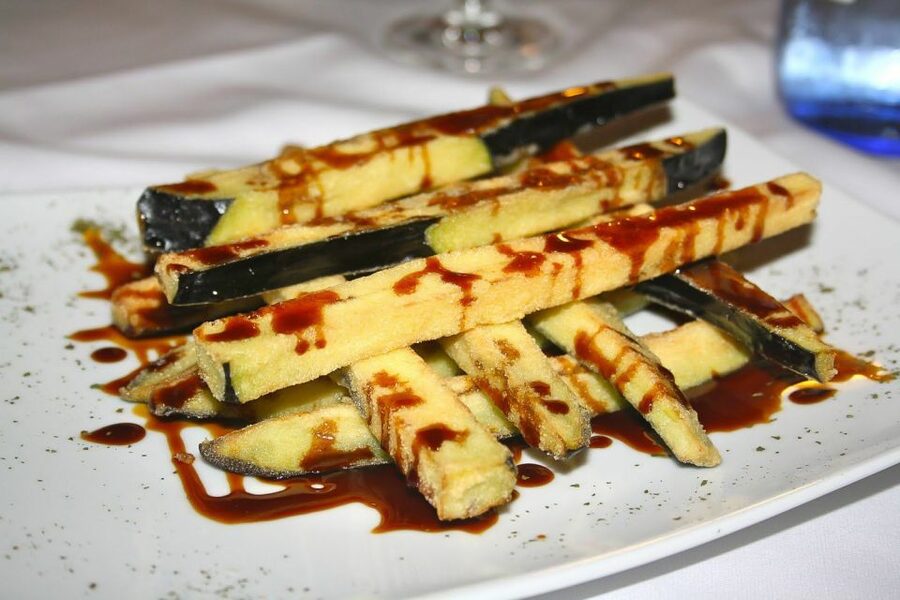
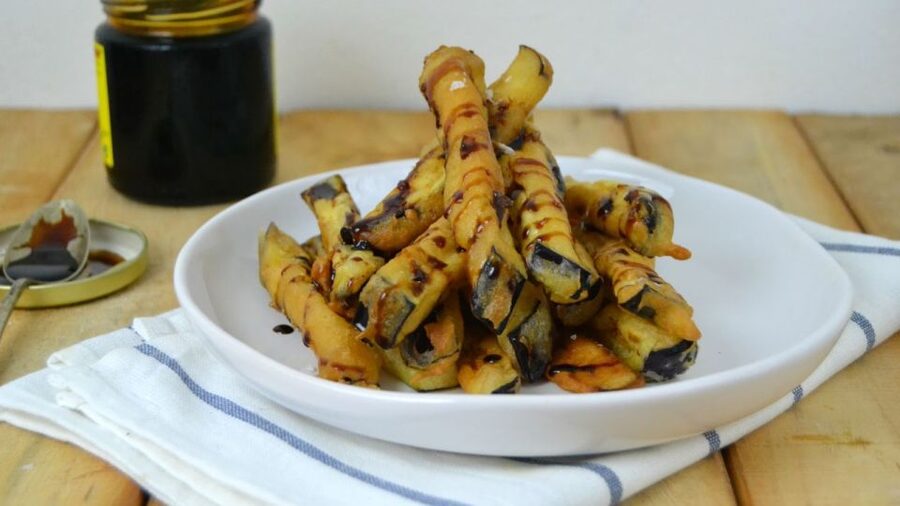
The second tasting is berenjenas califales, or aubergine with honey. The dish is tied to the Muslim period, when aubergines were introduced to the Iberian Peninsula by Muslim communities.
This is perhaps the most immediately distinctive plate of the three. The combination of fried aubergine and sweetness is a familiar feature of Andalusian cooking, but it may be new to you if your experience with aubergine is limited to savoury dishes. The guide uses it to show how ingredients introduced during one period can become part of the local food tradition.
The dish also gives you a chance to compare expectations with reality. One person found the aubergine bland, while another praised the food choices overall. That contrast is important. The meal is fixed, and the quality may depend on the restaurant and preparation on the night. You should book this for the cultural explanation and tasting format, not because every plate is guaranteed to be a personal favourite.
The portion is designed as a tasting rather than a full serving. You will want to keep that in mind if you are hungry. The tour includes drinks, but it is not described as a full meal with multiple choices, sides, or dessert.
Same streets, a different round:
- Montserrat with Black Madonna & Medieval Winery with Tapas/Lunch
★ 5.0 · 5,209 reviews - Barcelona: Montserrat and Winery Tour with Tapas or Lunch
★ 4.8 · 4,695 reviews - Barcelona: Tapas Walking Tour with Food, Wine, and History
★ 4.8 · 4,261 reviews - Madrid Tapas & Wine Tasting Walking Tour – Small Group Local Bars
★ 5.0 · 3,644 reviews
Oxtail and the Christian chapter
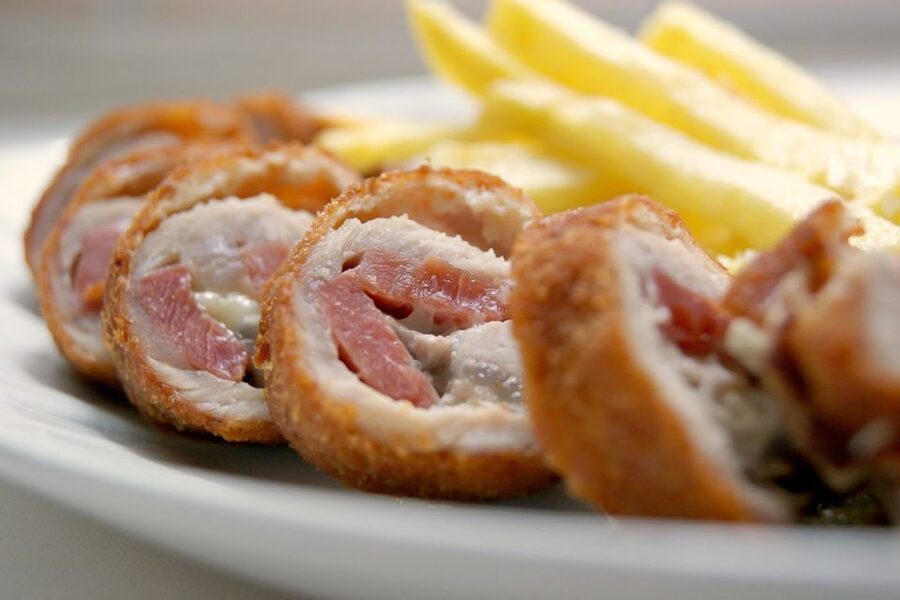
The third dish is rabo de toro, or oxtail. The tour links it to Córdoba’s Christian conquest and presents it as the food associated with that later stage of the city’s story.
Oxtail is a strong choice for the final savoury tasting because it is a recognizable Córdoba specialty. It is generally associated with a slow-cooked, gelatinous texture, and that texture can be either the attraction or the problem. One dissatisfied diner found the meat too gelatinous and the accompanying fries poor, while another described the food choices as excellent.
Again, the fixed menu makes this a matter of taste rather than choice. You cannot replace the oxtail with something else if you dislike slow-cooked meat or do not eat it. If that sounds like a concern, ask the company in advance. The supplied information specifically says the tapas are selected beforehand, not chosen by each participant.
The historical structure helps make the third plate more meaningful. You are not simply tasting oxtail because it happens to be available. You are hearing how the dish fits into the story the guide is telling. That connection is the tour’s strongest idea, even if the food itself may not satisfy every palate.
Finishing above Córdoba with wine
The evening ends on a rooftop terrace with a view of the Mosque-Cathedral. This is the tour’s most memorable setting, and it gives the experience a natural finish.
You have already walked through the old town and tasted the three dishes. Now you pause with local wine and look over one of Córdoba’s defining monuments after dark. The terrace is not just an extra drink stop. It provides the moment when the route comes together: food, history, and the city’s nighttime appearance.
The view may also explain some of the price. At $112 per person, the meal alone would be difficult to justify if you are measuring value by portion size. You are also paying for a private guided walk, the historical storytelling, three restaurant visits, drinks, and the rooftop setting.
That still does not make the price automatically good value. One dissatisfied booking felt that three tapas and three wines cost far more than they should have. A separate view of the same format is that the dishes were small, the soup was cold, and the aubergine and oxtail did not meet expectations. Those concerns are fair, especially for anyone comparing this with Córdoba’s ordinary tapas bars.
I would pay the price only if the guided context and terrace view matter to you. If your main goal is to eat as much as possible for $112, you can likely do better by ordering your own tapas. If your goal is a structured introduction to Córdoba’s food and past, the price becomes easier to defend.
What the strongest feedback tells you
The most consistent praise focuses on the guides. José Antonio was singled out for explaining Córdoba’s food, culture, and history, while Chema was described as charming and able to make the evening pleasant. Barbara was also praised for leading a well-organized tour with energy.
That tells you something practical: the guide can shape the quality of this experience. The historical links are built into the route, but a good guide makes the Roman, Muslim, and Christian chapters feel connected rather than like three unrelated facts.
The food feedback is less steady. Several people liked the choices and the mix of local dishes. Others felt the quality was poor or the portions did not justify the price. You should book with realistic expectations: this is a set tasting, and the food may be the weakest part of the experience for a picky eater.
The overall rating is 4.1 from 18 ratings, which suggests a generally positive experience but not a sure bet for every diner. The difference between the strong and weak responses seems to come down to expectations, food preferences, and how much value you place on the guide and setting.
Allergy and menu concerns
The company asks anyone with a food allergy to contact them in advance, and the activity is listed as unsuitable for people with food allergies. Take that warning seriously.
One person with a gluten allergy received an extremely limited selection, described as mostly potatoes. That is a clear sign that substitutions may not match the original menu and may not offer good value. Do not assume that a common dietary request can be handled easily.
The menu is not free choice. You receive the tapas selected by the local company, so you cannot simply avoid an ingredient at the restaurant. If you have an allergy, a strict diet, or strong dislikes, this is probably the wrong food tour unless the operator confirms a suitable plan before you book.
For everyone else, the set menu has one advantage: you do not need to spend time deciding what to order in three places. You can focus on the guide’s explanations and the walk. The tradeoff is less control.
Who will enjoy this two-hour tour?
I would recommend this experience to you if you want a short evening introduction to Córdoba, enjoy trying traditional dishes, and like learning why food matters in a place’s past. It suits a first visit particularly well because the route combines several old-town sights with a meal and a drink.
It also fits people who prefer a private group and want a guide speaking English or Spanish. The two-hour length is manageable before or after another evening plan, though you should not schedule it as your only dinner if you usually need a substantial meal.
I would be cautious if you are looking for a generous tapas crawl, want complete control over your order, or judge value mainly by quantity. I would also avoid it if you have a food allergy, based on the limited substitution experience already reported.
Should you book the Córdoba Tapas Tour?
Book it if you want history explained through three set dishes, a nighttime walk past the Roman Bridge, and a final drink with a view of the Mosque-Cathedral. The best part is the structure, especially when the guide, such as José Antonio or Chema, brings the food and history together.
Skip it if you want a low-cost meal, several full plates, or the freedom to choose your tapas. At $112, the tour is a splurge for the setting and storytelling rather than a bargain dinner. For the right person, that can be worthwhile. For a hungry diner with dietary restrictions or strong food preferences, it is a poor match.
FAQ
How long does the Córdoba tapas tour last?
The tour lasts two hours, including the guided walk, three tapas tastings, drinks, and the final terrace stop.
Where does the tour begin?
The meeting point is Plaza del Potro in Córdoba’s old town. Look for a guide holding an orange umbrella and arrive 10 minutes before the start time.
What food is included?
The set tasting includes mazamorra, a bread and oil soup associated with Roman times; berenjenas califales, aubergine with honey linked to the Muslim period; and rabo de toro, or oxtail, connected with the Christian period.
Can I choose my own tapas?
No. The tapas are selected in advance by the local company, so the menu is not free choice.
Is the tour available in English?
Yes. The tour is offered with a live guide in English or Spanish.
Are drinks included?
Yes. Drinks are included, and the tour ends with local wine on a terrace overlooking the Mosque-Cathedral.
Recently reviewed in Spain
- Barcelona : Gothic, Tapas, Churros & Vermouth★ 5.0 · 65 reviews
- City of Arts & Sciences Tour with Rooftop Tapas & Wine★ 5.0 · 41 reviews
- Midday market and tapas tour of Zaragoza★ 5.0 · 24 reviews
- Wine Tasting and Tapas in the ancient Town of Zaragoza★ 5.0 · 66 reviews
- Evening traditional tapas walking tour in old Zaragoza center★ 5.0 · 19 reviews
- Valencia: Wine Tasting and Tapas Experience★ 4.5 · 38 reviews
- Zaragoza: Evening Tapas Walking Tour in the Old Town★ 4.9 · 37 reviews
- Flamenco, Tapas and Wine Tour: Best of Málaga in one Evening★ 5.0 · 52 reviews
Tours, compared.

Montserrat Half-Day Tour with Tapas and Gourmet Wines
Read our review →
Barcelona Tapas and Wine Experience Small-Group Walking Tour
Read our review →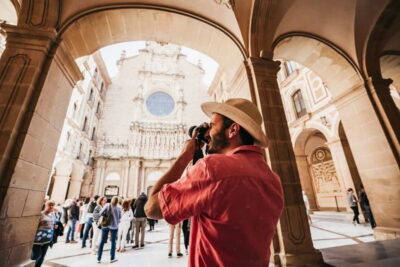
Montserrat and Winery Tour with Tapas or Lunch
Read our review →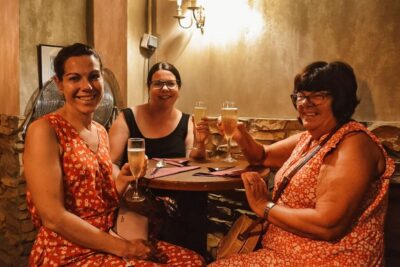
Tapas Walking Tour with Food, Wine, and History
Read our review →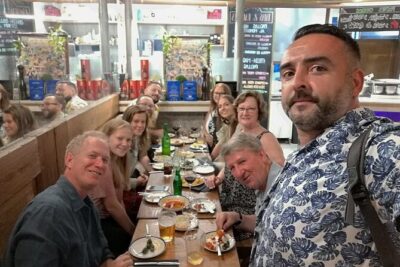
Madrid Tapas & Wine Tasting Walking Tour – Small Group Local Bars
Read our review →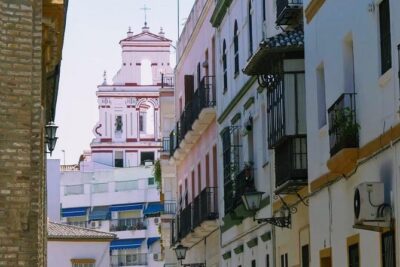
Sevilla Food Tour: Tapas, Wine, History & Traditions
Read our review →
Valencia Old Town Tour with Wine & Tapas in 11th Century Historic Monument
Read our review →
Madrid Tapas & Taverns Small Group Food & History Tour
Read our review →Browse the lists this tour appears in