
REVIEW · TAPAS AND WINE TOURS
Barcelona Tapas & Wine Experience as a Local at Hidden Wineries
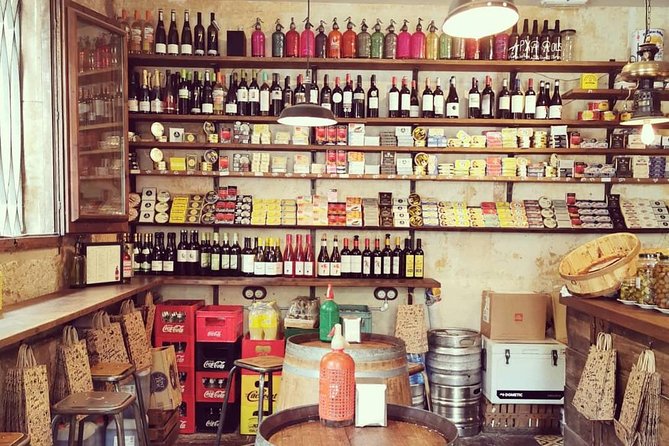
Barcelona’s best food lessons often happen at a small bar, not in a grand dining room. This three-hour walk links the Gothic Quarter, El Born, and Barceloneta with stops for Iberian ham, local cheeses, croquettes, tortilla, vermouth, and Catalan wines.
I like two things right away: the group is capped at 12 people, and the food comes with a running account of Barcelona’s past. Guides including Libor, Ellie, Eli, and Naomi have made a strong impression with their humor, local knowledge, and care with dietary needs. The main catch is pace: you will walk between stops, and a three-hour tour cannot give every neighborhood more than a taste.
Key points to know before booking
- 800-year-old market setting: The meeting area near La Rambla leads into one of the city’s best-known food districts.
- Three historic neighborhoods: You walk through the Gothic Quarter, El Born or La Ribera, and La Barceloneta.
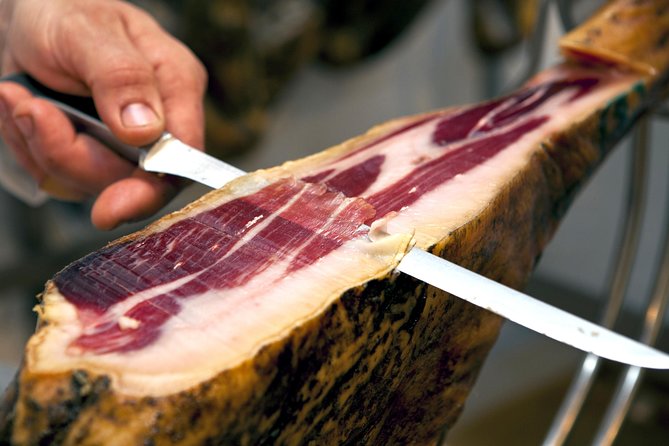
- A serious spread of tapas: Expect Iberian ham, six local cheeses, croquettes, patatas bravas, tortilla, tomato bread, a gilda, mojama, and smoked sardine.
- Regional drinks included: Tastings can include Terra Alta white wine, Montsant red wine, craft vermouth, and cava.
- Small-group format: A maximum of 12 people makes it easier to hear the guide and ask questions.
- Best early in your visit: The food stops and neighborhood advice can help you get your bearings before the rest of your Barcelona stay.
A food walk through Barcelona’s old center
This is not simply a bar crawl with a few historical comments added on. The food gives the walk its rhythm, while the streets supply the setting and context.
You meet at La Rambla, 97, in the Ciutat Vella district. From there, the route heads into the old center. Because the tour lasts about three hours, you should expect a compact introduction rather than a full sightseeing tour of every major landmark.
The format works well for first-time visitors. You get enough context to understand where you are, then stop to eat and drink before moving on. That break matters. Barcelona’s old streets can feel like a maze at first, and the combination of walking, short talks, and shared plates keeps the evening moving.
The small group also changes the tone. A guide can speak to everyone without shouting across a large crowd. You have a better chance to ask about Catalan food, local customs, or a place you pass on the way.
More Tapas and Wine Tours in Barcelona
- Montserrat Half-Day Tour with Tapas and Gourmet Wines
★ 5.0 · 7,359 reviews - Montserrat & Cogwheel Train, Gourmet Wine Tasting & Tapas/Lunch
★ 5.0 · 6,290 reviews - Barcelona Tapas and Wine Experience Small-Group Walking Tour
★ 5.0 · 5,804 reviews
Gothic Quarter: stone lanes and first tastes
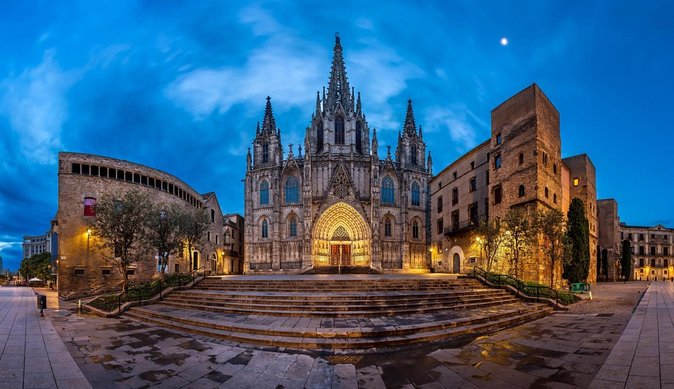
The Gothic Quarter is the natural opening chapter. Its narrow streets and old façades provide the setting for the first look at Barcelona’s long urban history.
You will not spend the entire three hours on formal sightseeing. Instead, the guide uses the route to explain the city as you walk toward the first food stops. That approach is useful if you prefer history in short, memorable pieces rather than a lecture.
The first plates may include Catalan tomato bread, Iberian ham, cheeses, or other traditional tapas. Tomato bread is a simple dish, but it says a lot about the local style: good bread, ripe tomato, olive oil, and salt do much of the work.
The ham and cheese are also practical introductions. You can compare textures and flavors while learning how Spanish and Catalan eating habits differ from the meal patterns you may know at home. Since dinner is included, you are not paying an extra bill at each stop.
Keep your expectations in check. A food walk can introduce you to the Gothic Quarter, but it does not replace a dedicated visit to the cathedral, Roman remains, or the area’s museums. Think of this section as a guided orientation with snacks.
El Born and La Ribera: old streets, family bars
The route continues toward El Born and La Ribera, two central districts with a strong food and neighborhood identity. The shift from one area to another gives the walk useful variety. You are not simply returning to the same type of bar for another plate.
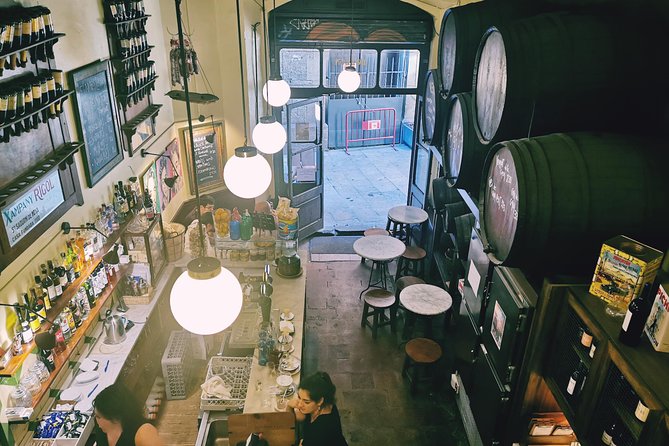
This is where the tour’s family-run character matters. The guides have taken groups to long-established local places rather than focusing only on the most obvious stops along the main tourist streets. That does not mean every location will feel secret or empty, but it does give the evening a more local shape.
You might taste a gilda pintxo, a small combination of ingredients served on a skewer, or mojama, salted cured tuna. These are the sort of foods that can be easy to miss if you only order familiar tapas.
The menu also includes croquettes and spicy potatoes called patatas bravas. These are more familiar, but they are useful points of comparison. A good food tour should not make every dish unusual. It should show you how ordinary bar food fits into local life.
The pace can be social here. The food arrives for the group, people compare plates, and the guide fills the gaps with stories about the district. If you are hoping for a quiet, private dinner, this is not the right format. If you enjoy eating with new people, the limited group size helps.
Santa Maria del Mar: a landmark between plates
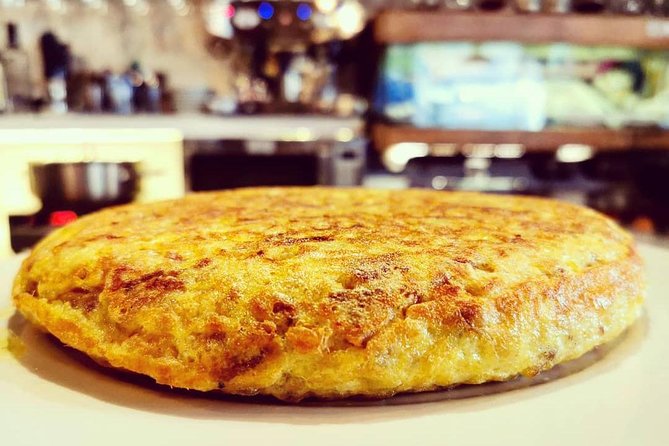
The Basilica of Santa Maria del Mar is one of the key stops. Its presence gives the tour a clear architectural anchor between food and drink.
The basilica is closely tied to the old La Ribera neighborhood, and its broad presence feels different from the tight lanes around it. The guide can connect the church and surrounding streets to the working life of the district, helping you see the area as more than a backdrop for photographs.
You should understand the sightseeing limits. The experience includes the basilica as part of a walking route, but the supplied details do not promise an interior visit or a formal guided tour inside. If you want extensive church architecture, plan a separate visit.
Still, this stop adds useful balance. Without landmarks, a tapas walk can blur into a series of meals. Santa Maria del Mar gives you a place to pause, look up, and connect the food districts to Barcelona’s older civic and religious history.
More Tapas and Wine Tours in Spain
- Montserrat with Black Madonna & Medieval Winery with Tapas/Lunch
★ 5.0 · 5,209 reviews - Barcelona: Montserrat and Winery Tour with Tapas or Lunch
★ 4.8 · 4,695 reviews - Barcelona: Tapas Walking Tour with Food, Wine, and History
★ 4.8 · 4,261 reviews - Barcelona: Food Walking Tour with Tapas and Wine
★ 4.9 · 2,180 reviews
Placeta del Pi: a small square with a local pause
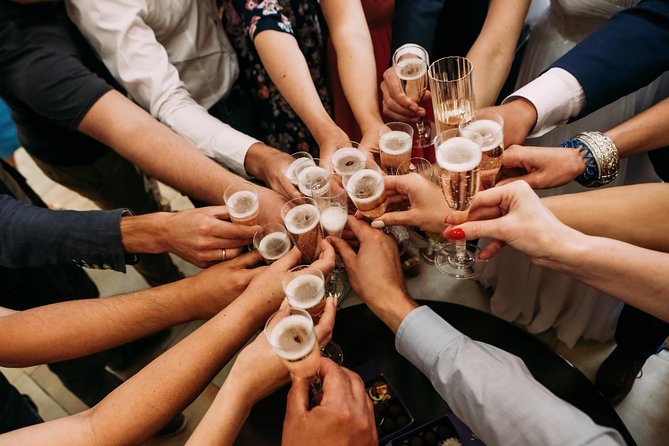
Placeta del Pi offers a change of scale. Instead of moving through long streets, you arrive at a more compact public space in the Gothic Quarter area.
This kind of stop is valuable because it lets you notice the city between bites. The square and nearby streets help explain how old Barcelona is organized, with small gathering places tucked among churches, shops, and lanes.
The tour may use this part of the walk for more context before another tasting. Since the route is guided in English, you can ask about the neighborhood rather than trying to piece together the story from a guidebook while walking.
There is a practical point here: wear comfortable shoes. The experience lasts about three hours and includes several neighborhoods, so even a food-focused evening involves a fair amount of walking. The supplied details do not state a precise distance, but this is clearly not a seated meal from start to finish.
La Barceloneta: from old city to fishing neighborhood
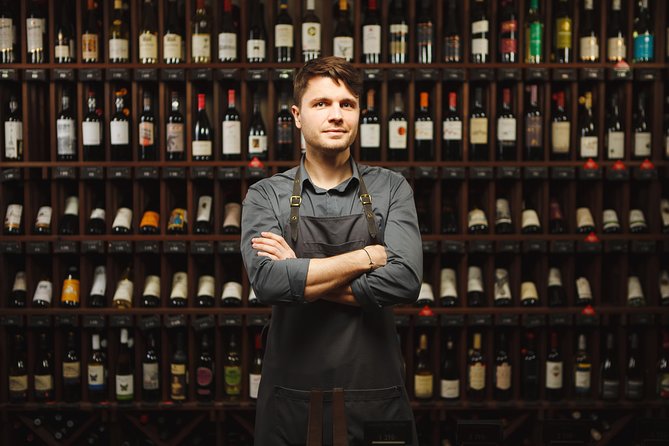
The route reaches La Barceloneta, the famous former fishing neighborhood. This gives the evening a different mood and brings the walk closer to Barcelona’s maritime side.
The neighborhood is a good match for the food. Smoked sardine with tomato bread and salted cured tuna make more sense when you think about the city’s relationship with the sea. The dishes are compact, salty, and designed to pair well with a drink.
You may also encounter a final round of traditional tapas here, depending on the exact order of stops. The published menu includes six local cheeses, Iberian ham, croquettes, patatas bravas, tortilla, gilda, mojama, and smoked sardine, so you should expect plenty of variety rather than one large entrée.
The route ends back at the meeting point. That is convenient, especially if you are still learning Barcelona’s layout. It also means you do not have to guess where the tour leaves you at the end of the night.
What you will eat and drink
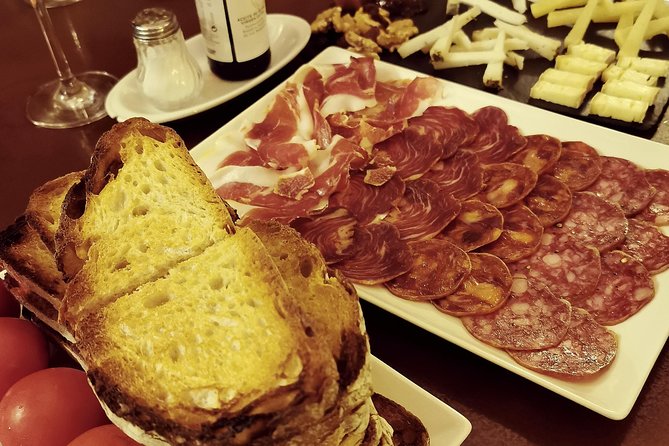
The menu is broad enough to function as a real dinner for many people. It is not a token tasting with one bite per stop.
Here is what may appear across the evening:
- Iberian ham
- Six local cheeses
- Croquettes
- Patatas bravas
- Spanish potato omelette, or tortilla
- Catalan tomato bread
- Gilda pintxo
- Mojama, or salted cured tuna
- Smoked sardine with tomato bread
The drink pairing gives the meal a clear Catalan and Spanish focus. You may taste a white wine from Terra Alta, a red from Montsant, craft vermouth, and cava.
That range is one of the strongest reasons to consider the price. At $102.58 per person, you are paying for dinner, alcoholic drinks, a guide, and a three-hour walking experience. It is more expensive than ordering a few tapas on your own, but the value improves if you would otherwise pay separately for several dishes, multiple drinks, and a guided city walk.
The main limitation is that exact portions and brands can vary. Shared plates are social, but they may not satisfy someone who wants a large private entrée. If you have a big appetite, treat the food as a substantial tasting dinner, not an all-you-can-eat meal.
Dietary needs are worth raising when you book or before the tour begins. One guide, Libor, has been particularly accommodating with restrictions, but no fixed alternative menu is promised in the details provided.
The guides shape the evening
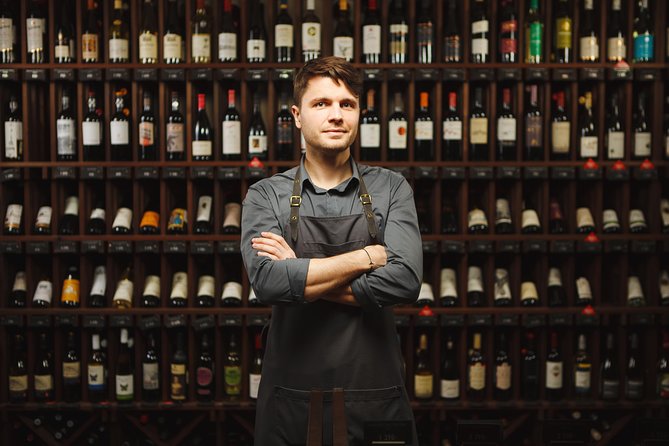
The strongest part of this experience is likely to be the guide. Names associated with the tour include Libor, Ellie, Eli, and Naomi.
Libor is known for combining city history with humor and for choosing long-established family places. Ellie brings a local Catalan perspective, while Eli has been praised for enthusiasm and a clear sense of place. Naomi led one first night with the company and handled a mixed group well, even when the evening had an unexpected interruption.
Guide quality matters more than usual on a route like this. You are not simply being shown monuments. You are trusting the guide to choose a good sequence of stops, keep the group together, explain unfamiliar dishes, and create a comfortable mood around a shared table.
The small group limit of 12 helps. It is large enough to create conversation but small enough that the guide can respond to questions. Couples, solo visitors, and friends can all fit into the format.
Arrive on time. The meeting point is central, but the route is built around several stops. If you arrive late, you may miss the opening explanation and first tasting, and the group will not be able to wait indefinitely.
Who should book this experience?
I would choose this tour if you want an easy first-night introduction to Barcelona’s food and old center. It is especially useful if you like learning through eating and prefer family-run bars to a formal restaurant meal.
It also suits people who want a social evening. The food is shared, the group is small, and the guide helps strangers settle into conversation. Solo visitors can find this format more comfortable than walking into several bars alone.
Wine drinkers will get good value from the range of regional pours. The Terra Alta white and Montsant red add a sense of place, while vermouth and cava broaden the tasting beyond standard table wine.
You may want to skip it if you dislike alcohol, have limited mobility, or want a slow dinner at one table. Alcoholic beverages are included, and the experience involves walking through several districts. Service animals are allowed, public transportation is nearby, and most people can take part, but the route’s full accessibility details are not provided.
Families should also consider the tone. The supplied information does not give a child age rule, but this is plainly built around wine, vermouth, cava, and an evening food crawl. Adults are the clearest fit.
Timing, price, and cancellation
The experience runs for about three hours and is offered in English. It is often booked around 44 days ahead, so reserving early makes sense if your dates are fixed.
At $102.58, the cost sits in the paid-experience range rather than the budget category. I think it earns that price for someone who would otherwise pay for a guided walk, a full tapas dinner, and several drinks. The value is weaker if you mainly want one or two inexpensive plates and plan to explore the neighborhoods on your own.
You can cancel for a full refund up to 24 hours before the start time. Changes or cancellations inside that window are not refunded, and the tour requires a minimum number of participants. If that minimum is not reached, you are offered another date or experience, or a full refund.
My call: book it early in your Barcelona stay
I would book this for the first few days of a Barcelona visit, especially if food is one of your main reasons for coming. You will see several central districts, try dishes you might not order alone, and leave with a better sense of where to eat later.
The best reasons to go are the wide tasting menu, regional wine, and small group size. The main caution is simple: this is a walking dinner with alcohol, not a private restaurant evening or a full architectural tour.
If you want local flavors, short history lessons, and a friendly group led by someone like Libor, Ellie, or Eli, this is a strong choice. If you need a quiet, highly structured meal or cannot comfortably walk between neighborhoods, spend your $102.58 elsewhere.
FAQ
Where does the Barcelona tapas and wine experience start?
It starts at La Rambla, 97, in Barcelona’s Ciutat Vella district.
Where does the tour finish?
The activity ends back at the meeting point.
How long does the experience last?
The tour lasts approximately three hours.
What neighborhoods and sights are included?
The route includes the Gothic Quarter, El Born or La Ribera, the Basilica of Santa Maria del Mar, Placeta del Pi, and La Barceloneta.
What food and drinks are included?
The included tasting can feature Iberian ham, six local cheeses, croquettes, patatas bravas, tortilla, Catalan tomato bread, a gilda pintxo, mojama, and smoked sardine with tomato bread. Drinks can include Terra Alta white wine, craft vermouth, Montsant red wine, and cava.
How large is the group?
The tour has a maximum of 12 people. Mobile tickets are provided, and the experience is offered in English.
Recently reviewed in Barcelona
- Barcelona : Gothic, Tapas, Churros & Vermouth★ 5.0 · 65 reviews
- Born to Eat: Gourmet Tapas & Wine Small Group Tour in Old Barcelona★ 5.0 · 67 reviews
- Sunset Sailing Experience w/ Live Spanish Guitar & Spanish Tapas★ 4.5 · 69 reviews
- Barcelona Tapas & Wine Walking Tour with Optional Flamenco★ 5.0 · 70 reviews
- Barcelona: Old Town Tapas & Paella Food Tour with 8 Tastings★ 4.9 · 73 reviews
- Boqueria & St Caterina Markets with Food & Tapas Small Group Tour★ 4.5 · 73 reviews
- Barcelona: Private Tapas & Wine with Flamenco Show Old Town★ 4.7 · 77 reviews
- Barcelona: Sailing Tour with Spanish Tapas and Drinks★ 4.7 · 81 reviews
Tapas and Wine Tours, compared.

Montserrat Half-Day Tour with Tapas and Gourmet Wines
Read our review →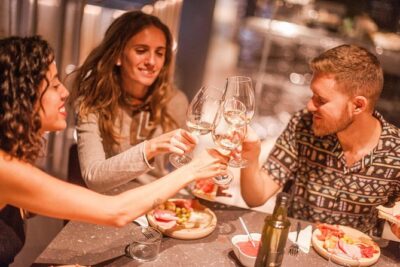
Montserrat & Cogwheel Train, Gourmet Wine Tasting & Tapas/Lunch
Read our review →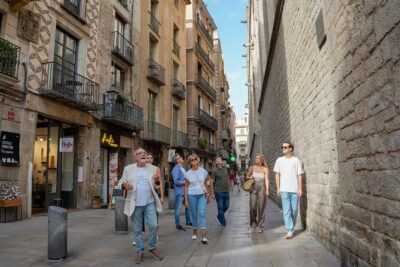
Barcelona Tapas and Wine Experience Small-Group Walking Tour
Read our review →
Montserrat with Black Madonna & Medieval Winery with Tapas/Lunch
Read our review →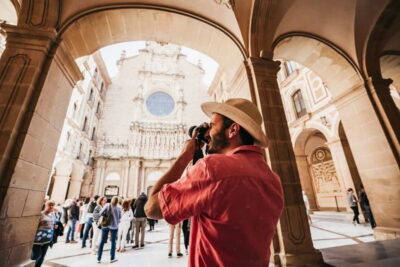
Montserrat and Winery Tour with Tapas or Lunch
Read our review →
Tapas Walking Tour with Food, Wine, and History
Read our review →
Madrid Tapas & Wine Tasting Walking Tour – Small Group Local Bars
Read our review →
Sevilla Food Tour: Tapas, Wine, History & Traditions
Read our review →Browse the lists this tour appears in